The Accidental Orchid

Last summer my son-in-law brought me out two of his house plants to tend while he went home to Spain for a month. I was glad to tend the hydrangea; it was in a big pot and it could live outside on the porch next to mine. Mine was pink; his was blue. They would look lovely together, and I’m not afraid of hydrangeas.

The other was an orchid. I shook my head at that one. “Oh, I’ll kill that one for sure,” I said. “I’m not good with any plants that are tender or need a lot of care.”

“It’s okay,” he said. “Just give it three ice cubes a week. Or 1/4 cup of water. No direct sun, and if it doesn’t work, I’m not attached to it. Don’t worry.” Even though he said all that, I still didn’t want him come back to a dead orchid.

fullsizeoutput_18f9

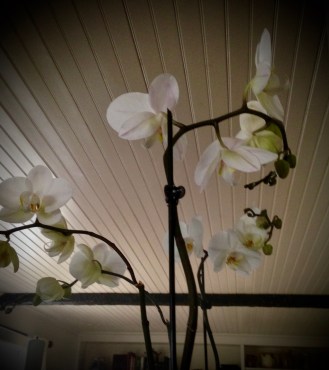
That was in July. It had one icy white bloom atop a long thin stem; it looked very fragile. The bloom dropped off within a couple of weeks and left the long green stem. It wasn’t very attractive, but I dutifully gave it a quarter cup of water every Sunday. I didn’t think ice cubes would be good for a tropical flower.

After he came back from Spain, he was in the process of moving and told me to just keep the plants. The orchid didn’t do much for two or three months, and I was starting to think it was silly to keep watering such an ugly plant. (There’s a lesson there in that sentence….) But it didn’t look unhealthy, so I kept watering it.

One morning I was moving all the plants and dusting the window sill when I saw odd looking growths coming from the base of the plant. They were silvery. I had no idea, but since something was happening, I did some basic research on Phalaenopsis Orchid.
fullsizeoutput_18fa These were air roots. Of course. Every plant has air roots, right?

I did more research. There are about a hundred million web sites for novice orchid growers, and they don’t all agree. But the first web site I checked suggested cutting back the old flower spike. It may send out a new shoot, or it may not. Depends if it’s happy or not…

It didn’t seem unhappy, so I cut it back by half. Within days a little sprout appeared just above where it had been cut back. And within days of that little sprout, another shoot appeared, and this time it was growing out of the dirt. Er… it isn’t really dirt. It is magic orchid-growing chunks of pixie dust ‘media’.

Excitement mounted, and I went back to researching. It turns out that the 3-ice cubes per week is a Thing. More correctly, a company — Just Add Ice Orchids. Most of the spectacular flowering orchids that the big box stores are selling right now are orchids from this company. I have always just passed them right by, because I’m not really a fan of delicate hothouse flowers. Did I say that already?
fullsizeoutput_18ef

With air roots and two flower spikes, I actually started to get excited and attached to it. I texted my son-in-law with a photo. He corrected me on its gender and called the orchid a she. Yes, it is plain from the photos, she is a lovely March bride.

img_7837I began to use the ice cube method, since it has obviously been approved — not only approved, encouraged. Her flower spikes grew tall, and soon there were little bumps all along both of the spikes. Dare I think they would be flower buds? I counted them. There were seventeen!

Before you think that I am an absolute genius with tender hothouse orchids, I have a confession.

I struggle with lack of light in the months of November through February. (Does this mean that I myself might be similar to a tender hothouse plant?) So this winter I bought four JOYOUS lightbulbs — full spectrum light that mimics natural daylight. As I was choosing where to put them, I noticed in big print on the packaging (that’s the only kind I can read these days…) that these light bulbs can also be used as grow lights. So I put one of them in the schoolhouse light over the kitchen sink, so the houseplants on the window ledge could benefit from joyful light too.
fullsizeoutput_18f0

I cannot say with full certainty this is why the orchid is so magnificent. Several of the websites I visited said that light does not affect the blooming of orchids. Can I say I don’t believe them? I must also say that this is the first year that my tender Rosemary plant still looks this healthy in early March. Usually it dies by mid-January.

I sent a text to Pedro the other day with a photo of how spectacular she is. I offered to give her back. He generously declined, saying, “She must love your window.”

And the hydrangea? The deer ate it to nubs one night last fall. I brought the container of small sticks inside and shoved it in a corner of the kitchen. Since spring is around the corner (What corner, Where?) it is starting to come back too. I’m hoping its lovely lavender bloom will take over when the last orchid blossom falls off.

So go for that spectacular orchid. If I can do it, you can too.

Relics of Time and Memory

Indian Rock

There are big rocks thirty miles to the south
in Slippery Rock Creek.
There are big rocks thirty miles to the east
in the National Forest.
There are big rocks thirty miles to the north
on the shores of Lake Erie.
But here in the rolling farm lands of Black Ash
there is just one big rock.

Walk with us just down the hill
past the edges of the berry bramble
and the fallow field
to where the
North Fork of the West Branch of Little Sugar Creek
winds its way through the beeches and hemlocks,
rippling and glinting
murmuring and echoing
the breeze of the leaves.

witch_hazel_03_fullTurn here at the witch hazel tree.
The path narrows, but just a stone’s throw
into the little glen
Indian Rock is there,
dominating.
A ten-foot maple tree grows from its moss;
Eons and roots have split the smooth stone.
There is a foot ledge
to enable scrambling,
but no grand view from the top,
for this granite boulder guards a small ravine
and a bubbling spring
that feeds the
North Fork of the West Branch of
Little Sugar Creek.

a giant granite anomaly amidst
a sea of sandstone,
thrown here in ancient days by melting glaciers
and God.

The granite is carpeted with moss
and baby blue forget-me-nots
Pale green lichens and fiddlehead ferns–
Miniature perfection.

delicate rock garden Forget-me-not flowers in moss and stones

Image courtesy of freeimages.co.uk

Relics were found here.
Mortars, pestles, arrowheads
from the people called Seneca.
Picture the mother, baby strapped to her back
pounding the leather, the corn,
kneeling to collect clear cool water from the spring.
i carry my child in a bright green back pack and we
collect the water
in our plastic Mr. Donut buckets,
but i feel a kinship with her just the same.

i lift him from the backpack and sit him on the soft moss;
i step up on the ledge from behind
and we rest in the shimmering green sunlight
on an ancient moraine.

my pale hand reaches to stroke this red haired child
crawling on the mossy rock
as her brown hand tousles the dark hair of her child
crawling on the mossy rock
and in that second
our fingers
touch
through
time.

sunlight on rocks

Kale, again?

I thought I had settled the whole kale issue in the fall with The Trouble with Kale.

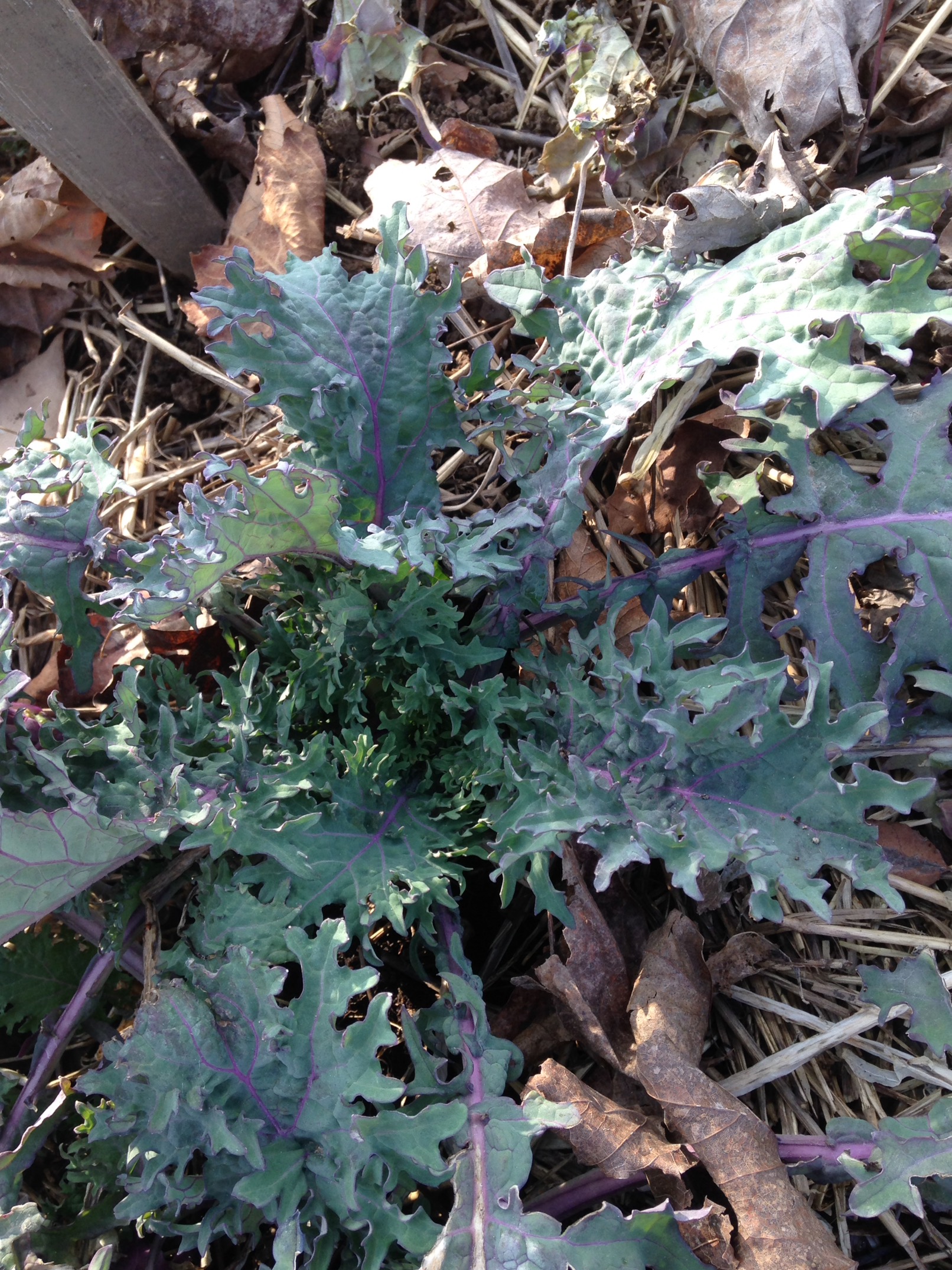
Turns out, I didn’t because last week, on the eleventh of February, I walked down to check out the garden. I discovered both spinach and kale cheerfully surviving the Pennsylvania winter with just a light layer of straw mulch. Today, February 18th, I went down with my scissors and harvested both kale and spinach for a salad. The kale had new growth; there were a few larger frost bitten leaves around the edges, but the inside of the plant was actually growing.

Now admittedly we have had a very mild winter. But the temperatures have dropped to 8-10 degrees several times and one week in particular it was that cold all week.

The best thing about this is Fresh Greens. In. February. So for those of you who live in a year round warm climate, excuse me while I SHOUT IN JOY!


I’ve been trying an experiment this winter in trying to cook as much as I can with what’s on hand. (Note the word trying used twice…) That means potatoes, onions, garlic, beef, eggs, frozen peppers, canned green beans, beets, frozen squash/pumpkin, applesauce, salsa, frozen okra, canned and stewed tomatoes, and pickles/relish/ketchup.

The only vegetables I’ve been buying are mushrooms and carrots and an occasional red pepper. I had beautiful peppers last year, but none of them turned red (even though one variety was specifically a red bell pepper). I hope to remedy that this year — the frozen peppers are very acceptable.

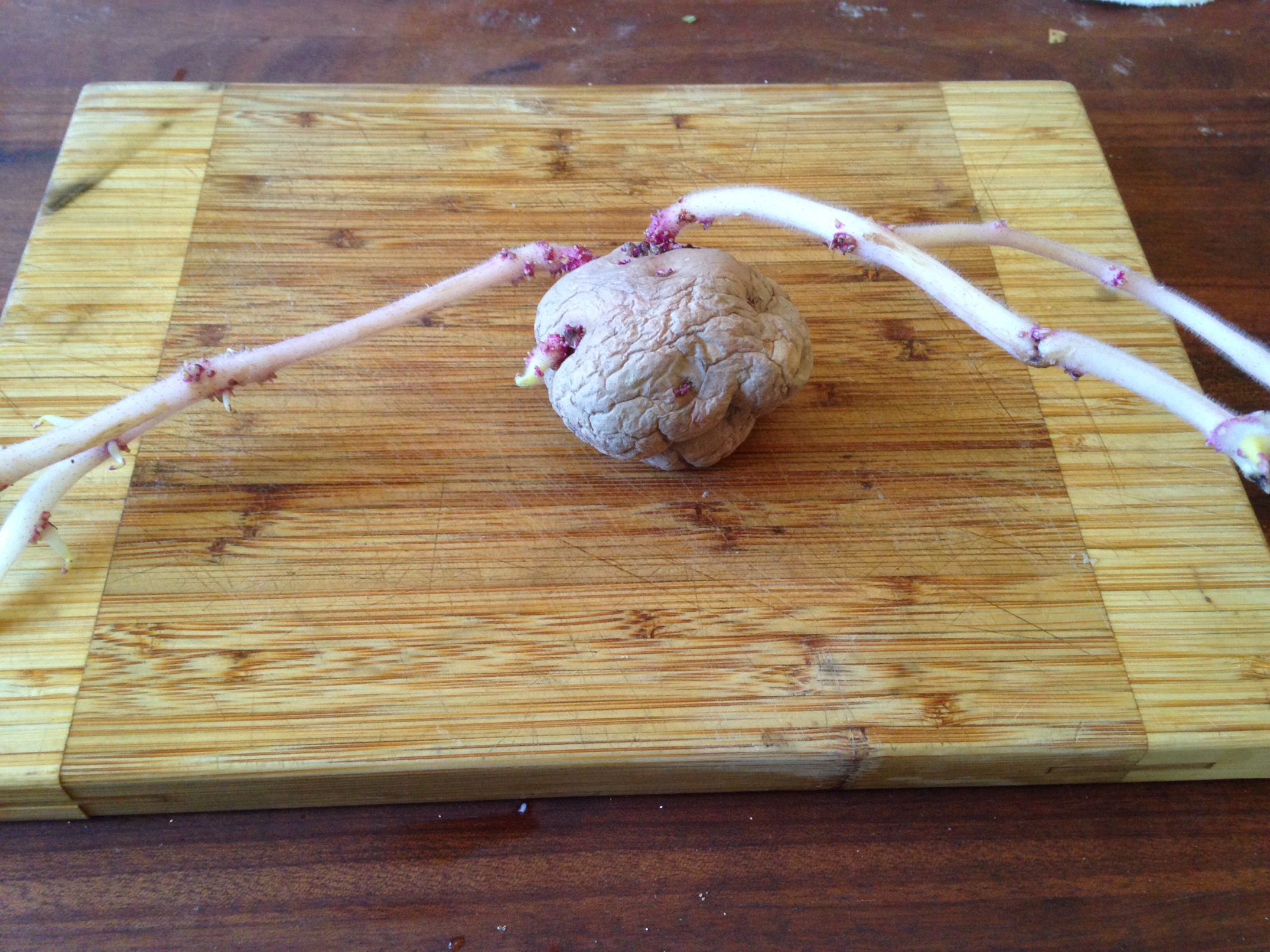
But not in salads. I used the last of our onions two weeks ago. I’ve got ten potatoes left and two of them look like this:

We haven’t been having many salads this winter. So it was particularly exciting to discover the growing kale and spinach. If you remember the one drawback to kale was the cabbage worms. But guess what? There’s NO cabbage worms in winter.

So I’m rethinking the kale issue. If I plant it in September, I could have some greens in the fall and winter with no worries about cabbage worms. And this mild winter has me thinking of a hoop house to extend the season on both sides. Just a small one, maybe?

You Tube Video from BuddyClub Gardening. Click on the photo and it will take you to the DIY cheap hoop house video

Hoop House or not, I planted another row of spinach today and threw in some radishes for good measure. (They were just short rows…) It only took me ten minutes; it was last year’s leftover seeds and it still could snow in April;  but I couldn’t resist planting something on Feb. 18th. Just because I could!

And since I only harvested enough for two kale and spinach salads, I’ll just have to give you one of my favorite salad dressing recipes.

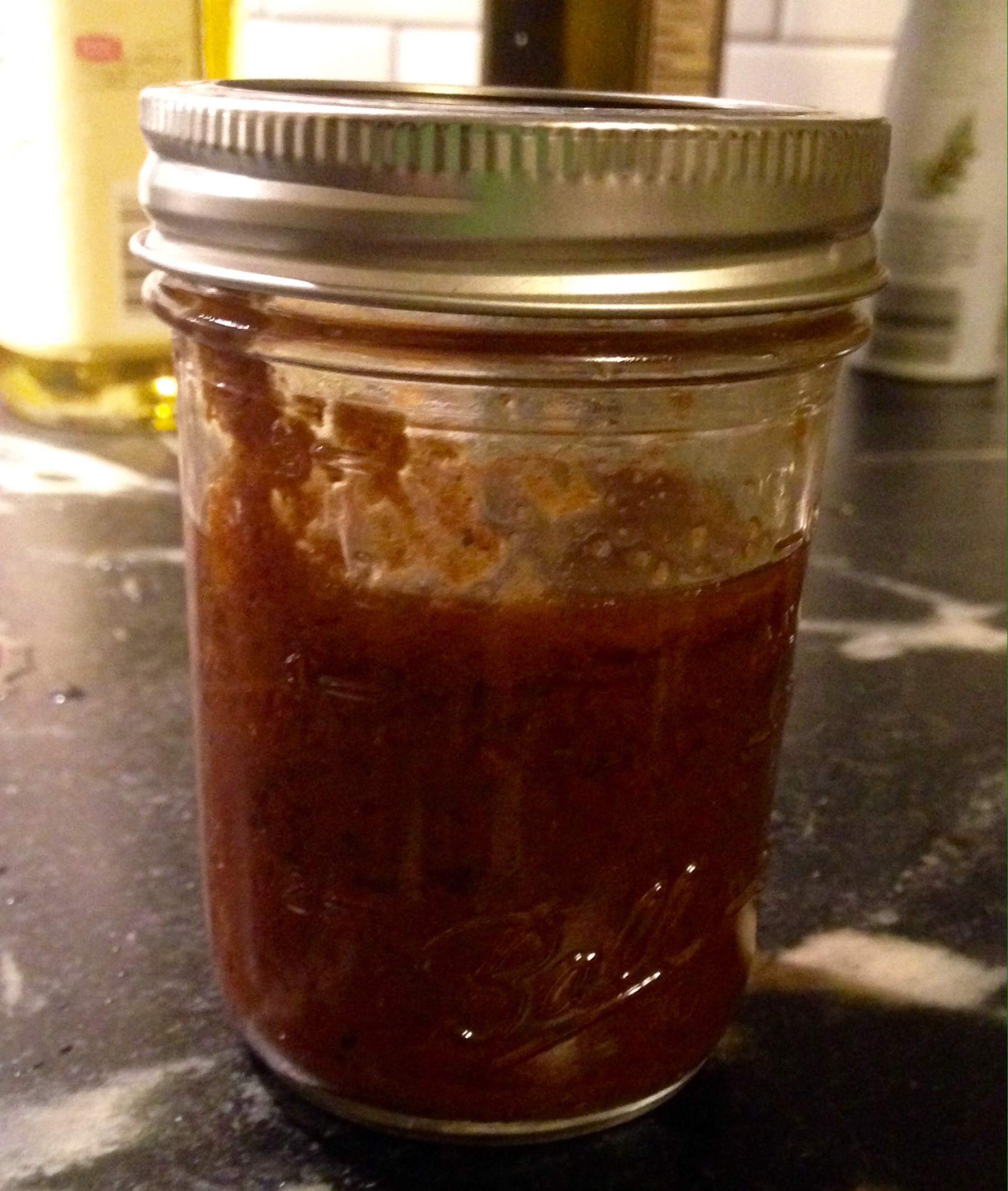
Tomato Vinaigrette (The basic recipe is from the Hay Day Country Market Cookbook, but I changed it a bit.)

6 sun-dried tomatoes soaked in 1/3 cup almost boiling water for about a half-hour.
Drain the tomatoes, save the liquid, and coarsely chop the tomatoes.
Mix the tomatoes with 3 T. mixed vinegars–balsamic, red wine, white wine, cider, or lemon juice.
Add a clove of minced or pressed garlic and 1 T. whatever fresh herbs you have. Basil is good, Rosemary is good, Thyme is good, Dill is wonderful in the summer…
Add 1/2 t. salt and some fresh pepper.
Put all the above in a blender or small food processor and pulse five or six times.
While the blender is still running, add the liquid from the tomatoes, and then 1/2 c. extra virgin olive oil in a thin slow stream and blend until all the oil is mixed in.

This is a thick, spoonable dressing. Dress it up with capers or chopped olives if you are serving it immediately; or you can add a tablespoon or two of mayonnaise or Greek yogurt to make it creamier.

(We had our spinach and kale salads with cheeseburgers from the grill. Outside. In February. Really.)