It is the third Sunday in Advent: the Sunday of Joy.
I write this with only a little touch of irony, because in this season of dark, on a gloomy December day, one of the longest nights of the year, I’m struggling with finding joy.
And I know I’m not the only one.
Just today in church, two friends shared their own distinct struggles with the elusive words of the Advent season: hope, love, joy, peace…And then this afternoon another friend’s battle with anxieties became a prayer. And when I pray, I always remember my friends in Haiti, and that results in more distress. My prayers don’t bring me peace. It’s an anxious time–from the personal, to the political, to worries for the world.
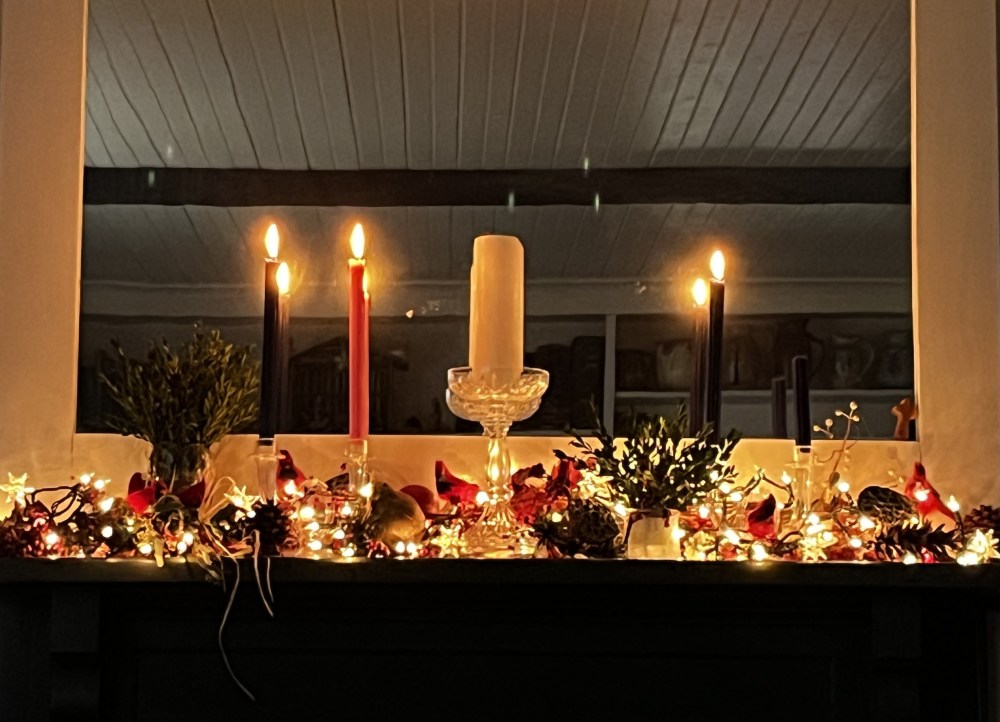
So I’m sitting here wrapped in a blanket, staring at my beautiful light-filled mantle, praying for myself and my friends and the country and the world. Meditating on joy–how we miss it, how we long for it, how we try to make up for its lack on our own terms, in our own ways.
In the sermon today, I heard that Joy is a gift from God, but it is also a decision we make. Choose joy. It’s a familiar phrase, a book title, a piece of music, and the source of many quotes, both familiar and not, But often such quotes simply seem like platitudes when we are going through dark times. When there is nothing to look forward to? Perhaps a good thing to do is look back. Look back and see how God has blessed you through your life. Look back with gratitude at the good things that have happened. Acknowledge your grief of today, and remember things past that made you smile. That make you smile still. Yes, it’s a way of choosing joy.
Remember a few years ago when gratitude was a thing? There were books, there were gratitude journals, there were blogs on writing down your blessings. Isn’t it silly, Isn’t it human, that something like gratitude can be a fad? Gratitude and Joy are related–if we decide to be thankful, if we decide to live life gratefully, then joy will simply be a byproduct of those attitudes. Except, there is nothing simple about joy.


Especially if you are, if one is, if I am, a glass-half empty type of person.
I have a book on my bookshelves called Living Life as a Thank You. The subtitle is The Transformative Power of Daily Gratitude. I don’t know how I came by it; I’ve never read it. Looking at it now for the first time (the cover creaked and groaned when I opened it) the authors are Nina Lesowitz and Mary Beth Sammons and the copyright is 2009. And there is a chapter on Staying Thankful in Difficult Times. And the next chapter is The Power of Gratitude to Make a Difference in the World. Perhaps I need to read this book.
I think most of us who are struggling to find joy right now are really asking the question, How long? How long, Lord, will you allow this injustice to continue? Injustice can be the shape of the world and what the evil powers are doing to it. But injustice can also be the personal–illnesses that can’t be cured, problems that have no solution, anxiety that won’t be calmed, poverty that can’t be escaped, sorrow that can’t be assuaged…And the feeling that you’re tired, exhausted, actually, and nothing that you can do will relieve the endless suffering.
The other book I’m reading right now is Reversed Thunder: The Revelation of John and The Praying Imagination by Eugene Peterson. I’m spending much time with it and taking many notes because what Peterson says to us right now in this time and what he is saying to me right now in my brokenness is just invaluable. Listen to what he says here:
“The persistence of the prayer ‘How long?’ issues, apparently, from a deep, unshakable conviction that God will bring an end to injustice even though he shows no signs of calling the court room to order…So what accounts for the incredible persistence of the cry? In the general abandonment of prayer, in which great crowds of people give up on God and plunge into the streets to get what they can with their fists, what accounts for the remarkable minority who do not, but who stay, and cry, and wait? We are accustomed by now to St. John’s answer: Worship…St. John’s recurrent representations of worship are not pious, escapist fictions, but theological convictions. The conviction is that God’s action, not the world’s action, is what we want to be involved in. The world is not the context for dealing with God; God is the context for dealing with God (and the world)….Worship is the act of giving committed attention to the being and action of God.”
It is God’s actions, and not the world’s actions that we want to be involved in.
But there’s also one more important thing to remember, or we could easily just try to withdraw from this world’s ugliness. Everything we do is of eternal importance. (I’m summarizing Peterson, here) : Everything we do is political and we can choose the way of God or the way of the world. Every one of our “…encounters is a significant detail in the life of faith. But we are not aware of it. Most of the time we are not living in a crisis in which we are conscious of our need of God, yet everything we do is critical to our faith, and God is critically involved in it. All day long we are doing eternally important things without knowing it…”
At the grocery store, talking with a friend, taking someone a meal, choosing silence over argument …it all counts.
If you are still reading after all of this meandering, thank you. I’ve no answers on finding joy except two: Focus on gratitude and Focus on God while we are waiting (and working) for the injustices of this world to end.
He promises that we will know someday.
And it will be joyous.
And there will be no more sorrow, no more injustice, no more grieving.
And in the meantime, turn off the news and focus on the good; focus on the small things of everyday life that make up those “eternally important things”. I think I will try a Choose Joy project of my own: each day I will take a photo of something that gives me joy or makes me thankful. I’ll report back in a couple of months….And here’s my first photo:
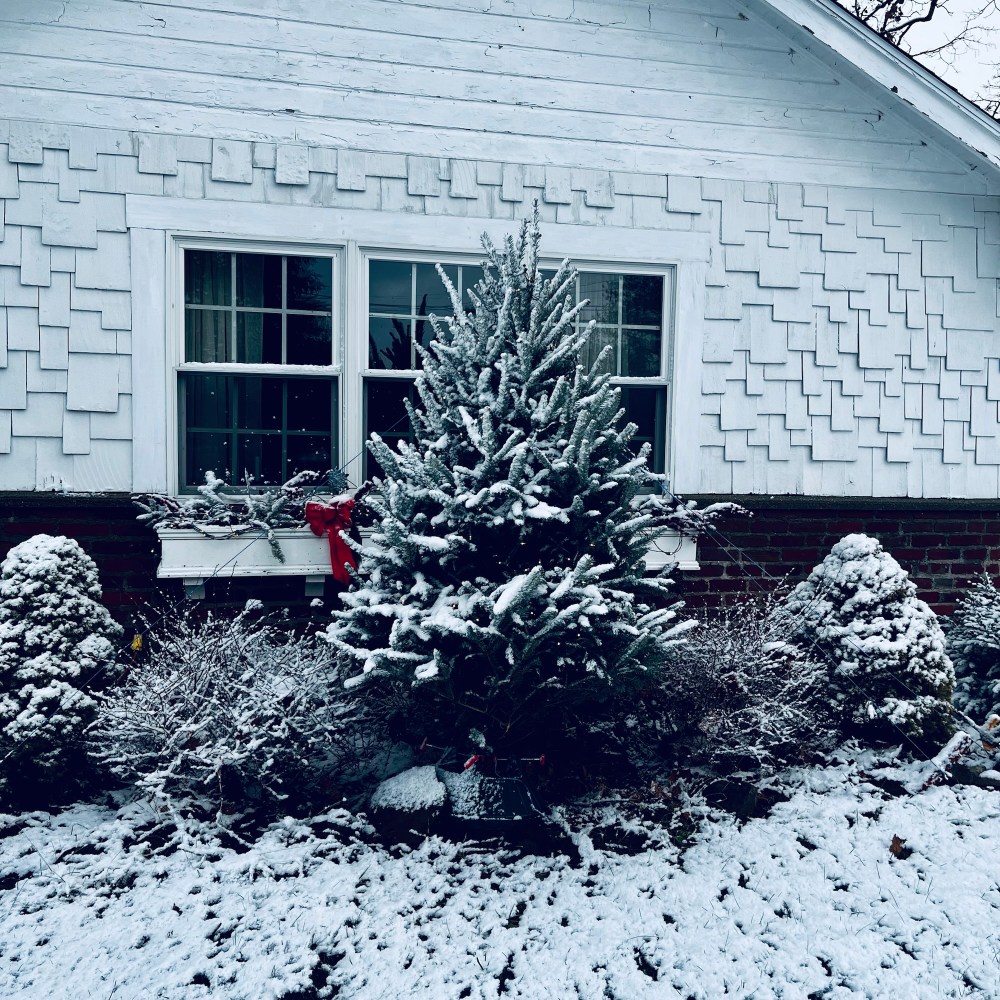
 the circle of life