23. Not Quite Mom’s Baked Apples

20120907-095009.jpg
I’m not sure why we loved Mom’s baked apples so much. They are a homely dish, not fancy, and easy to make.

It might be that we got to eat a sweet dessert-like food for dinner — she never served them for dessert — we always ate them right along with whatever else we were having. Or it might be that she only made them in fall and early winter when we had fresh apples.

Depending on how long the apples baked, or how juicy the apples were, the recipe was never the same. Sometimes the sauce was thin and sweet, sometimes the sauce was thick and caramel-like; it didn’t matter, we always loved them.

We have four different apple trees at Apple Hill and only one variety has been absolutely identified: the Red Delicious. (They are the two apples on the right in this next photo.)


So in the interest of trying to determine what varieties the others are, I decided to make baked apples using all four kinds of apples. Two of each, knowing that Mom almost always used Red Delicious for hers. They are not a cooking apple, so they hold their shape very well when baked; and also, it’s a good use for them, because who really likes to eat a Red Delicious? There are so many better varieties — beats me why they ever got famous for being a good eating apple!

20120907-094732.jpg
See the dish of walnuts on the right? Those are from our very own English walnut tree! Talk about being happy campers when we discovered that! We thought the tree was the traditional black walnut with those nuts that you have to drive a car over to get the husks off, as well as staining your hands and fingernails a beautiful, rich dark brown.

20120907-210749.jpg
It took us about 30 minutes to pick and shell enough walnuts for the baked apples. Technically the nuts are supposed to dry in the shell for about a week, but we couldn’t wait! Maybe the next picking…

20120907-153223.jpg
The Recipe:

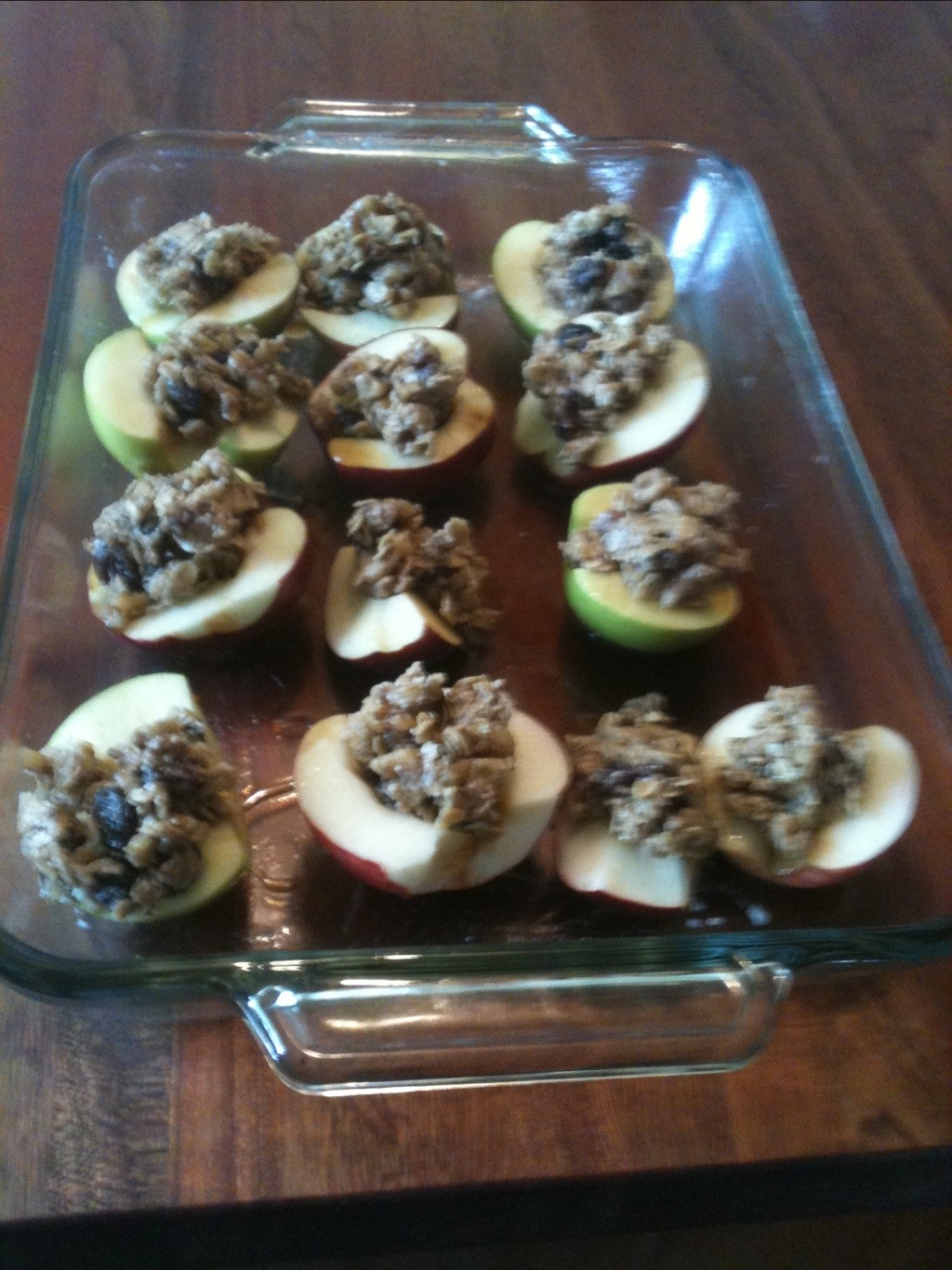
  1. Wash, halve, and core the apples, but don’t peel them.
  2. Mix together some soft butter, brown sugar, oats, and walnuts or pecans if you like. Some people add raisins or dried cranberries.
  3. Scoop about a tablespoon of the mixture into the center of each apple.
  4. Pour some liquid into the bottom of the dish. I like to use cider and a splash of water. If you’re out of cider, you could use some water and maple syrup. You could use orange juice and water. Use your imagination. Sprinkle with your favorite spice—cinnamon, cardamom, nutmeg…
  5. Cover and bake at 350 degrees for 25 minutes or so, until the apples are soft. Uncover for the last five minutes.
20120907-154956.jpg

Serve warm with dinner. Pay attention now: this is not dessert. No ice cream, no whipped cream, no creme fraiche…

The experiment was a success. The greenish yellow apples on our side yard tree have been judged to be a Yellow Transparent — good for cooking and eating (just be sure to peel them).
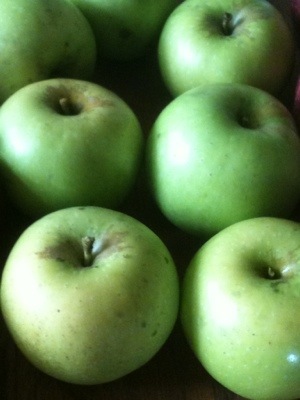
20120909-154913.jpg

The other two trees on the wild part of the property seem to be Jonathans (ripe now)

20120909-155529.jpg

and McIntosh (not quite ready, but they still taste delicious!)
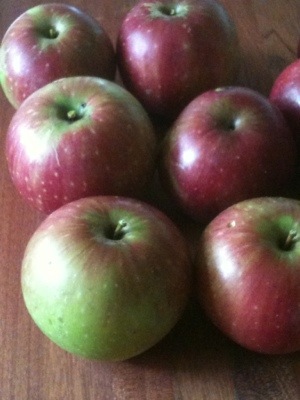
20120909-155202.jpg

Verdict: the Red Delicious looked the best and tasted pretty good. The Yellow Transparent tasted good, but they separated from their skins and didn’t look so appetizing. The Jonathans looked just okay, but tasted the best. The Macs are definitely not for baked apples; they turned into crunchy applesauce.
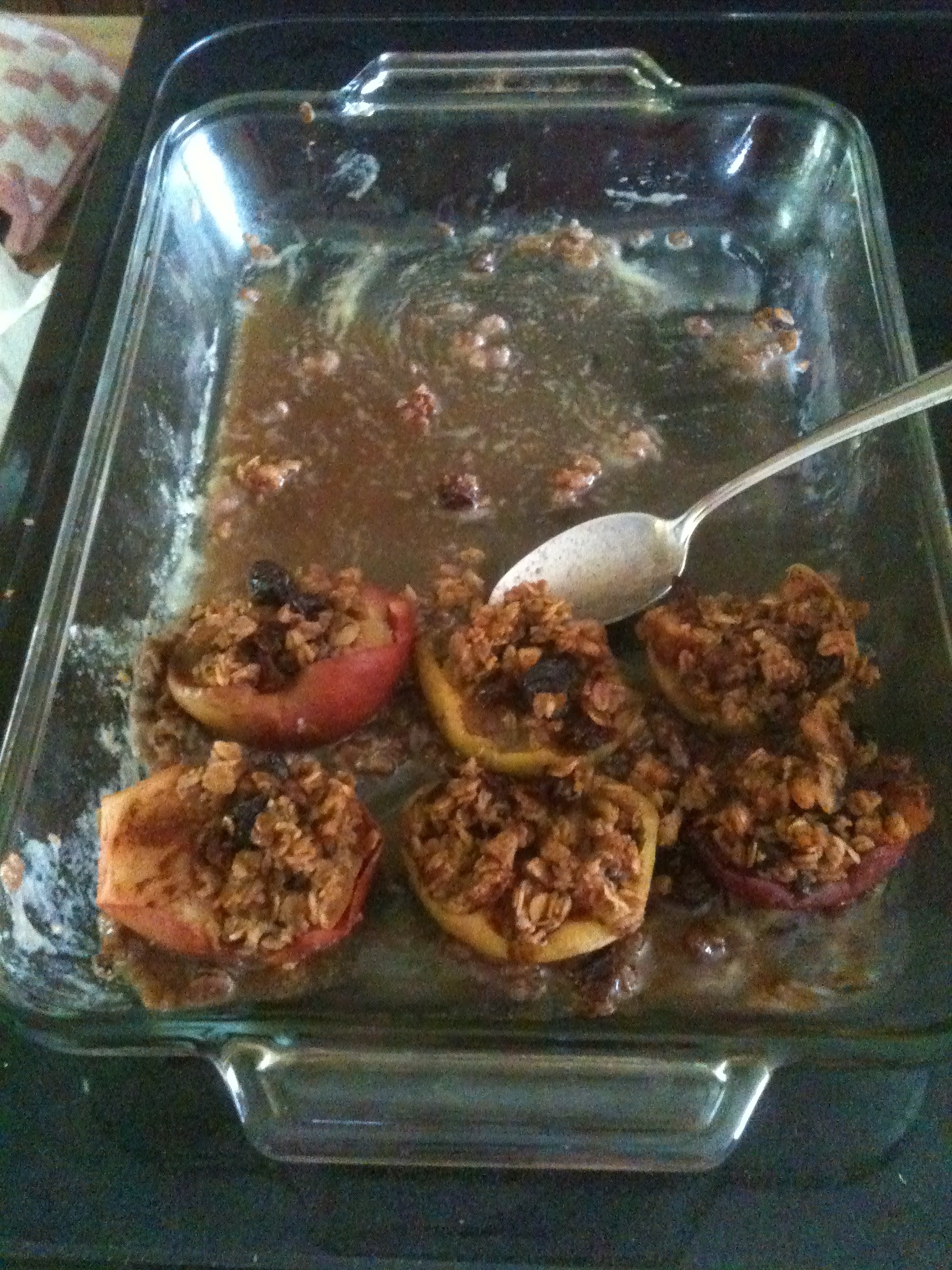
We ate half for dinner and saved the other half for breakfast. They’re even good cold.

Bon appetit, or in Greene County lingo — them’s good eatin’.

20120909-172628.jpg
Mr. H.C. using his new picker, so we can get the good ones up high. He splurged and bought the expensive one!

22. Two Sides to Every Window

I got a new job this past weekend.

We are getting close to starting the ceiling. (I know, I’ve been saying that for a month now…) So this weekend we had the lovely task of taking down everything that touched the ceiling. That would be:

  • the obtrusive wall cabinet where all our food and dishes were stored;
  • the ugly fake wood moulding around the windows;
  • the horrible fluorescent light fixture above the windows; and
  • the two-by-four that was nailed into the ceiling where the old wall used to be.

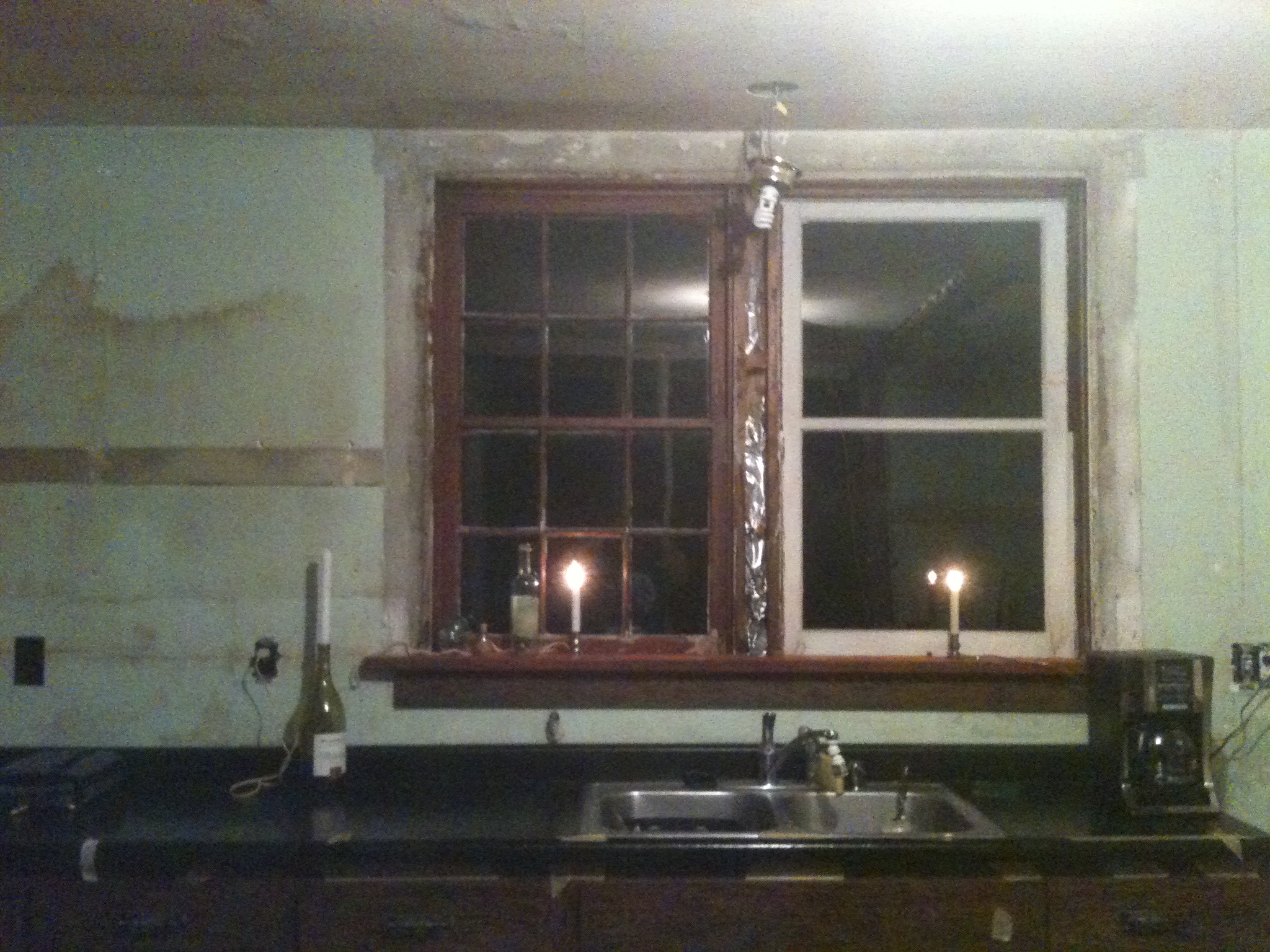
All those objects are now kaput. When the dark cabinet came off the wall, the whole kitchen lightened up! It was even better than we had hoped — who would have thought an ugly green wall with holes and stains would look so beautiful?

Ugly cabinet begone! Let in the light!

Oh yes, my new job…Windows. The windows in the kitchen are old wood double-hung windows with panes (in today’s terminology — true divided lights). They don’t match exactly, but you have to be my husband to notice. The really old window has wibbly wobbly glass, but they both are original to the house. That means they have been painted many times. The inside has four coats: white, sage green, mint green, and orange. The orange coat was then antiqued. Does that make five coats? I’m not sure. The paint is dried and cracked, and the window sill was always dirty with the little paint leavings that were chipping off the muntins.

This window has a storm window on the outside, so it was the first to come down.

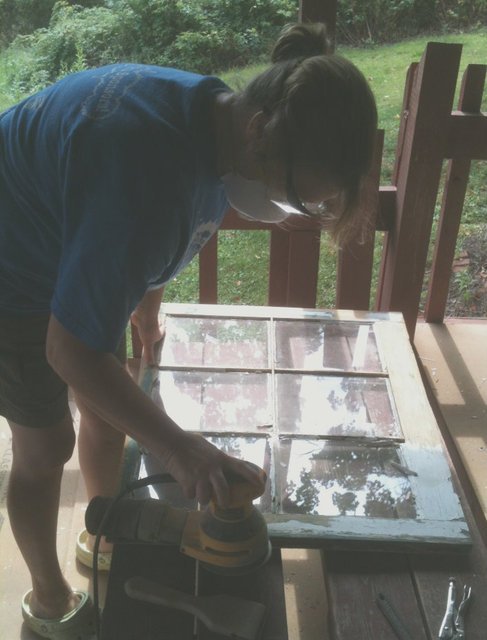
So one window of the two has been taken down, in two pieces, and is now back in the sanding department. I had just cleaned up the sanding porch in anticipation of priming and painting ceiling boards, and now it has become the sanding porch once again…

Restoration in process…

It is fitting that I am in charge of renewing these windows because I am the one who wanted to keep them. Back last winter when I was reading Jane Powell’s Bungalow Kitchens, I read to Michael her opinions on old windows. She loves them (big surprise!) and believes that the American home-owning public has been sold a bill of goods (by window manufacturers, installers, and big box stores) about the R-value of new windows. She believes that a properly fitted and sealed window, with a storm window on the outside, is just as good as any window we can buy new. (If anyone can seal these old windows, Michael can figure it out.)

He didn’t agree; he still doesn’t. But we looked at new windows. They are either ugly or prohibitively expensive. They look new. They look modern. The cottage is neither.

The original green paint

On the outside of the windows there are just two coats of paint: white and dark green. The exterior paint is actually easier to sand off than the inside. The old paint is weathered and easily chips off. I scraped first, then sanded. There’s plenty of time to think while sanding — and that green paint I’m sanding off is probably what my grandfather painted on the windows many years ago! It is forties dark green, and my goodness, is it ever stuck on those windows! The sander gets hot and that dark green paint bubbles up in lumps before it comes off.

Michael came out to the porch in mid-afternoon to see how it was going. “Well,” I answered, “there are two sides to every window…”

AWYSG (Always Wear Your Safety Glasses — and a breathing mask also if you might be sanding lead paint…)

Yes. Inside and outside, there’s been a lot of looking through those windows. Seasons passing — life being lived inside and outside. I know both the women who have lived in this house. It used to be that people lived outside more than we do now. There was a pump under that big tree where Aunt Mary drew water — every day, probably more than once. She had a big farm sink in front of those windows where apples were cleaned and peeled and sliced, hands were washed, a little boy’s knees were mended, meals were prepared, dishes were washed, and probably tears were shed. I think women cry while doing dishes — when they are alone and can just let the tears fall into the dishwater. Clara changed the kitchen sink to stainless steel, but the cold of a silver sink catches tears just as well as porcelain. Her husband Joe died while she was living there, and left her a widow in the country, rambling around in a house that I’m not sure she loved.

Clara told the story of Joe coming home and announcing that he was thinking of buying the orchard, and how would she like to move? When they went to see the cottage, Aunt Mary was there and not particularly welcoming to the people who would be buying her house. She had lived there for thirty plus years and was now going to have to move to an apartment in town. Clara was moving from the house where she had lived for almost twenty years, the house they had built, the house where she had raised her family, to a cottage in the country that needed repairing. Two women, two kitchen sink windows — what stories those windows tell.

We originally thought we would add a third window to let in more light. My window. But then we looked from the outside and realized that the two windows are perfectly balanced under the clipped gable of the roof, and a third window would destroy the symmetry of the cottage. So I am scraping, stripping, and sanding these two kitchen windows. And I will be painting them too. Those muntins between the panes are hard work, but I am being careful. Careful to respect the life, the love, the joys, the sorrows that they have seen. I won’t have my own window, but I will have put my sweat into the two original old wooden double-hung windows that are there. Still.

21. Apple Picking Time

No, it’s not time to hire any laborers yet, but the two old trees in our side yard have picture perfect apples on them for a couple of old codgers (not us, the trees…). They are so close together that the red and the green apples mingle for a wonderfully random effect.

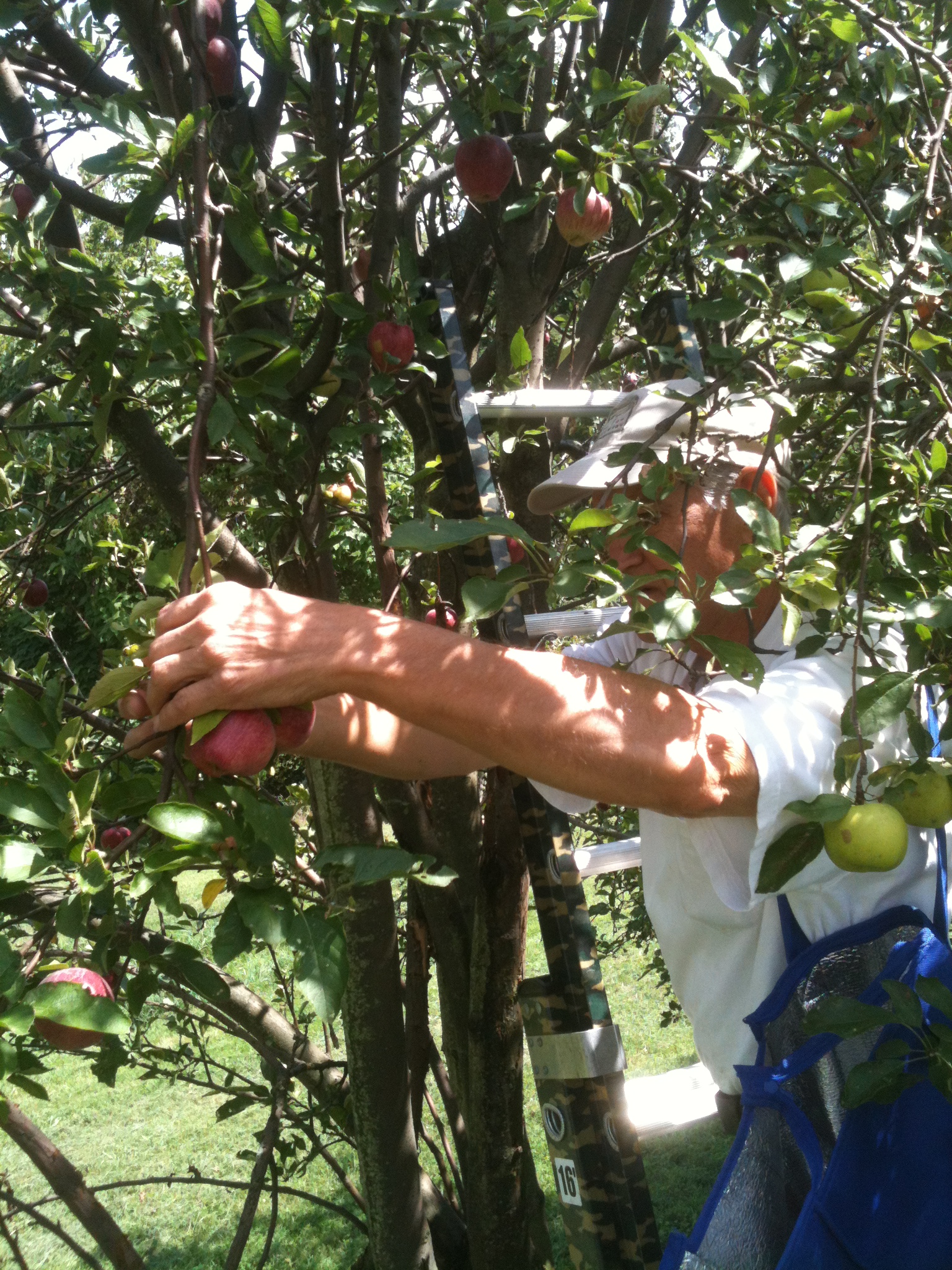
The most beautiful apples are always high above our heads. We got out the ladders!

They’re small, and a few have scabs, but there are surprisingly few worms! We can eat them whole (not the worms!) –always the sign of a good apple! Neighbor Betty reminded us that there are two other trees on the wild part of our property line (near Our neighbors, the cows) so we have to check them out this coming weekend. I’m hoping they are Macs–my all time favorite apple. Here is our harvest–not quite enough for a bushel basket, but there are still plenty of apples on the trees.

There are also four pears in here somewhere…

We are not the only ones who love these apples–you saw the deer a few posts ago–this week I finally got a photo of Gus, our elusive groundhog. He’s so deliriously happy while eating these apples that he forgets to run away when I get out my camera. He eats one under the trees, then picks one up and takes it down into the woods. For lunch? For a mate?

Gus eating an apple. This is the fifth shot–each time I got progressively closer and he (she?) was oblivious…

This behavior prompted much discussion, and we’ve decided that perhaps this critter’s name should really be Gusella (Gusette?), as we think her husband met an untimely demise. (Score Michael 1, Gus 0) Michael insists it was deserved because Gus was digging around the basement doors where the tractor is stored. We don’t want any groundhogs taking off on the tractor. I wish I could draw; I have this wonderful picture in my head of the groundhog driving off into the sunset on the tractor waving good-bye to Michael. At least we are taking care of his widow…

And this gentleman showed up again:

I took four shots of him, but this one is the best. I only had my IPhone camera with me on the porch and this is as zoomed as it gets. (After the fox appeared, we set up a tripod on the porch with Michael’s nice camera on it.) Before he got to the sunlight, he took a left into the woods. Mr. Fox was not interested in the apples; Michael had just mowed, and I think that’s what brought him into the field.

After we picked apples, work on the cottage was slow. Michael has finished putting up the light boxes in the attic, and we are almost ready to order the ceiling wainscot boards. In the meantime…

we’re trying to savor these last days of summer…You do the same!

Favorite Apple-icious books:
Down the Road by Alice Schertle

Apple Picking Time by Michelle Slawson

The Apple Pie Tree by Zoe Hall

The Apple King by Francesca Bosca

The Apple Doll by Elise Kleven

How to Make an Apple Pie and See the World by Marjorie Priceman

Johnny Appleseed by Reeve Lindbergh

The Sign Painter’s Dream by Roger Roth