The Visitor

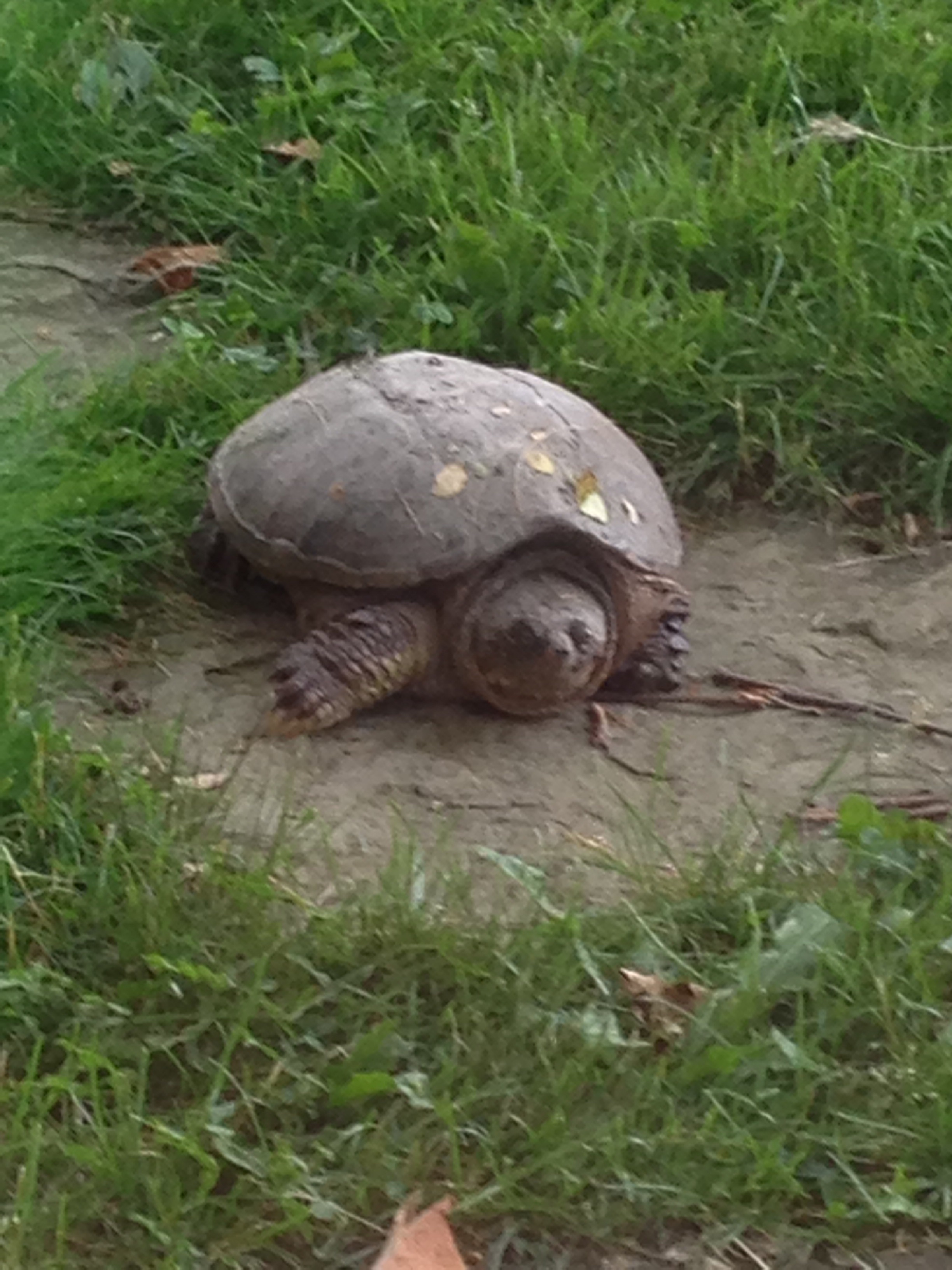
Just a few weeks ago I mentioned the opossum who knocked on our front door in the middle of the night. I didn’t get a snapshot of the possum, but I did get one of our latest front door visitor.


Chelydra Serpentina

Surprised? We certainly were. Just for the record, the closest body of water to the cottage is a very small ephemeral spring pond covered in green slime, even in the spring, about 600 yards down the hill. Through brush, briars, and scrubby bushes, which, in all likelihood matters not to a turtle. But still, it seems very far away.


She spent the day in the yard, as Mr. H.C. said, Just chillin’. I thought perhaps she’d been hit by a car; her shell didn’t look all that new or shiny. There were actually quite a few nicks and dents, but neither of us tried to get too close. We made sure the cat spent the day inside.

Then as we were eating dinner, she thought to come a little closer. Perhaps she liked the smell of cooked chicken? Mr. H.C. threw her some apple slices, which she disdained. We left by the door on the other side of the yard, and when we returned two hours later, she was gone.

We don’t really know that she was a she-turtle; however, our research implied that female snapping turtles range far and wide from mid-May to mid-June looking for suitable egg-laying spots. Wikipedia says it is quite common to find them far away from water — the females especially are looking for a sandy spot for easy digging. Sadly, she is also far away from any sandy soil here in the land of Greene County clay. Perhaps if she finds that little watering hole, the woodsy litter around it will be good for depositing a clutch of snapping turtle eggs.
There’s a wonderful African Anansi story (Anansi and the Turtle) which I used to tell to during story times: Turtle came to eat at Anansi’s house and he wouldn’t let her in because her feet were muddy. So she lumbered down to the stream to wash them, but by the time she got back to Anansi’s house her feet were muddy again. Yes, her feet definitely don’t look clean enough to come in the house. Hmmm… this sounds like it might be a story post with photos for some other time….
The Catalpa Forest

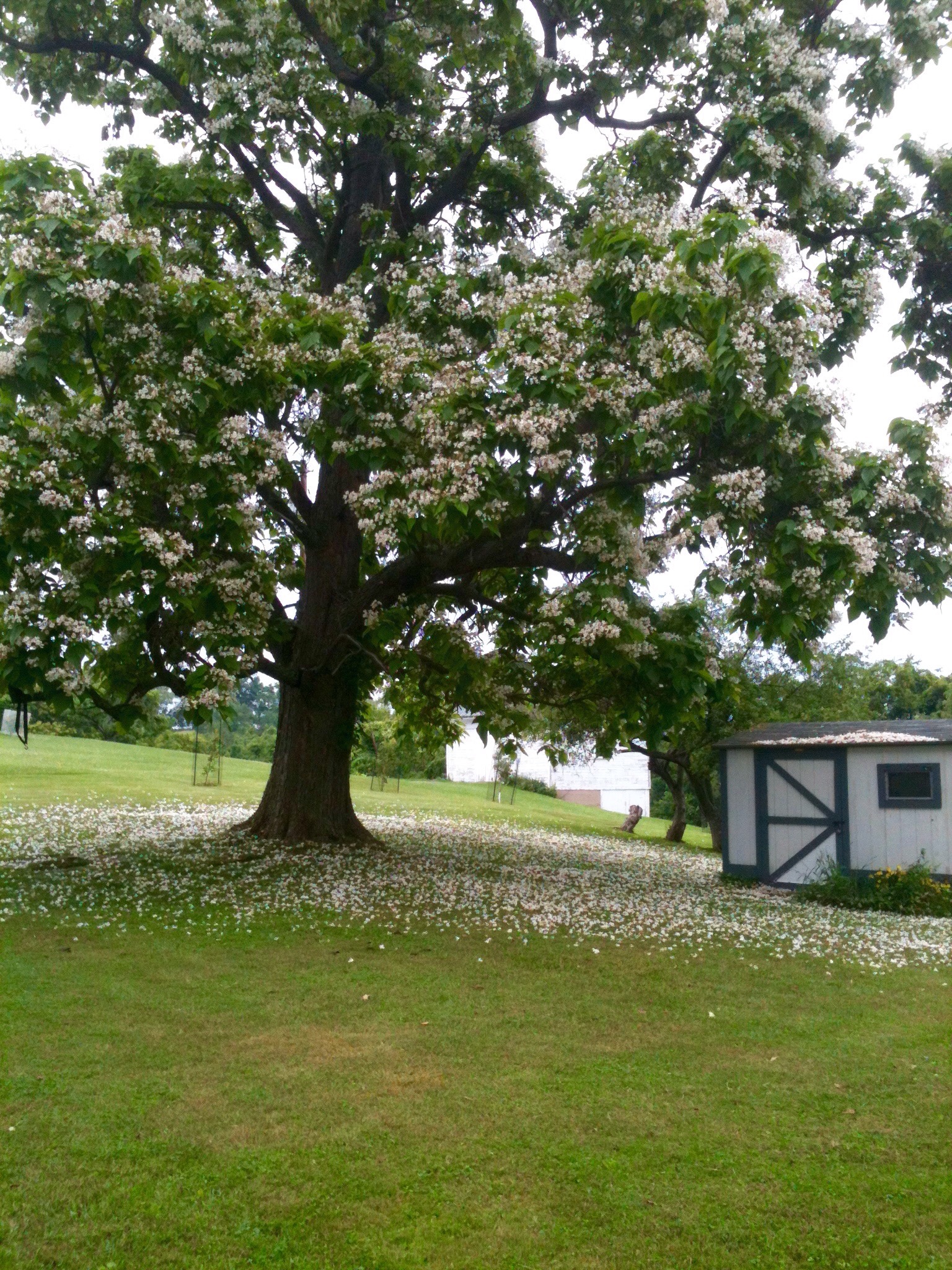
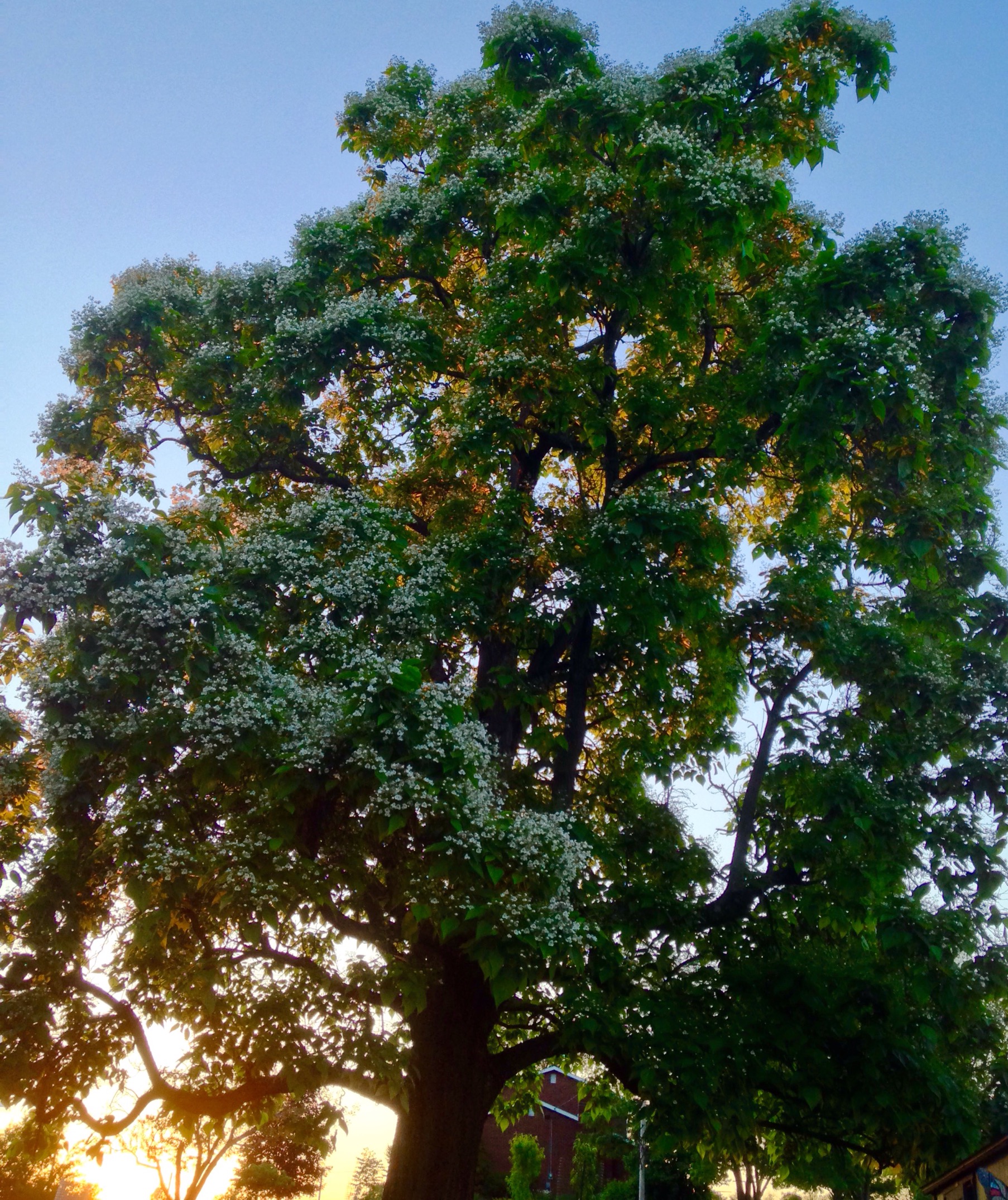
the catalpa tree in the side yard
Dominates.
catalpa tree and sunset
A late bloomer,
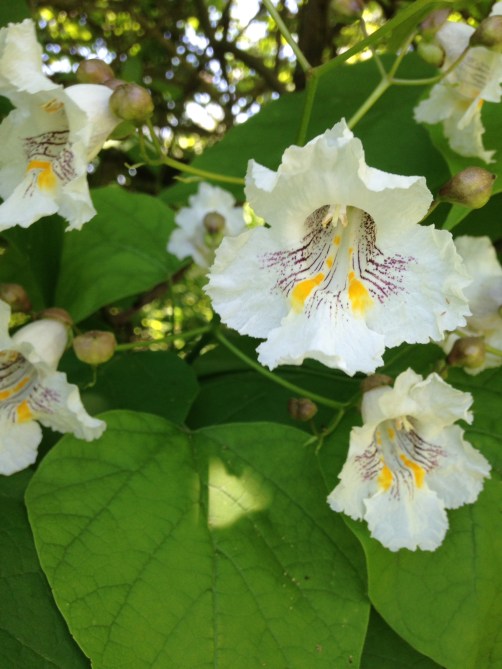
She wears lace in June
on her sunlit green dress


Luxuriously, she gives with abandon all she has —
blossoms, twigs, branches, seeds, leaves…

The birds and the wind
deposit her bean pod necklaces
far away at the grassy edge of the hillside. 


Every spring there is a new little tree.
Or three.
The catalpa forest grows
and the wind is sweet with the orchid blooms.

Her waist is not small nor dainty,
Eleven feet around,
No arms could encircle her.

Green lichen covers her bark,
And winter shows her true form
of gnarled, aged branches.

Birds and bees love her,
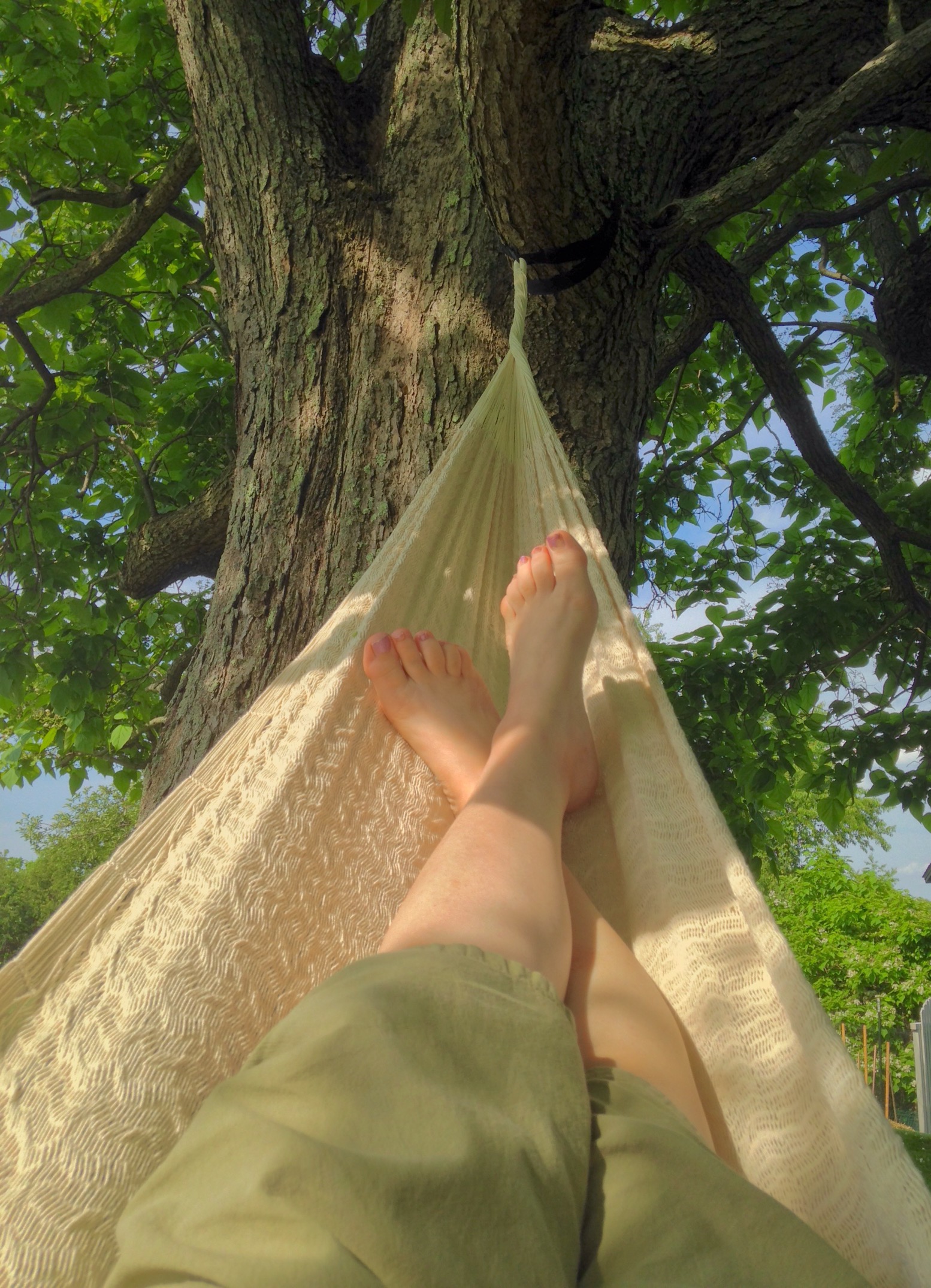
and so does the hammock.

The view is unforgettable
on a June Sunday afternoon.
Birdsong and breeze and the billowy green
bring gentle rest to the needy soul.

Reblogged this from June a couple of years ago….

The Road Winds Around

The Road Winds Around

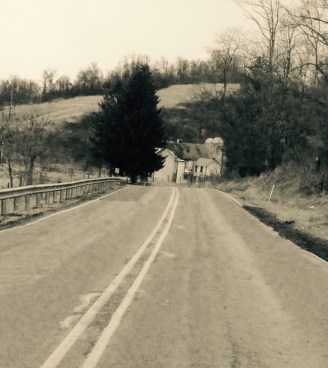
The road winds around through time —
a gray concrete ribbon now,
edged with yellow and white lines.
But before now, then,
then there was a land between two rivers —
inhospitable high forested hills–
stopped the glacier eons ago.
The narrow lands in the valleys curve around the next hill;
the banks of the meandering stream
that connects the two rivers
are the only flat lands
until Ohio.

Deer and bear and Native Iroquois carved out the first path —
the leaves and dirt compacted and hardened by the feet of
animals, wild and domestic; people, wild and domestic.
The route was never chosen, never drawn on paper;
it just became.
Horses picked the easiest way up the high hill;
moccasins chose the slowest curve for walking downhill;
wagons took the flattest way along the stream’s flood plain.
And year after year, as the trees grew and changed colors and dropped their leaves,
the path grew and changed
into a road.

As the road grew wider and harder,
an inn appeared on a long slow curve, where water was plentiful.
The land was flat and spacious for carriages and wagons and horses.
At thirty miles between the towns,
it was a pleasant stopping point between two arduous rides.
Farms dotted the road in between the ridges and woodlands;
sheep proliferated on the hilltops,
cows lived in the narrow valleys
where barns were wedged
between the hills.

Even the industrial era —
coal mines and the discovery of oil —
did not bring more traffic to the hills and curves of the road.
Rather, the oil barons and the coal companies used barges
to float the precious cargo
up and down the rivers to Pittsburgh.
When barges no longer sufficed,
railroads were built on the flat river banks
for the transport
of black rock and black gold.

The surroundings were home
to coal, oil, and gravel,
and the road was macadam,
until Mr. Ford’s Folly was assured.
In 1935, workless men were put to work
laying asphalt over the macadam;
the steam engines and rollers puffing and belching
to get to the top of the hills with picturesque names:
Tin Can Hill, Clearcut Ridge, McFeeter’s Knob,
String Bean Bluff…

The inn, vacant for years, burned to the ground in the thirties,
and a small filling station took its place.
The flood plain by the creek held picnic tables
for families traveling in their new cars.
Family farms were handed down to the next generation of farmers,
never wealthy, but never hungry;
self-reliant but good neighbors;
taciturn, but full of life;
independent, but willing to serve.

And then the era of speed flashed
upon the road–
a lightning bolt in a summer storm.
The Pennsylvania Turnpike,
the first high-speed road of its kind,
opened for business in 1940,
and moved those cars and trucks
across the Blue Ridge Mountains,
linking Philadelphia, Harrisburg, and Pittsburgh.
Seven abandoned railroad tunnels were used for going, not over,
but through those mountains.
Cars and trucks traveling ever faster,
left hills and curves behind in favor of straight, wide, and flat.

There was no straight, wide, or flat
on the road between two rivers.
No.
The road winds around
between hills, valleys, trees and farms,
and is left in the dust of the modern world of speed,
instant indulgence, and time saved.
Those who have chosen that mostly peaceful life
are mostly happy with their choice.
The restless have moved on;
the educated children have moved away
to bigger cities, better jobs, faster lives.
The straight, wide, flat roads bring them home to visit,
only to leave again and again.
Those who stay have chosen place over pace,
paucity over plenty,
peace over prosperity,
people over public.

But some stay who haven’t chosen. Poverty limits them, lack of education limits them, the hills limit them.

Just as the hills keep away hurry,
the hills isolate and divide
those who stay on purpose
and those who are left
in the dust.

The road winds around through time,
telling its story to those
who will take the time
to listen.

IMG_1559


This is actually taken from a novel I’m writing. I’d be glad for comments.