This is part 6 of several posts discussing Richard Foster’s chapter on Simplicity in Celebration of Discipline.
We bought a galvanized wash tub the other day to use next to the washer we are installing. (Well, Mr. H.C. is installing it; I’m not the plumber!) An old-fashioned galvanized tub seemed to fit the cottage better than the cheap plastic ones that sell at the Big Box stores. UPS delivered the tub last Monday, and I put it together in the front yard.  It came from Pigeon Mountain Trading Company in Georgia, but it was made in Mexico. And my question is: If I buy a galvanized tub made in Mexico, am I supporting some poor person who is working at his own business to support his family, or am I making him/her work in a dangerous factory with molten metal and lousy working conditions? Am I giving some person in need of a job welcome employment, or is it a low-paying job that doesn’t provide for a decent living?*
Yes, this is another “stuff” post that is hard to write, hard to live…
Foster’s ninth rule of practical simplicity reads: 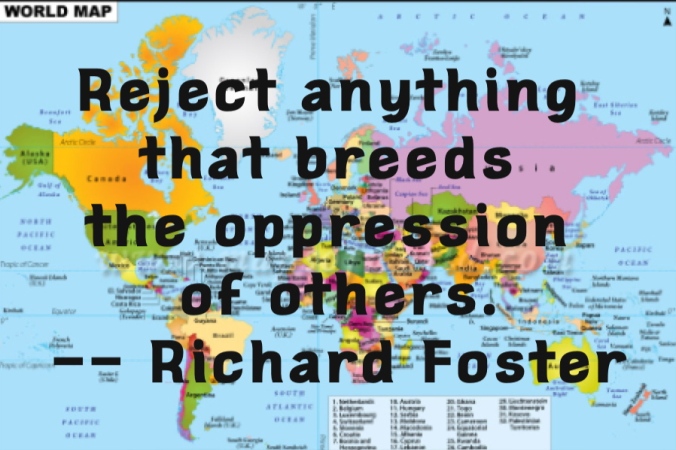 Richard Foster’s chapter on Simplicity from Celebration of Discipline is not easy. It has stuck with me, and made me consider many of my actions and the way I live as a wealthy American. No, we won’t ever make the Forbes list of billionaires, but we have houses, cars, and too much stuff, plus some money in the bank. If a family of four makes $40,000 a year (after taxes) they are in the richest 15% of the world’s population. To discover just how rich you are on a world wealth scale, you can go to this site Giving What We Can. (I’m not necessarily recommending their charities, but the money information was very personal and interesting.)
And not only do I have more wealth than most people in the world, the stuff I buy might be contributing to someone else’s oppression…
 Also within the last two weeks, I purchased a new pair of jeans at Ann Taylor Loft and the same questions apply: Were they made in one of those clothing factories that caught fire or collapsed? Or if not those, another sweatshop in another poor country? We live in a world of instant information, but how do we find this out?
I have a closet full of cheap clothes, and I’m not sure that expensive clothes aren’t made side by side with the cheap stuff in the same sweat shops. I’m struggling with this because I don’t think there is one right answer. Government regulations and unions made the industry disappear from this country, and there will always be a poorer country and an unscrupulous owner to exploit the laborers, whether it be in Bangladesh, Haiti, or Malawi. But it troubles me that I might have encouraged it. Richard Foster writes,
“This is one of the most difficult and sensitive issues for us to face, but face it we must. Do we sip our coffee and eat our bananas at the expense of exploiting Latin American peasants? In a world of limited resources, does our lust for wealth mean the poverty of others?…”
One person can’t change the world. But I can be informed. And I can spend my dollars in a way that I feel comfortable. If you are still reading, you have probably thought about this lately as well. So may I humbly suggest:
- Buy Used or Local — consignment shops and re-sale stores have great clothes and at good prices… Buy presents at local craft stores, Etsy, art festivals… (And beware of historic looking items that are reproductions made in China…) Buy your food at local farmer’s markets — especially in the summer.
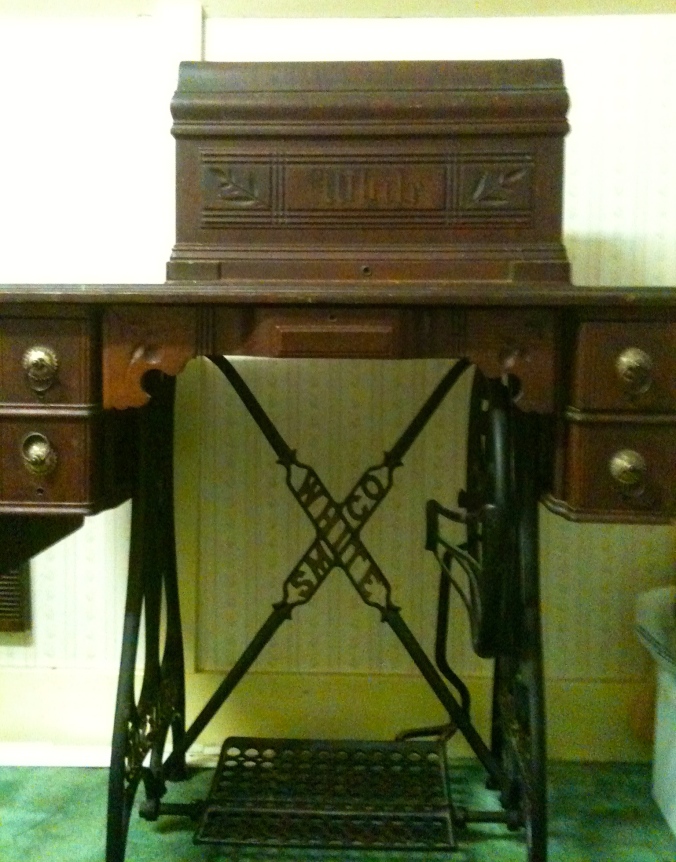
- Learn to Sew or make it yourself– don’t let that sewing machine sit lost under clutter. (See Post 70. Sew What?) (Although I have a concern as to where textiles are made as well…) But let’s not stop at clothing — laundry soap, face creams, deodorants, simple cleansers — they are better for you and better for the environment.
- Buy American — Just in the past few days, I have found these two websites: Made in America and Made in USA Forever. Several days ago, I bought shower curtain rings at Big Lots (12 for $1.99.) They were made in China. All the shower curtain rings in the store were made in China.
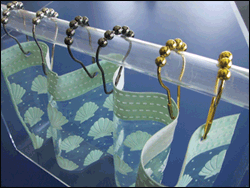 When I googled Made in America Shower Curtain Rings I found these metal shower curtain rings, made in the good old USA for 14.95. This has the added benefit of helping OUR economy! And this leads me to the next suggestion,
 - Stay Out of Dollar Stores — Unless you are buying paper towels, there’s probably not much inside that is made by someone who is given a fair wage.

- Buy Fair Trade items — Coffee and chocolate are labeled clearly Fair Trade; Ten Thousand Villages has a fair trade policy; many ministries and non-profits support honest wages, cooperatives, and people who are learning a skill.
- Demand that corporations be transparent about where and how their goods are made. (I’m composing my letter to Ann Taylor right now! I know it won’t do any good, but what if a thousand of us threatened to not shop at a clothing store until their manufacturing practices are more transparent?)
- Do Without — This is the land of stuff; just look at what we waste. Think about your purchases. Do you really need that new cell phone (Apple has recently come under fire for the conditions of their manufacturing plants as well…), that new tool, those new shoes, that new cooking gadget?
Today is July 1st. I challenge you to 31 days of making sure what you buy is NOT breaking the back of someone else. I will be writing down my purchases (including food) this month and where they were manufactured. And I’ll let you know how well I’ve succeeded–or failed– in a month or so. No guarantees — I’m as guilty as all of US. And I know that buying this way is more expensive, and it doesn’t make me happy. So what do you think? Are you willing to spend 11.99 on a t-shirt made in America (Organic all-cotton!) as opposed to a $2.99 t-shirt from Joe Fresh that broke the back of someone in Bangladesh?**
*The average hourly rate for a factory worker in Mexico in 2011 was $2.50/hour. Although according to this article by the Brookings Institute, wages in Mexico are rising and manufacturing there is benefitting from close proximity to the United States.
**And just to be clear, I am not against a global economy; I realize that buying American is not the answer for everything; but buying locally has the added benefit of keeping your dollars in your own community… And that’s a good thing.

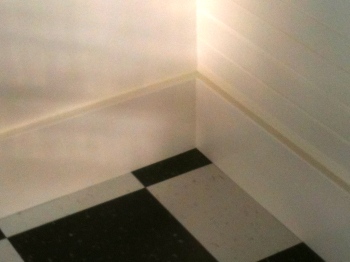
 We’ve got some baseboard in finally — no more ugly gray plaster lines! And notice the crown moulding. I only have one thing to say about that. If your husband is doing it, keep out of his way and keep your mouth shut. Okay, that’s two things, I know…