144. Squashed, but not defeated

Is there any squash with better flavor than butternut?

It’s the only winter squash I’ve ever grown, because, really, why grow anything else?

The groundhogs like it too. groundhog chewed squash

This summer, from four hills of squash, we grew 24 lovely butternuts. And seemingly overnight the groundhog took one or two bites out of half of them. When I discovered the treachery, I covered the garden plot with fencing, just casually thrown over the plants. It seemed to work, and the twelve unblemished squash remained perfect. They are currently curing in the side yard with some early onions.

But that left twelve of these beauties that couldn’t just be stored for fall.

I’ve been trying to can rather than freeze, because our freezer is full, and there’s not much room for anything extra. So I found this website from the University of Minnesota that recommends canning cubes of squash or pumpkin for 90 minutes (quarts) in a pressure canner.

Yes, I had just purchased a lovely made in USA granite-ware pressure canner; and I had two loads of green beans under my belt. I was ready for the 90-minute ordeal…

butternut squashI peeled and chopped and steamed twelve butternut squash, just cutting out the groundhog bites — they were only skin deep, mostly — although there was one that he had obviously had for salad, dinner, and dessert. I only got half of that one…

I wish I had taken a picture of those lovely five quarts of squash for you.

But sixty minutes into the process, I could smell burnt squash. Not good.

I turned off the heat, waited until the pressure dropped, and opened the lid. The water in the canner was gone; it had boiled or steamed or vaporized away…

So now I had five beautiful quarts of squash, just waiting to be botulized.

I let them cool, and the next morning drained all the cubes of semi-canned squash into my big colander, smashed and squashed the squash into puree and put it into bags for the over-crowded freezer.

squash for the freezer

The El Cheapo Method for vacuum packing: Zip the bags most of the way closed, insert a straw just a little way inside and suck the air out of the bag. Zip it shut quickly while pulling out the straw.

Yes, I only got three bags, because I MADE A PIE with the other two cups. We ate it so fast I didn’t get a picture of the pie either. But here you can see the gorgeous orange of fresh squash. We had some for dinner that night as well. It was the most delicious squash we’d ever eaten — picked that day.

My pie recipe was just a regular pumpkin pie recipe using the squash instead — though I do highly recommend the addition of cardamom with the spices. Instead I give you three! yes, three! simple recipes for that delicious butternut squash you are going to buy at your local farmer’s market soon.

Recipes for butternut squash:

Roasted Butternut Bites

Squash bites

Peel squash and cut into cubes. Discard seeds. Toss with olive oil, sea salt, pepper, and balsamic vinegar, and roast in the oven at 425 for 30 minutes, turning the cubes with a spatula every ten minutes. Squash candy…

Fall Butternut Casserole
  • 1 large butternut squash
  • 2 medium onions
  • 2 eggs
  • Fresh nutmeg and thyme to taste
  • 1 c. grated sharp cheese
  • panko or roughly chopped pumpkin seeds for topping, optional

Halve a large butternut squash, and scoop out the seeds. Brush with olive oil and place face down on a cookie sheet and pierce skin with a fork several times. Bake at 350 for 45 minutes or so, until squash is tender. Let it cool.

While the squash is cooling, chop two onions and sauté them in a skillet with olive oil or butter. Add some herbs — thyme is good, and freshly grated nutmeg. Beat two eggs in a bowl, add the onions and herbs and a cup of grated sharp cheese. Salt and pepper to taste, and pour into a greased casserole dish. If you like, you can cover the casserole with panko crumbs. (Another optional topping is roughly chopped pumpkin seeds.) Bake at 350 for 40 minutes.

Squashed Date treats

I have to say I’ve been meaning to make these for months, and I’ve just put it off, so I made a batch finally — especially for this post  (and Mr. H.C. needed a treat for his lunch tomorrow) And yes, I’m sorry I put these little treats off for so long. Yummy and healthy, and a quick little snack — with NO ADDED SUGAR! All told, it took about 20 minutes. I found this recipe on Paleo Grubs, but I changed it up a bit.)
toasted pumpkin seeds Toast 1/2 c. nuts — pecans, walnuts, cashews, or pumpkin seeds and grind them small. I left mine a little chunky because that’s the way I like them.

Soak 1 c. pitted dates in just a little hot water for 10 minutes, so they get soft, and then drain them.

Puree or mash 1/3 c. squash (I had canned pumpkin in my cupboard expressly for this recipe, but why open a can when you’ve got fresh squash?)

Put these three ingredients in your blender or food processor. Add 2 t. vanilla, 1 t. cinnamon, 1/2 t. freshly grated nutmeg and 1/4 t. ground cardamom and a pinch of sea salt. Pulse until the dates are chopped up to your liking. I added a little bit of the sweet date water to help; if you have a food processor, you might not have to do that.

doughScrape your blended mass into a bowl; add 1/4 c. unsweetened coconut flakes, and stir. Roll into one inch diameter balls. Refrigerate for 30 minutes if your dough is too soft to roll. Mine wasn’t. Now you could roll the balls in the coconut if you wanted. It might make them less sticky to eat. I would have gotten 12 balls if I hadn’t been so eagerly testing them to make sure the spices were correct. :-) Store them in your fridge, if you have them that long…

Mr. H.C. gave them a thumbs-up.squashed date treats

143. All the Gray Is Gone…

Just when I think I’m going to post about the new back porch that is finished just in time for September (it’s not);

Or the new door that we’ve found to replace sliding glass door #3 (we haven’t);

Mr. H.C. surprises me by saying, “Let’s do the front of the house.”

He must have read my post a month or so ago, when I listed all the projects that need to occur for the front of the house to look good better. (See post 136.)

New windowsThis is the cottage up until two days ago. (Uhmmm — the way it’s looked for the last two years. Just let me say that the front looks WAY better than the back.) So with the red brick, the faded blue gray cedar shakes, and the white clapboard siding, there was just way too much going on. Sort of a stripey effect, don’t you think?

I’m actually favoring the colors of white, red, and gray; but in a google image search for “white cottage red trim” this is the first image that showed up:

old_kurtz_house
Please pardon me, if this is your house, but it’s not at all what I have in mind for the cottage. Though it does look about like the color of red that is our back porch — Segovia Red — this color right here:

Back porch rails and ceiling, newly painted

Back porch rails and ceiling, newly painted

The back porch color can be seen from both sides of the house as one drives down (or up) the road. So it counts.

I always thought when we did the exterior of the cottage, that we would try to emulate what it looked like in the forties; but we can’t really.

Back then it was white with forties green trim.

The roof was green, now it’s gray, and it will stay that color when we put on the new roof (next year?).

There was not a red back porch.

And there was no brick on the front. I’ve looked at photos of white houses with dark green and red trim, and no, I don’t want a Christmas house.

Here’s what we have now:

apple hill cottage, newly painted

Neither of us are used to seeing it without the gray. Mr. H.C. thinks it might be too much white. I was originally thinking of whitewashing the brick, but now I’m thinking yes, that might be too much white…

The sliding glass doors will be replaced sometime before winter with doors that look something like this:

IMG_6391

There hasn’t been an interactive post on this blog for awhile, so here is your chance:

  1. Should we paint the brick? If so, what color of gray? :-) (Maybe if we paint the doors red, it will tie in the brick color?
  2. What about door colors? Both front doors can be painted. (Keep in mind that the back porch is Segovia Red, and one can see the porch from both sides of the house.)
  3. What do you think about shutters? Mr. H.C. brought that up the other day, just as I had been thinking about them too. But I have an aversion to shutters that don’t fit the windows, and that’s a 3-window series there in the front… I’m thinking more along the lines of flower boxes under those 3 front windows. What do you think — flower boxes or shutters or neither?

I’d like to hear your thoughts, dear readers. Of course, then we’ll do what we want anyway — whatever that might be…

Here are some more shots to get you thinking…

142. Skip the Cleaning Aisle: DIY easy green clean recipes

Earlier this summer several of us were cleaning a commercial kitchen at a children’s camp before camp started for the summer.

There was a lot of grease… everywhere.

My friend Joey introduced me to her recipe for an all-purpose cleaner that cuts grease better than the expensive, commercial, stinky stuff that contains “who knows what unpronounceable ingredients.”

I had been using a natural cleanser of my own — orange vinegar, sometimes with baking soda — which I like a lot, but this one is way better! I liked it so much, I went to the dollar store and bought my own clean spray bottle for it, instead of just using a hand-me-down bottle.

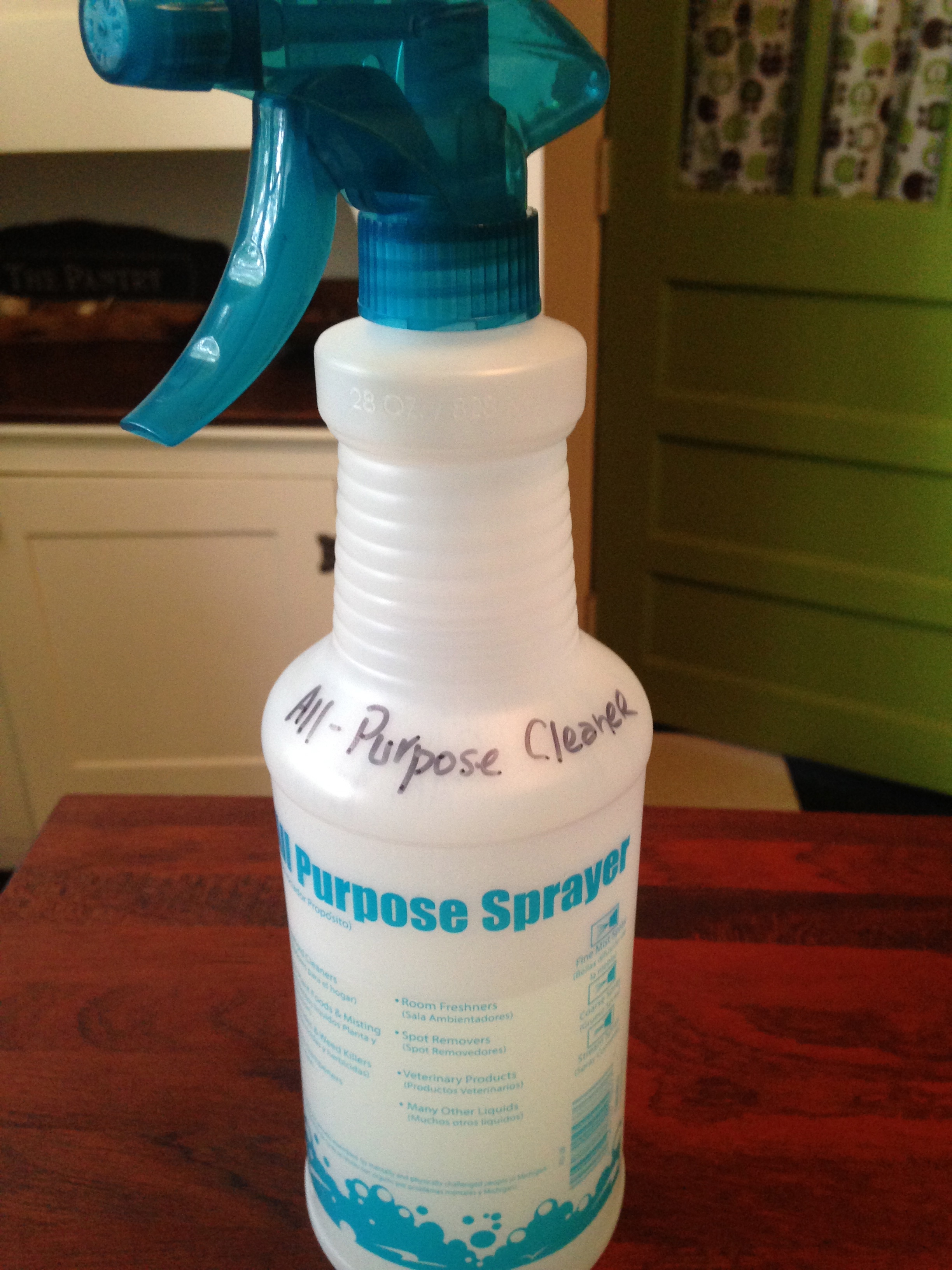
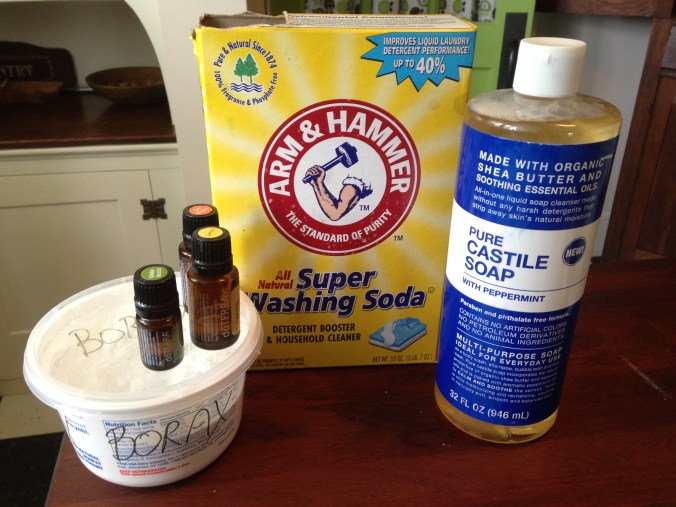
All purpose cleanerAll-Purpose Cleaner and Degreaser:

  • 1 teaspoon washing soda (not baking soda)
  • 2 teaspoons Borax
  • 1 teaspoon Castile liquid soap
  • 2 cups hot water
  • 10 – 15 drops essential oil (Good oils for cleaning use are cinnamon, lemon, orange, melaleuca, peppermint, and lavender.)

Mix all the ingredients and pour into a 16 ounce spray bottle, and get to work on that greasy stove top.

Green cleaning

Dishwasher Detergent

I’ve been using a green cleaner in my dishwasher, but I really don’t like it much. The glasses are cloudy when they come out, and the silverware doesn’t always get clean, even though I rinse my dishes in hot water before I load the dishwasher. I know it’s a waste of water, but I don’t want food collecting in the bottom of my dishwasher. And that’s the bottom line.

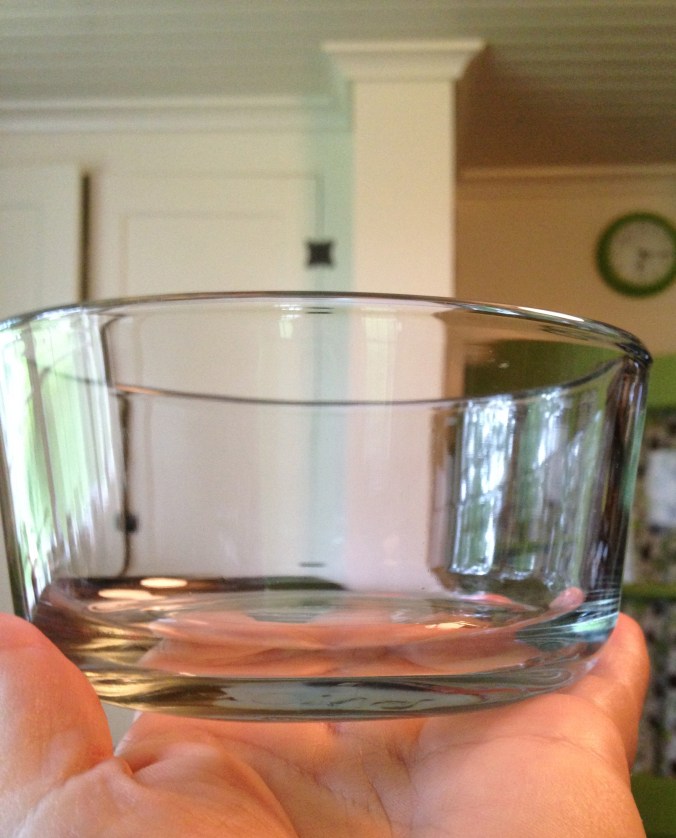
So I was delighted when I found this oh-so-simple recipe for dishwasher soap. I remember reading that homemade dishwasher soap was an issue, because Mother-in-Laws come to your house and inspect your glasses for spots. Well, guess what? This is a mother-in-law proof recipe! Here’s my glass bowl, fresh out of the rinse cycle.

IMG_6190

Dishwasher Detergent:

  • One part Borax
  • One part washing soda
  • White vinegar in the rinse-aid compartment

We have city water and I’ve used washing soda with great success. I have also heard that citric acid is a great addition to the rinse aid compartment if you have sediment on your plastic ware. But even the commercial dishwashing detergents leave sediment on my plastic stuff, and that’s just one more reason for getting rid of your plastic stuff. If you have citric acid, by all means try some with the vinegar. I was so astounded at how well this worked that I’m not going to bother with it. (If you are someone who wants research behind this, you can go to the blog post “10 things you should know before making homemade dishwasher detergent” by Little House in the Suburbs. Or you can just make this recipe, and be amazed that it’s so simple, and it works so well. Now if only I could discover a shampoo that is so simple and works so well…

Disinfectant

And here’s one more cleaner I love to spray on my countertops — both wood and soapstone. It is also a disinfectant, so it’s good for sinks and toilets too. And it is reputed to keep ants away. I can’t say about this for sure. What I can say is that it might work. I sprayed around Henry the Cat’s food bowl when I started seeing ants there, and now the ants are gone. But I’m also being careful to keep it cleaner and his food swept up better. Not only is he the King of Cats, he is the King of Slobs when it comes to the food bowl department.

Cinnamon Disinfectant:

  • 12 oz. hydrogen peroxide
  • 1 teaspoon cinnamon oil

Mix together in a spray bottle and shake well before every use. I use a bottle that has a mister option, and I love this cleaner for two reasons: the cinnamon in it smells terrific, and the peroxide in it foams up on contact with dirt, so you can tell it’s working. Use an opaque spray bottle — there’s a reason peroxide is sold in brown bottles. It’s a great addition to your green cleaning supplies. Use it as a disinfectant, on your tile grout, on your floors, or as a bleach replacement in your laundry. I’ve even poured it down our bathroom sink drain. Here’s a great article about using hydrogen peroxide as a cleaning tool.

But I’m not giving up on my orange vinegar — it’s the best on a linoleum floor.