And here are the last seven eight — I hope you’ve been reading and enjoying…

Sidney and Norman by Phil Vischer; illustrations by Justin Gerard.
Phil Vischer is the creative genius behind Veggie Tales; Justin Gerard’s wonderful illustrations glow, and together they have written just about the perfect picture book for Christian parents and teachers to read to their kids. The two pigs are as different as can be: Norman is the perfect pig; Sidney has trouble getting out of bed in the morning. Norman always did well in school and has a good job; Sidney spent many hours in the principal’s office, and he fears his boss now doesn’t like him much either. They are neighbors, though they rarely meet until one day God invites both of them to meet him on Tuesday at noon on Elm Street… Regardless of which pig you identify with, or your child identifies with, God has something interesting to tell them both. Think of it as a modern day Prodigal Pig Parable. Vischer has written a winner–with not only a message, but style, heart, and two darn cute pigs. Ages 5-Adult
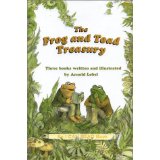
The Frog and Toad Treasury by Arnold Lobel
The Frog and Toad series (along with the Little Bear books by Else Holme Minarik) helped change the style of beginning books for children to read for themselves. First published in 1970, Frog and Toad Are Friends was an instant hit. The two friends are as opposite as Sidney and Norman (see above) and they don’t always get along. They disagree, they hop off in disgust, they do and say embarrassing and wrong things; but at the end of the day, they are still best friends. Each story is an understated golden lesson in friendship that children everyone need(s) to hear. They need to hear that it isn’t always easy to be a friend, that sometimes we mess up, and that we need to be kind. And that we all need forgiveness and we all need to forgive. The frog and the toad couldn’t be more human. Ages 3-7 to be read to; Ages 5-8 for reading alone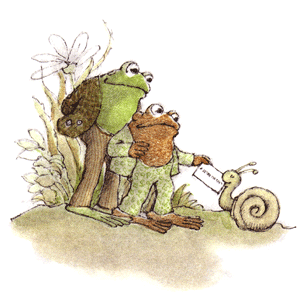 Buy the Treasury — it includes Frog and Toad Are Friends, Frog and Toad Together, and Frog and Toad All Year. (There is one more that is missing in this trilogy — Days with Frog and Toad, published in 1979.) These are technically Beginning Readers, so your first grader will be able to read it, but for goodness sake, sit down and read it with them. You don’t want to miss these great stories and wonderful discussion starters.
(Note: The James Marshall books about the hippo friends George and Martha were originally on this list as well. But as I read and reread the list, I just felt that these two “Old Classics” shouldn’t both be on the list. So if you love Frog and Toad, make sure you check out the George and Martha series too.
 Ox-cart Man by Donald Hall; illustrations by Barbara Cooney.
Barbara Cooney’s delicate primitive style illustrations are part of why Ox-cart Man made this list. It was a tough call between this book and Cooney’s own Miss Rumphius. But ultimately I think I chose this one because I love what it represents. On a long-ago New England farm, the family spends the year making what they need and being self-sufficient. Then in late fall, the father packs all the extras that they have made and grown that year into his ox-cart and walks many miles to the town of Portsmouth where he sells it all. Even the cart. Even the ox. With the money he makes, he buys what supplies they will need and small gifts that will please his wife and children. Then he walks back home, and the seasons of making begin again.
The rhythm of country life, satisfaction in craft, industriousness, and learning to make do with what you have — our modern American urbanized children need to hear this over and over. Ox-cart Man won the Caldecott for best picture book in 1979. Ages 5-8
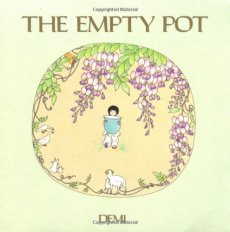 The Empty Pot by Demi
Ping is a child with a green thumb. The plants and flowers that he tends grow beautifully. The Emperor loves plants too, and when it comes time for him to choose an heir, he gives all the children seeds — with a stipulation: the one who comes back in a year’s time with the most beautiful flower will become emperor. Ping tends his seed every day (for a year!) but nothing grows. And when the day comes to take his empty pot to the emperor, all his friends walk by with the most gorgeous flowers ever growing from their pots…
This is a wonderful picture book on honesty rewarded. Who among us can’t recall a lie that we told as kids? There is no hidden message in this story. It is absolutely right out in the open, where no kid can fail to miss it. Yet it’s beautifully told (and illustrated). It’s a great story about doing the hard thing. Ages 5-Adult
 The Ant and the Elephant by Bill Peet.
Bill Peet has such an amazing body of work that it was difficult for me to choose my favorite. My children and I loved Farewell to Shady Glade (an ecological tale told from the animal’s point of view) and No Such Things (a hilarious book filled with crazy, made-up animals). But The Ant and the Elephant is the classic story of the large and the small, with the ant saving the life of the elephant. Kids love it!
This book is filled with other gentle lessons as well. The elephant goes through his day fixing the lives of other animals who have gotten in trouble. None of them are grateful; in fact, this book might be filled with some of the orneriest critters ever drawn. But by the end of the day, the elephant is feeling pretty smug and self-satisfied for helping everyone — and sure enough — then he gets into trouble! Ant comes to the rescue, and all ends well.
Peet was an early illustrator with Disney Studios, and his illustrations are done entirely in colored pencil. They are amazing! (Be sure to have a set of colored pencils handy for your child after reading this book). Ages 5-9
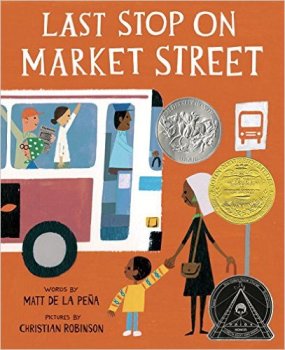
Last Stop on Market Street by Matt De La Pena; pictures by Christian Robinson.
I lied in one of the earlier posts.
I said all the other books in this list had been kid-tested. They had. Until I sat down in the book store the other day with this new book — Last Stop on Market Street. It just won the Newbery Award for 2016. There were several complaints from reviewers on Amazon — Newbery Awards are supposed to be thicker, meatier books for older children. The Newbery Award is given for Words; the Caldecott Award is given for Pictures. So, yes, picture books generally win the Caldecotts. But there are exceptions for exceptional books. And this is one. The pictures are lovely (it also won a Caldecott Honor award) but the words are spectacular. Listen: “She smiled and pointed to the sky. ‘Sometimes when you’re surrounded by dirt, CJ, you’re a better witness for what’s beautiful.'” Or this: “He wondered how his nana always found beautiful where he never even thought to look.”
CJ and his Nana have been to church, and now they are walking to the bus stop. CJ is full of childish complaints: why do we have to take the bus; why don’t we have a car; why can’t I have an iPod like they do… etc. etc. etc. Nana gently answers each question with patience and wisdom. Oh, that all children could have such a Nana… Ages 4+
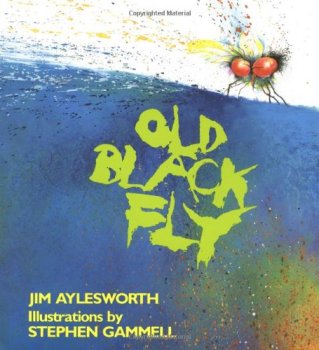
Old Black Fly by Jim Aylesworth; illustrations by Stephen Gammell
This is another book in the “funnest books ever to read aloud” category. It’s short. It’s exuberant. It rhymes. It’s an alphabet story. And the illustrations are perfect. (Stephen Gammell won a Caldecott Award for The Song and Dance Man — also a delightful read.)
Take a hot summer day and a pesky fly who bothers everyone — he even bothered the baby and made her cry. Shoo Fly, Shoo Fly, Shoo, Shoo, Shoo. So. Much. Fun. And it’s about a nasty old villainous fly. Who goes the way all pesky flies should go: Z-Z-Z-Z-Splat! (An alphabet book, remember?) Ages 2-6
And now I’ve come to Number 29…
I’ve dithered very much about this last book — some have come on the list and gone off the list at least three times… But now, there’s no hesitation. This might be the only book on this list that isn’t easily obtainable. I know because I don’t have it, and I can’t get it (unless I want to pay $150 for a new hardback copy.)
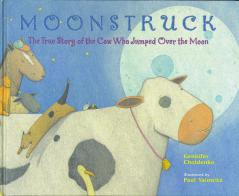 Moonstruck: the true story of the cow who jumped over the moon by Gennifer Choldenko; illustrated by Paul Yalowitz. (Paul Yalowitz also illustrated Somebody Loves You, Mr. Hatch — on Part 2 of this list.)
The horse narrates this satirically funny take on the cow who jumped over the moon. And he thinks Mother Goose did a terrible disservice to the cow by relegating her to just one line in the nursery rhyme. After all, it was no mean feat to jump over the moon! Especially a cow! As he notes, horses have been jumping over the moon for thousands of years, but horses are born to jump — cows are most certainly not jumpers. (Note: Your child needs to be familiar with nursery rhymes to get a lot of jokes in this book. But, ahem, all children should know nursery rhymes anyway… go get them one). These two are the best:

The Librarian’s 29 Favorite Picture Books…Part 3
Moonstruck is hilariously understated; it has great wordplay, funny puns, and a good lesson — if at first you don’t succeed, practice. And if you practice, practice, practice, you might just be able to jump over the moon! Even if you’re a cow. Ages 5-9

My worst fear in making these lists and writing these posts is that I will have forgotten one of my very favorites that I haven’t read for awhile and isn’t in my personal collection. Knowing how forgetful I am, it is bound to happen…
But there are also five books which didn’t make the cut — Honorable Mention, as it were — that I feel I just can’t leave off the list — no review, but they are wonderful just the same:
- The True Story of the Three Little Pigs by A Wolf (Jon Scieszka);
- Edward and the Pirates by David McPhail ;
- Borreguita and the Coyote by Verna Aardema ;
- Miss Rumphius by Barbara Cooney; and
- The Red Thread, an adoption fairy tale by Grace Lin.
I have also intentionally left off non-fiction and poetry. They might have their own lists later…
How about you? Do you have a favorite picture book of all time? Or twenty-nine?