The kitchen here at Apple Hill is a busy place these days. You know those days? When you are cooking, peeling, stirring, canning while in your yoga pants and t-shirt, and hoping desperately that no one just drops in to visit because 1. every pot in your kitchen is in use; 2. you surely don’t have time to take a break to talk to anyone; and 3. you were so busy getting into the kitchen that you might have forgotten to brush your teeth and you definitely didn’t comb your hair.
In between making tomato sauce, stewed tomatoes, applesauce, apple butter, and canning gingered pears, I made this most-delicious-apple-cake-in-the-world. I posted the plain recipe before in a post about walnuts, but the fancy version (without walnuts) is, perhaps, the very best recipe ever that you can make with apples. And we do apples right around here…

It goes by the humble name of Apple Pudding Cake. I know, not exactly exciting or gourmet sounding is it?
But this is the most luscious, caramel-ly, apple-ly, golden brown earthy goodness you will ever taste. And if you want to make it even more so, there is a simple warm caramel sauce that you can ladle over the cake that will just send you and your tasters over the moon. Or at least over your favorite apple tree.
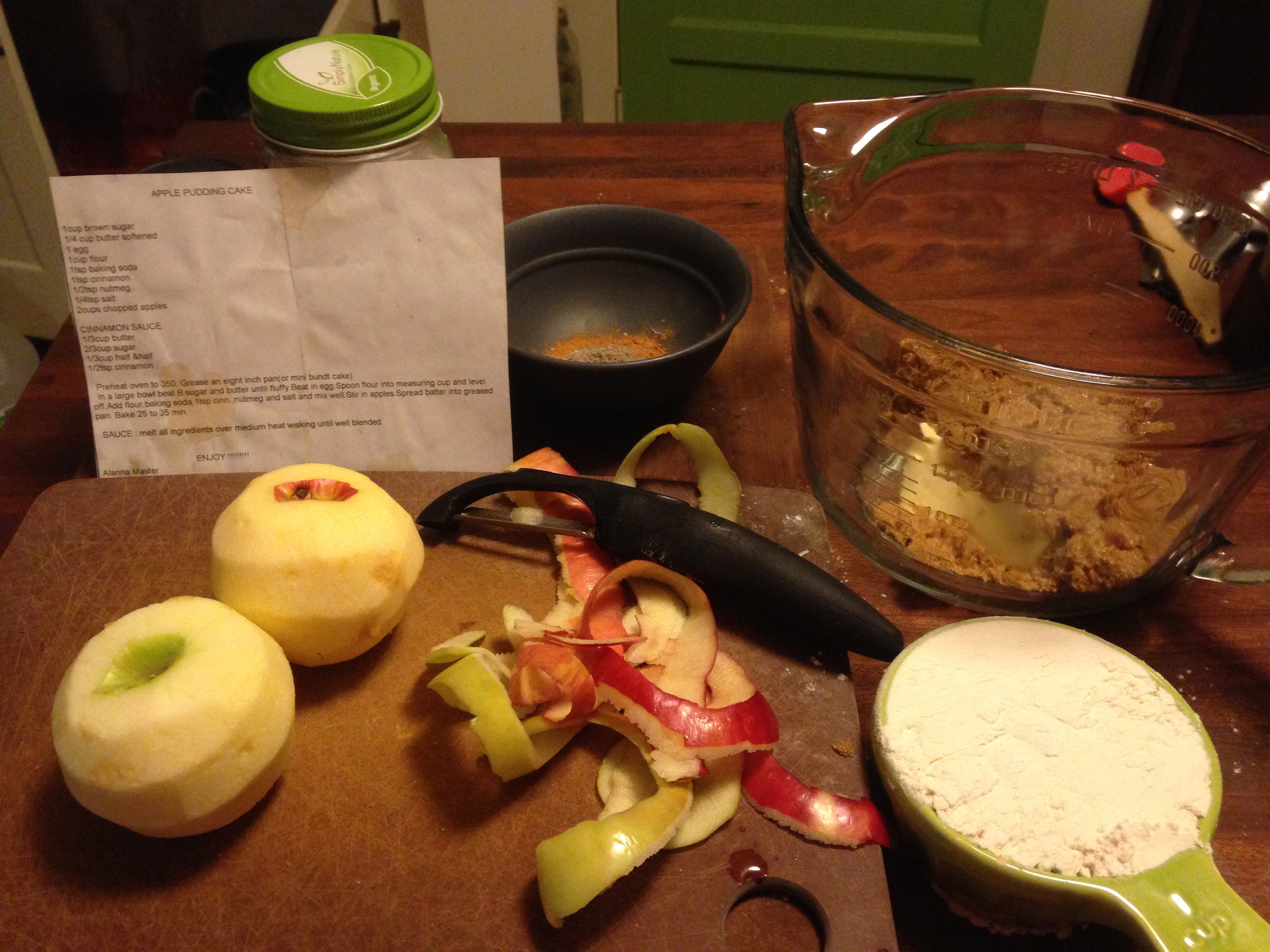
You can see how old and spill-covered the recipe is…
 And after a quick scan of the ingredients, you can also see how basic the ingredients are. Most likely they are sitting in your food pantry this very moment, just calling out to be made into this simple, simply amazing pudding cake.
Preheat your oven to 350 degrees, and butter an 8 inch square pan. (This recipe can be doubled for a 9×13 inch pan as well. If you double it, bake the cake for 50 minutes.)
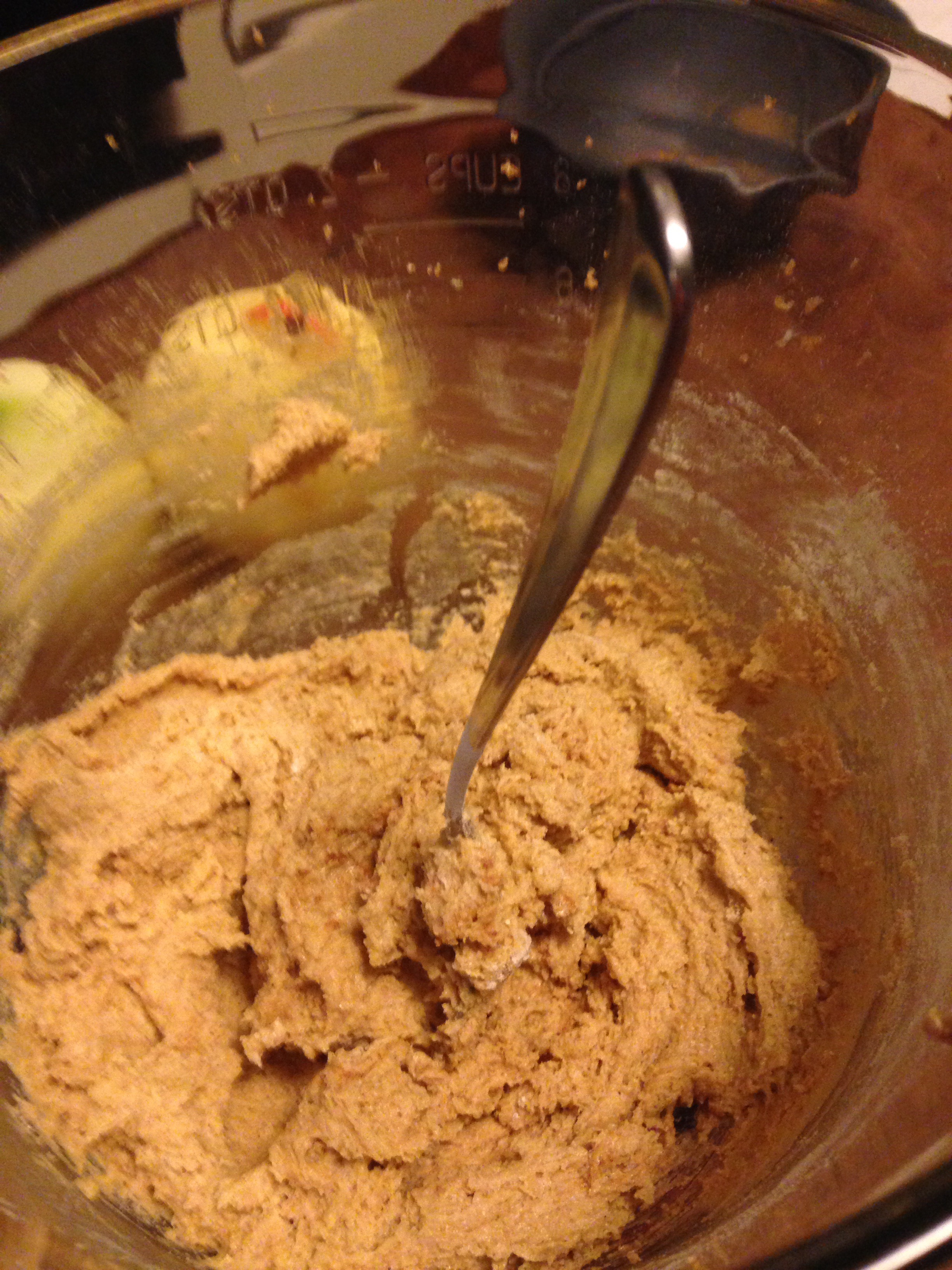 Beat 1 cup of brown sugar and 1/4 c. softened butter until well combined . Add one egg and beat until fluffy. Add the dry ingredients: 1 t. baking soda, 1 t. cinnamon, 1/2 t. freshly grated nutmeg, 1/4 t. salt, 1 c. unbleached white flour. Mix well. The batter will be thick — so thick a spoon will stand up easily in it. (If you are the type of person who likes spoonfuls of batter, try to control yourself — you still have to add the apples.)
Peel and chop apples to make two cups. Depending on the size of your apples, 2 or 3 is likely. I also like to mix and match the apples — you can see in the first photo I used a red apple (Jonathan) and a yellow/green apple (Grimes Golden). But really, just use what you have. I don’t think this dessert could possibly be ruined by using the wrong apple. Although I will say that if you are using a bland Red Delicious sort, you might want to zing them up slightly by squeezing half a lemon over them.

Do not skimp on the apples. As you are mixing them into the batter, it looks like quite a lot of apples, but they soften while baking, imparting to the cake its pudding-like consistency. Bake 25-35 minutes, depending on how gooey you like it. The brown crustiness on the top is amazing with the pudding-like texture inside. Do not overbake it…
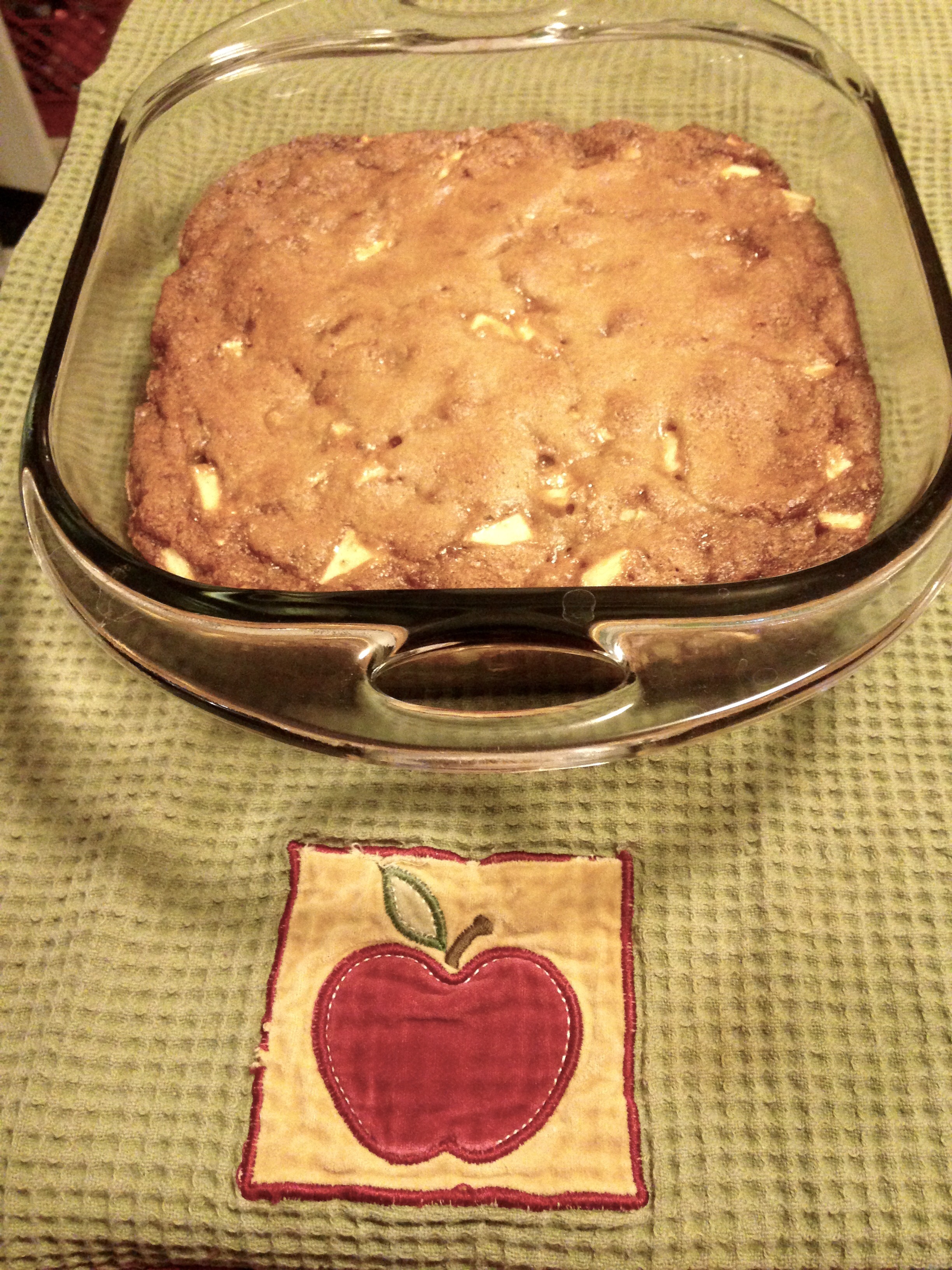
If you are reading the recipe card in the photo above, you will notice that it also suggests using mini-bundt pans. I tried this several times and had no success getting them out of the pans in any kind of decent shape. Maybe you will be better at that than I am, but I gave up and now just serve it as homely squares on a plate. When you make the caramel sauce to go over it, no one will care that it isn’t in some fancy shape.
 This recipe was given to me over ten years ago by a friend of the woman whose name is on the recipe card. Last year, at a church potluck supper, a new friend brought an apple cake. I commented to her how delicious it was and she brought me the recipe. It was the exact same recipe, except hers added walnuts and a teaspoon of baking powder as well. I’ve been making this cake without baking powder for ten years, but comparing hers and mine, I will tell you that if you add baking powder you might get more of a cake type outcome. And of course, should you care to add walnuts, feel free…
 To make the caramel sauce, melt 1/3 cup butter in a small pan. Add 2/3 cup sugar (I use 1/3 cup lightly packed brown sugar and 1/3 cup raw sugar) and stir until well-mixed and starting to bubble. Add 1/2 t. cinnamon and slowly add 1/3 cup half-and-half, whisking well. Let simmer over low heat until it is no longer sugar-y. Drizzle, ladle, or pour the warm sauce over individual squares of cake. This sauce guilds the lily. Truthfully, I only make the caramel sauce when I’m serving this for company (or taking pictures for a blog post) but the first time you make the cake, you should definitely have the sauce with it. You need to be able to make an accurate decision about when to make the sauce and when to have it just plain.
Plain or fancy — Which are you?
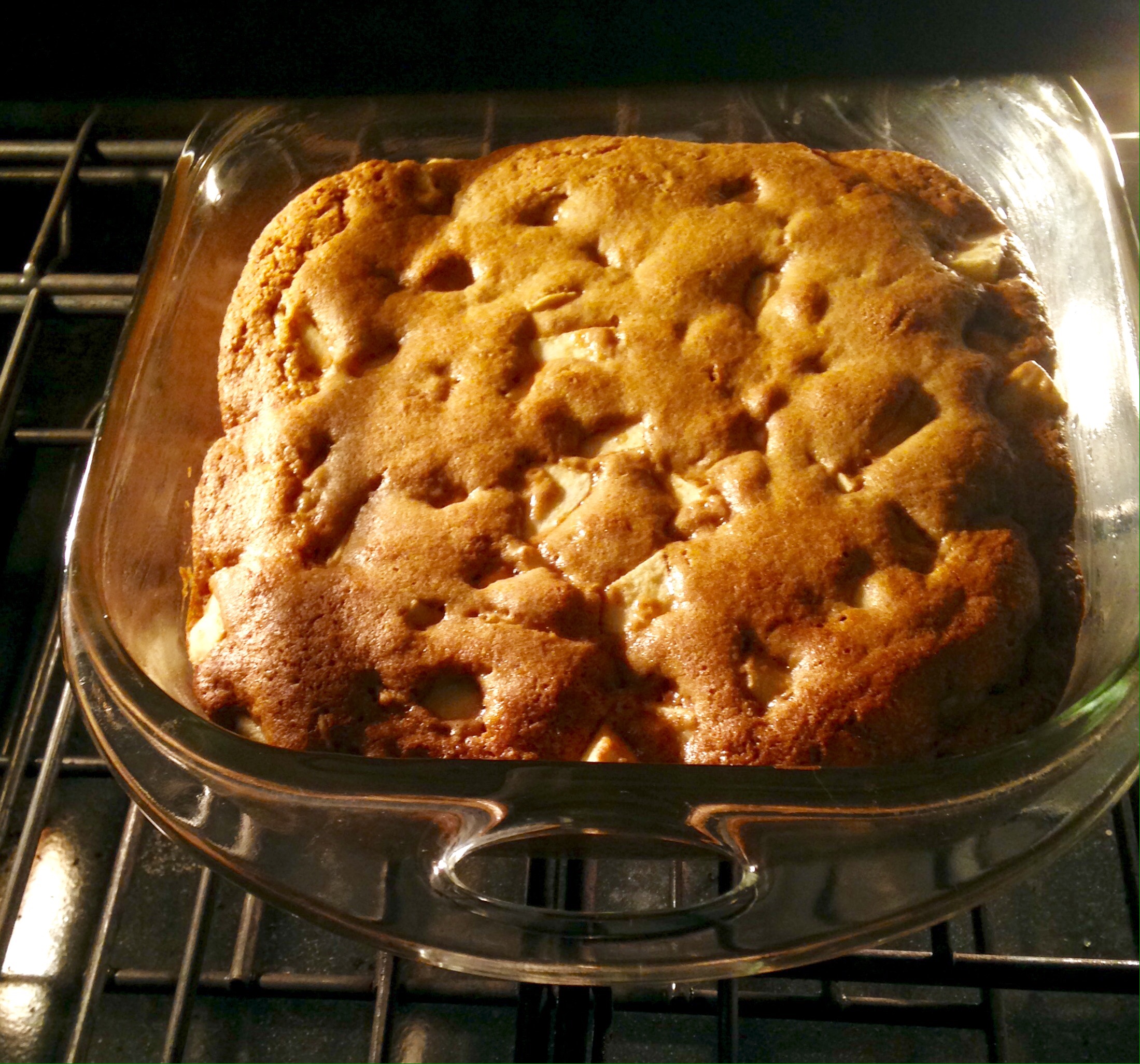
Smell the apple-cinnamon-brown sugar deliciousness?