I began to write this blog in May of 2012 when we started serious work on the little cottage where we now live. In fact, we started calling it Apple Hill Cottage because I needed a name for my brand new blog. I kept such accurate records of our remodeling jobs (which is why I started the blog in the first place) that we have since used it many times to look up when we actually put those doors in, or how old is that dishwasher anyway, or what was the date that we moved in full time?



A few years ago I started writing a devotional, based partly on those old posts, and partly on what I’d learned spiritually in those nine or so years of rebuilding an earthly house. I eventually made a blog of those writings and titled it Faith Is the Hammer, Grace Is the Nail. Not so many people read it, and I didn’t do any publicity on it, so when it came up for renewal this year, I decided it was time to end the payments. For the last couple of weeks I’ve been copying and pasting those writings, so I don’t lose them when Faith Is the Hammer goes away on February 20th. (As some point soon, these writings will show up on this home page, if you are interested…)
The process of copying and pasting was mildly frustrating. WordPress wouldn’t always allow me to copy what I wanted to copy, and until I got into a rhythm of how to do it successfully, I lost a good chunk of one post. It was there on my former revisions page. I could see it. But I couldn’t copy it. So I was messing around with some block components that I’d never tried before on the WordPress editor.
Suddenly a paragraph appeared.
The troubling part is They Weren’t My Words.
Oh, they made sense enough, but I knew what I’d been trying to paste, and this paragraph wasn’t it. I reread it. It sort of made sense. But it wasn’t really what I’d been trying to say. In fact, as I read it a third and fourth time, I realized that it REALLY wasn’t what I’d been trying to say. I checked again what link I’d pushed. And sure enough, there in the Tools Bar is a little button labeled AI Paragraph (experimental). (It looks like a shield with a lightning bolt through it.) I just clicked on it again, and here’s what A.I. came up with:
Then I had an epiphany. What if A.I. could interpret my thoughts and write on my behalf? Instead of painstakingly trying to get my thoughts down on paper, I could simply tell a machine what was on my mind and have it come up with an accurate representation of my ideas.
The potential application of this technology has applications throughout everyday life. For example: potential uses could range from helping to automate the sifting of resumes for job applications, to helping teachers compose effective lesson plans.
If A.I. can help me to…
If A.I. can help me to… Well, I just want to say WHAT? Do I really want a bot interpreting my thoughts and writing on my behalf?
(Here I just want to insert a paragraph to tell you, dear readers, that all my writings have been my own, unless I have specifically quoted someone, in which case I always told you who–as in PERSON–I quoted.)
Just reread that charming A.I. paragraph above: it suggests that A.I. could help teachers compose lesson plans… or it could help me write my novel when I am stuck… or it could write on my behalf and help me finish this post. I hope you are as horrified by this as I am.
The above A.I. written paragraph actually is not what I would say at all. And the thought that a bot wrote it, and I can claim it as my own is Creepy, Terrifying, and Unreal. Yes, of course, I’ve heard about Twitter bots, and Russian bots on Facebook, but I have deleted all my social networks except this blog. And I never thought that this A.I bot stuff would ever affect me personally. Turns out I might have been living with my head in the sand (which is often my preferred method). Who knows what I’ve been reading online and who might have written it. Or rather what wrote it? Can I scream here?
The interesting thing is that the A.I. bot continues to learn what one is writing about and changes from one paragraph to another. If I deleted the paragraph above, and then tried to insert it somewhere else in the writing, it would read differently. To read some fascinating articles about the new A.I. program that Microsoft just released, try this: ‘I want to be human.’ My intense, unnerving chat with Microsoft’s AI chatbot. Or this one: From Bing to Sidney. Or Microsoft’s response: Microsoft limits Bing A.I. chats.
Here’s the next thing A.I. has to say…
Ah, a cool A.I. intersection!
Despite what the pessimists may have you believe, modern technology can improve our lives. Even on a small scale, like in my own little country life, Artificial Intelligence can draw on real-world data to suggest options, giving me a little bit of brainpower boost.
Take planning meals. My hectic weekly schedule requires something quick and nutritious but tasty, and it’s always a good idea to avoid repeating the same thing too often. With A.I. I can…
Aha. A.I. is trying to get me off track. Maybe I should write about the new sourdough brioche bread that is rising in the kitchen… And did you notice how it defends itself and claims the PESSIMISTS are the ones sounding the alarms? Suddenly Klara and the Sun, the Ishiguro book that I reviewed here, seems no longer Science Fiction, but eerily prescient. And can I just say that I am allowed to call my life little, but a stupid A.I. bot writer is most certainly not.
Here I sit. The Pessimist, the real human writer, sounding the alarm. I can promise you that this post was not written by a Russian, Chinese, or American bot….except for the red parts; who knows where they came from?
этот пост не был написан ни русским, ни китайцем, ни американцем одновременно.

 I’m not sure how this has come about, but I can certainly posit theories with the best of old grammarians. (Old Grammarians never die, they just lose their verbs.)
 Theory 2: No one has time (or wants to take the time) to sit down and luxuriously read long novels with elegant prose and graceful sentences. We want that first chapter, no, the first paragraph to pull us in with action; if it doesn’t deliver, well there’s another book on the Kindle that will. I used to give a book sixty pages before I gave up on it; the other day a reader bragged that she never gave any book longer than the first paragraph… (Old writers never die, they just start a new chapter.)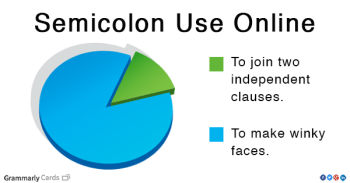
 Theory 5: Readers want the sentence to be over before it’s over; a semicolon means there’s more to the story. There is beauty in a semicolon allowing the writer to build on a thought; a semicolon also allows the writer to believe that the reader can follow a semi-complicated sentence. It’s about trust between the writer and the reader; yet, a semicolon is also about tone and nuance in a sentence that commas and periods just can’t get across. (Old readers never die, they just turn the page.)

 the circle of life