48. Not Just Spray Paint: a DIY Oil Rubbed Bronze Finish

The look of oil-rubbed bronze finish on metal is sleek and rustic at the same time; it isn’t black, it isn’t brown. It’s comfortable. All the hardware in the cottage kitchen is a variation of it except the Expensive Kitchen Faucet. (You can read about that here.) We bought the faucet in brushed stainless, mostly because the counter top and sink are going to be soapstone, and we didn’t think a dark faucet would look good on dark soapstone. My decorator sister agreed. She thinks the oil-rubbed bronze finish will date your house in a few years — “Oh, that is SO oughties…” Well, I might give her that — I just hope I’m not around long enough to know. And I’m still thinking of oil-rubbed bronze fixtures in the bathroom…

Brass push plate and handleBut last week Mr. H. C. brought home this wonderful handle for the kitchen door that goes down to the basement. (This is the door that will soon be Blooming Grove Green.) The handle was bright brass with a matching pull plate; a lovely simple design, but absolutely wrong color.
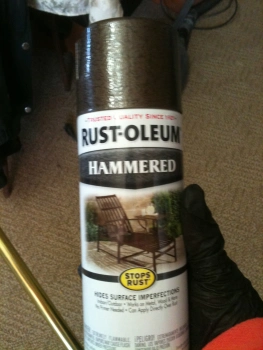
IMG_1300Now, I have spray painted oil-rubbed bronze finish on metal with the best of DIY-ers. I’ve done our cabinet hinges and screws, and I’ve done the light fixtures in the kitchen, and a curtain rod, switchplates, towel holders, door hinges…  But a door handle? That will be used every day? Mr. H. C. said, “So have you ever looked up how to get a real ORB finish? You know, Authentic?”

Apart from electrolyzing or electroplating metal, which I don’t think I am ready for, the best idea I found was from House of Antique Hardware. They sell a brass and bronze aging solution that takes unlaquered brass and gives it a dark old-looking finish much like the oil-rubbed bronze. We ordered a big bottle for around $25. I think we could have gotten away with a small bottle, but I don’t ever want to run out of this stuff!

Instructions specifically say that it only works on unlacquered metal, and I was pretty sure that this door handle was lacquered. It was really shiny. And smooth. So I soaked both the handle and the pull plate in lacquer thinner for about 15 minutes each; then I rubbed them carefully with the finest grade steel wool I could find.

I put on my safety glasses and my gloves – this is a nasty chemical mixture of acids, folks – and found a large plastic container. The instructions say that glass is also acceptable, but don’t use metal – you don’t want the acids to react in the wrong way with your container. Pour enough of the chemical solution in the container to cover the hardware. I did the handle first.

Items for DIY oil rubbed bronze finishing

Everything is pictured here except the safety glasses and the chopstick that I used to push the pieces around in the solution. I had my safety glasses on when I took the photo. AWYSG!

With gloves on, wipe the handle carefully with a clean lint-free cloth. Fingerprints can keep the chemicals from doing their thing on the brass. Then put the handle in the solution and be amazed. It starts to darken almost immediately. You also need a tool of some sort to fish the hardware out of the chemical solution. (I used a chopstick.)

Brass ager solution

I jiggled the handle around a bit so it would darken evenly on all sides; the larger pull plate I actually turned over several times. Leave the piece in the solution until it is a little darker than you want; it lightens with the next step.

Door handel in Oil rubbed bronze

No spray paint here!

Take out your hardware and rinse in cold water. I just used the sink, but you could certainly put a container of cold water next to you and just dunk the hardware into it. The point is to stop the chemical reaction. The water lightens it a bit. When I had done both pieces, then I got out some mineral oil and rubbed it in. That evened up the color and made both pieces a bit darker again.

You can see the shine of the mineral oil in this photo. Now you must control yourself from rushing around trying to find everything you own that is brass or bronze and throwing it in the solution. Pour the solution back in the bottle; it can be reused. I’m certain I will get much use from this bottle; however, this solution does not work on all metals. The little decorative washers that you see in the second photo came out splotchy; I don’t know if they weren’t solid brass, if I didn’t clean them enough, or why. Anyway, I spray painted them, and they look just fine.

This elegant $15 DIY oil-rubbed bronze door handle makes me smile.

*I am amending this post a few weeks later. I tried another brass push plate very similar to the one in the photo, but purchased at a different time and place. I soaked it in lacquer thinner as well. But when I put it in the solution, it was very streaky. Not acceptable. So I rinsed it off, got out the steel wool and went to work. Under a good light, I could tell that the lacquer thinner just had not gotten all the lacquer off. I put in a good 15 minutes of elbow grease and steel wool. The second time I tried it, it came out lovely — just as good as the other one. So don’t be afraid to try it again, if it doesn’t work the first time.

And here it is finished on the  painted door:

green door to the basement

This is how lovely it still looks three years later — this door handle gets touched multiple times every day.
45. Hearth Songs

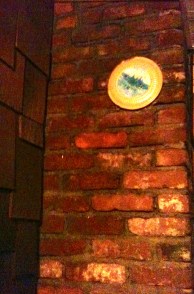
The chimney at the cottage touches three rooms — the kitchen, the living room, and the mudroom. Chimney in mudroomIn the kitchen and in the mudroom there are round openings for connecting up stoves or stove pipes. (The holes are covered with odd metal circles that look like paper plates.) In the living room is the fireplace. Bare brick only shows up in the mudroom, and it is rough. Perhaps that’s why the kitchen and living room parts of the chimney were plastered or paneled over. From time to time I lobby for uncovering the plaster in the kitchen or the living room for a partial-view of rough red brick, but Mr. H. C. vehemently vetoes the idea (quite stubbornly) every time.
IMG_1690

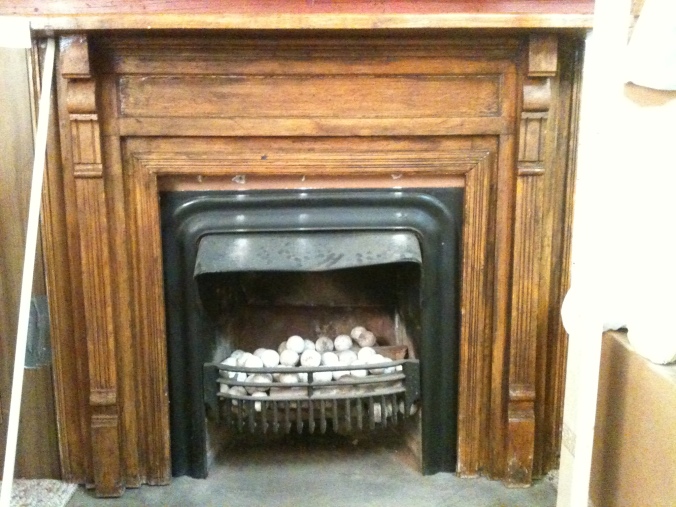
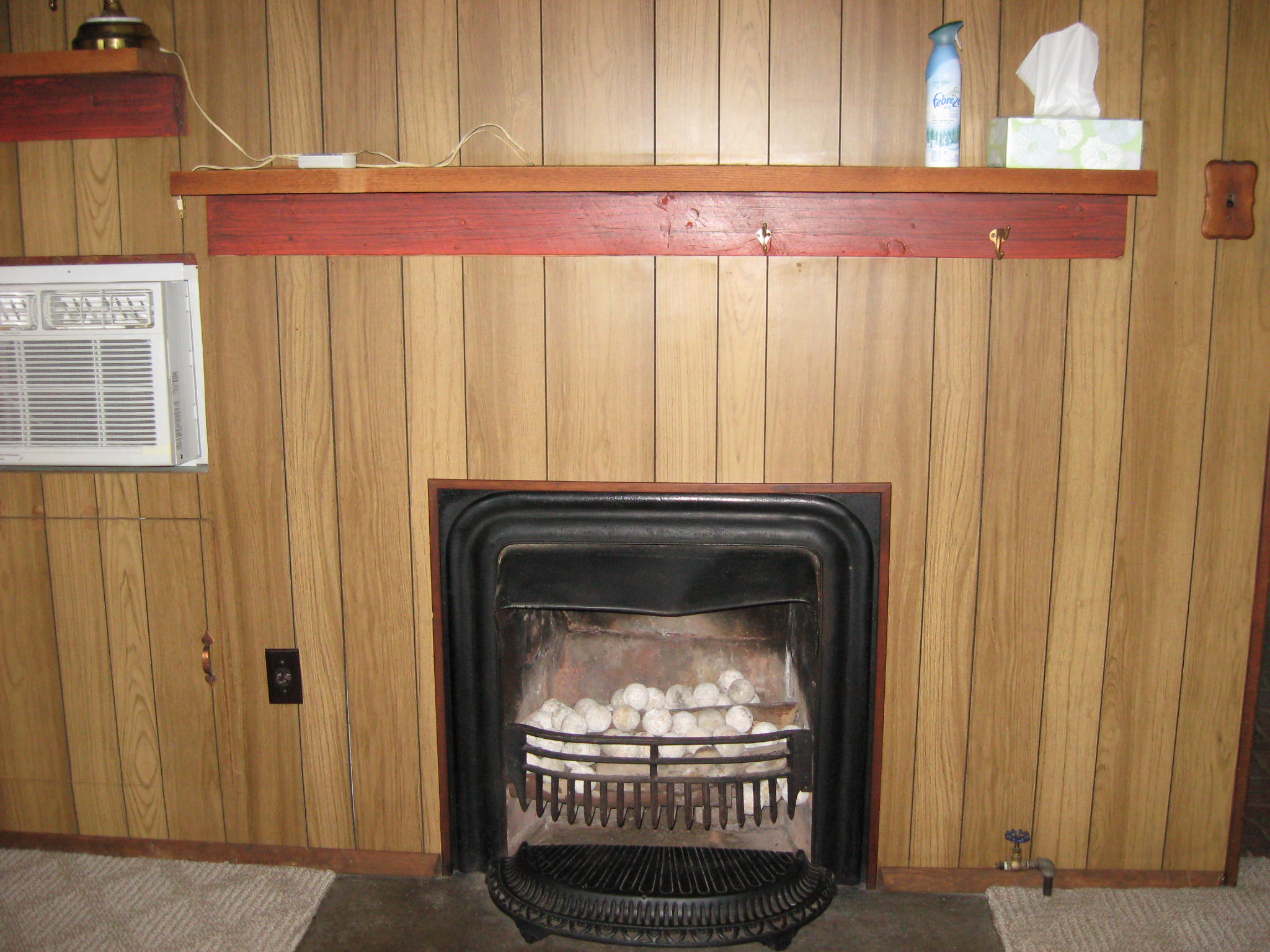
This is what the fireplace looked like in August 2011, when we first acquired the cottage. Clara’s knickknacks and collectibles are gone from the mantle, and in their place is the febreeze and tissues!

It’s been a puzzle to us, how we were going to fix up and adapt the chimney for our use. We know it will need work, no matter what we decide. Earlier in the process of rehabbing the kitchen, when we were more naive, we took off the round stove pipe cover in the kitchen (just for curiosity); we discovered it was full of leaves, sticks, ashes, probably mouse nests, bird feathers, and other unmentionables. We quickly put the cover back on and said, “Okay, something else we have to clean before the kitchen reno is finished.”

We were supposed to do that this weekend (in my mind anyway…) but it was just another thing that got put on hold while life happened. It will be next weekend, I think; but it’s just as well because, dear readers, I think you would be totally disgusted by any pictures of this process. So I am off the hook for showing them to you; you are off the hook for having to look at them, and we shall simply move on to other, more favorable aspects of the chimney…

IMG_1158

Not that this is very favorable! But you’ll notice that tools have replaced the Febreeze. And notice the paint shadows around the fireplace that tell us where some sort of hearth used to be.

We found this mantle pictured below in Waynesburg at a great little store called Jan’s Country Nook and Hardware. She bought the hardware store several years ago; she has kept the hardware inventory and added her own antiques and collectible finds. There’s everything from hard-to-find screws, antique oil finish, wash basins, quilts, canning jars, and old whatchacallits… A fireplace mantle in the window drew us inside. When we walked in, there were two old timers there looking around and offering their commentaries — “Well look at this, I ain’t seen one a these in years!” “Is that a real stuffed coon? He looks like he’s seen some hard times!” She had several fireplace mantles leaning around, and we found this one that was the perfect size. Well, almost perfect. So we paid our $75 and hauled it away.

Fireplace mantle

This mantle is old (dove-tailed joints) and made of pine, but stain-varnished to look like oak. I love that about it. It was made by a craftsman who just used pine…It was also used for a coal fireplace because it is filthy with coal dust. That’s what gives it the lovely patina! We aren’t sure what will happen when we start to clean it. The stain varnish may come right off and we’ll end up painting it…Ah, the adventures an old house brings!

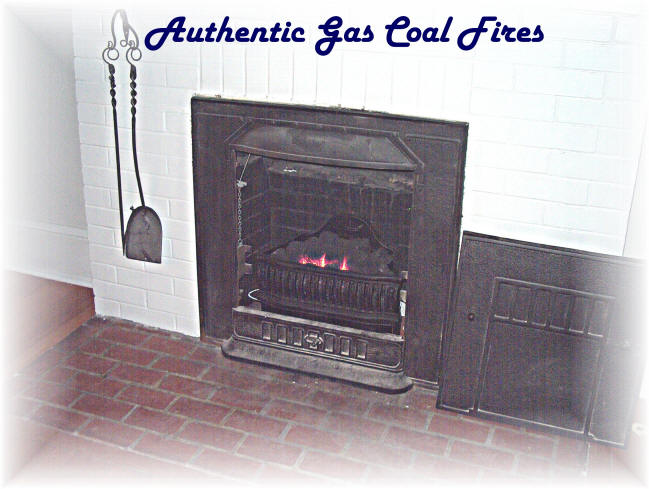
Only after we got home and leaned the mantle up against the fireplace, did we seriously start looking for gas logs. (See post 41. A Winter’s Eve.) And that’s when we discovered that our lovely little living room fireplace is actually for coal. This was typically done in Victorian houses in bedrooms for a lttle extra warmth. The fireplace dimensions are small, so gas logs are out. What’s in are very nice looking (read expensive) coal baskets.

Coal-basket

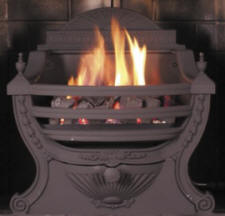
This is a picture of a coal basket from Four Seasons Supply; they sell these gas-coal baskets to retrofit old coal fireplaces.

Here is a another style from the same company:16c493f0

If you look closely at one of the photos of our fireplace, you’ll see that we already have the coal basket, so we’re hoping to find a unit that just has the burner and the coal thingys. (Oh, I love the exactness of the word thingy — and the best part is it can be substituted for ANY word! Hand me up that thingy… Did you see that thingy I’m looking for?… What are those round thingys in the fireplace?)

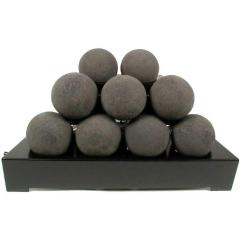
Yes, those round thingys in the fireplace are clay balls that were used to hold the heat in fireplaces. Michael counted them as he took them out of the coal basket — 61 of them! We both thought they were odd; most people who come here ask what they are. But while researching coal fireplaces, I found these fireballs. fireballsThey are now the “Contemporary Alternative” to gas logs at the Gas Log Guys website. Fireballs can be purchased in several different colors — brown, white, gray, adobe red, and black. We only have white, but if you like ’em, we, uh, have 61 for sale…

After Michael took out the fireballs, we put the decorative sycamore logs back in the coal grate and went looking for the little cast iron semicircle thingy that used to be in front of the fireplace. We found it and put it back. I cleaned the mantle this weekend (instead of the chimney) and sure enough, the stain varnish is chipping off in places.  We will have to paint it,  or antique it, or encourage its distressed look in some way, but that is more research and another post. Cinnamon brown? Dark gray? Gray-green? (Michael says no to antique white!) Stay tuned. But for now it has been decided — the wood stove with its real fire will go in the mudroom. Stay warm…

20130126-230558.jpg

37. ReHabitat-ing the Yellow Bedroom

In a previous post, I told you about [reHabitat], the online design/decorating company who is giving us ideas on what to do with our yellow bedroom, while we concentrate on the kitchen and the bathroom. In the interest of full disclosure :-) [reHabitat] is Diane and Emily, my sister and my niece.

I chose the reVive box for the bedroom. They have several others to choose from — less and more. This is what we’re getting with the reVive box:

{reVive}

Need a bit more direction as you settle into your home or want to give a room an upgrade? Let us give you a basic framework that still allows you full creative control. You’ll start by taking our TasteTest, measuring your room, and snapping a few before photos. We’ll draw up a floor plan (based on pieces you already have and things we think you should add), recommend paint colors, and show you some examples of pieces to look for as you shop on your own.

Includes: floor plan, paint colors, links to furniture inspiration, notes/suggestions to address any problem areas, phone conversation to clarify any questions you have after you’ve received your box.

*Shameless advertising plug: Visit reHabitat’s website to find out about other rehab box packages. They have a fun blog as well. The link is www.rehabitatdesign.com

With the taste test are some pictures of chairs, couches, tables, accessories and such. I checked off the ones I liked — this gives them an idea of my taste! Then there are two sections of questions. Although I can’t give away all their secrets, the questions mostly deal with what you like about the room, what you envision for the room, your favorite colors, your hated colors, that sort of thing. It was fun to do, but I’ve always liked filling out questionnaires… The hardest part was making up a floor plan of the room, but there are fairly specific directions on how to go about it.

And then you get to tell them the pieces you have for the room that you want to keep and send them pictures. I’ve done all that in the form of this post below. Our problem is that we are downsizing. and we have too much furniture. So what do we keep? And what can we get to tie all the mishmashed pieces together? I’m sure you all have ideas as well. Who knows, I might get lots of input from you all. Stay tuned to see what the professionals do…

Here is the bedroom from the four corners:

20121112-221926.jpg

Queen sized bed

20121112-221947.jpg

The TV does not have to go in the bedroom. It’s only here now because there’s nowhere else to put it. Don’t you love the card table?

20121112-222027.jpg

Small door goes into bathroom and has to be sanded and painted on the bath side, so could be on this side as well. The other door goes into the living room, is always open, and has to be replaced.

20121112-222043.jpg

Lovely corner, eh? Even the pictures of this yellow room give me a headache…

We have three dressers to pick from:

20121112-222322.jpg

This one was rescued at a thrift shop for $40, sanded, and ivy stenciled to go in the ivy bedroom. It can be painted or resanded — it’s yellow pine. It is 32″ x 17″ and 47″ high.

20121112-222621.jpg

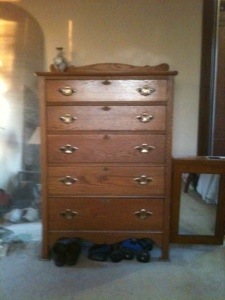
This is Clara’s oak dresser. It has to stay as is if used. (New hardware is okay.) 34″ x 18″ and 50″ high.

This is Michael’s dresser from childhood. (Is it back in?) I’ve been going to change the pulls forever — to a simpler mission type look — but never got around to it. At one point I suggested painting it (it is just pine) and he was okay with that. Dimensions are 51″ x 18″ and 30″ high.

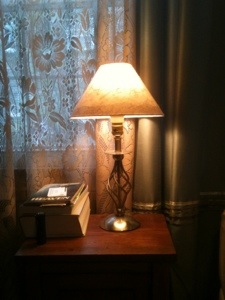
Here are lamp choices: (There are two of each; we don’t have to use either set, and/or new shades can be selected).

20121112-223428.jpg

These are fairly tall–30″

20121112-223453.jpg

This pair is shorter–20″.

Here are some other furniture pieces that have been in past bedrooms at various times…

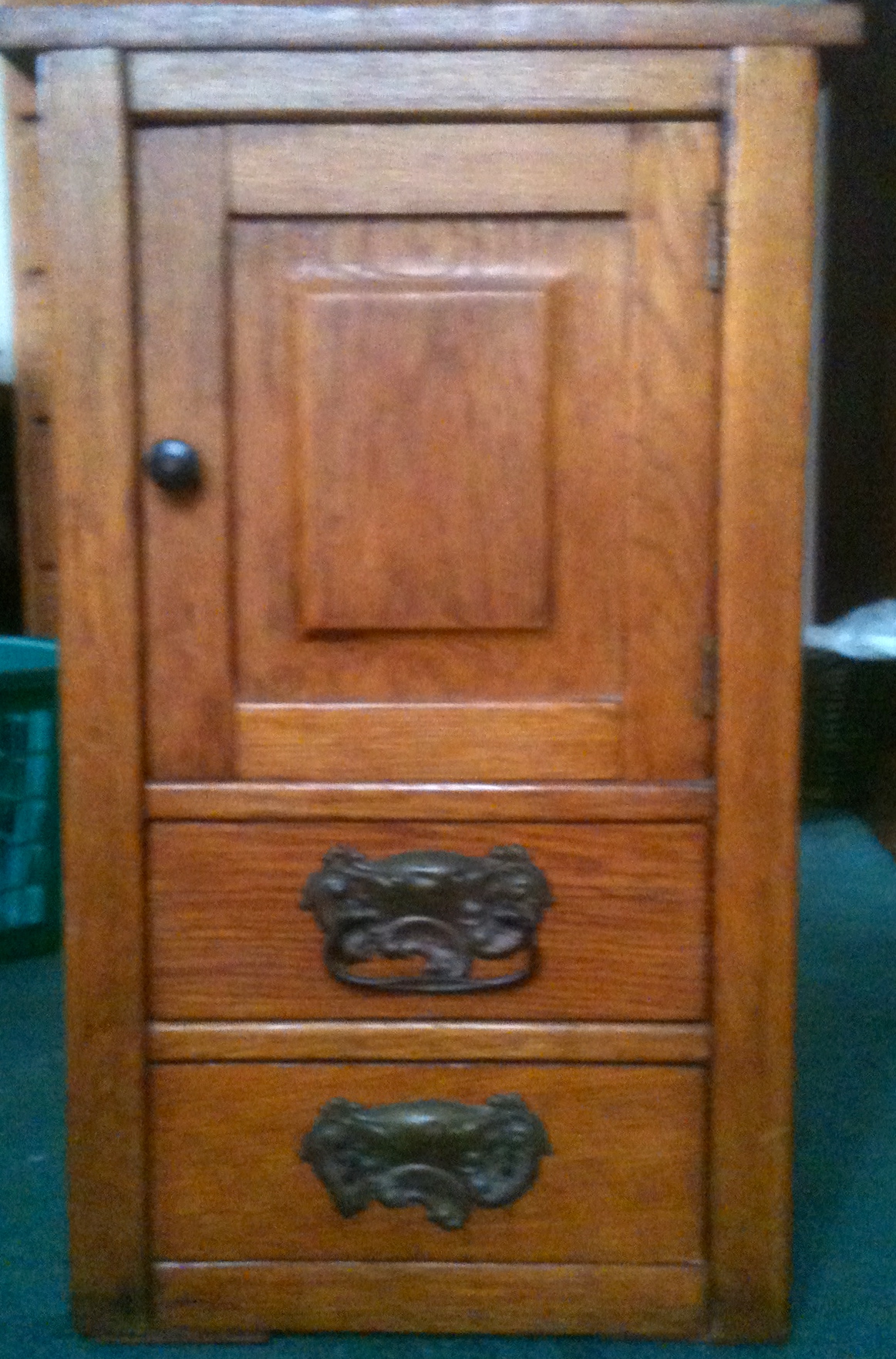
We dont' have matching nightstands. This is Michael's from when he was a kid  -- antique oak

We dont’ have matching nightstands. This is Michael’s from when he was a kid — antique oak

Here’s another:

This belonged to Michael’s grandmother; he thinks it is a Stickley.

20121112-224541.jpg

Nanny’s cedar chest–it is long, 60″!–fits at the bottom of a queen-sized bed. 22″ wide.

There are also these two mirrors–one came from Dad and one came from Clara and they are almost identical. 20121112-225714.jpg

20121112-230147.jpg

This is the ceiling light fixture. I kind of like it, but Michael isn’t so sure. It does bathe the room in yellow light, which goodness knows it doesn’t need right now, but maybe when there is new paint color?20121112-230547.jpg

This is the other one:20121116-074341.jpg
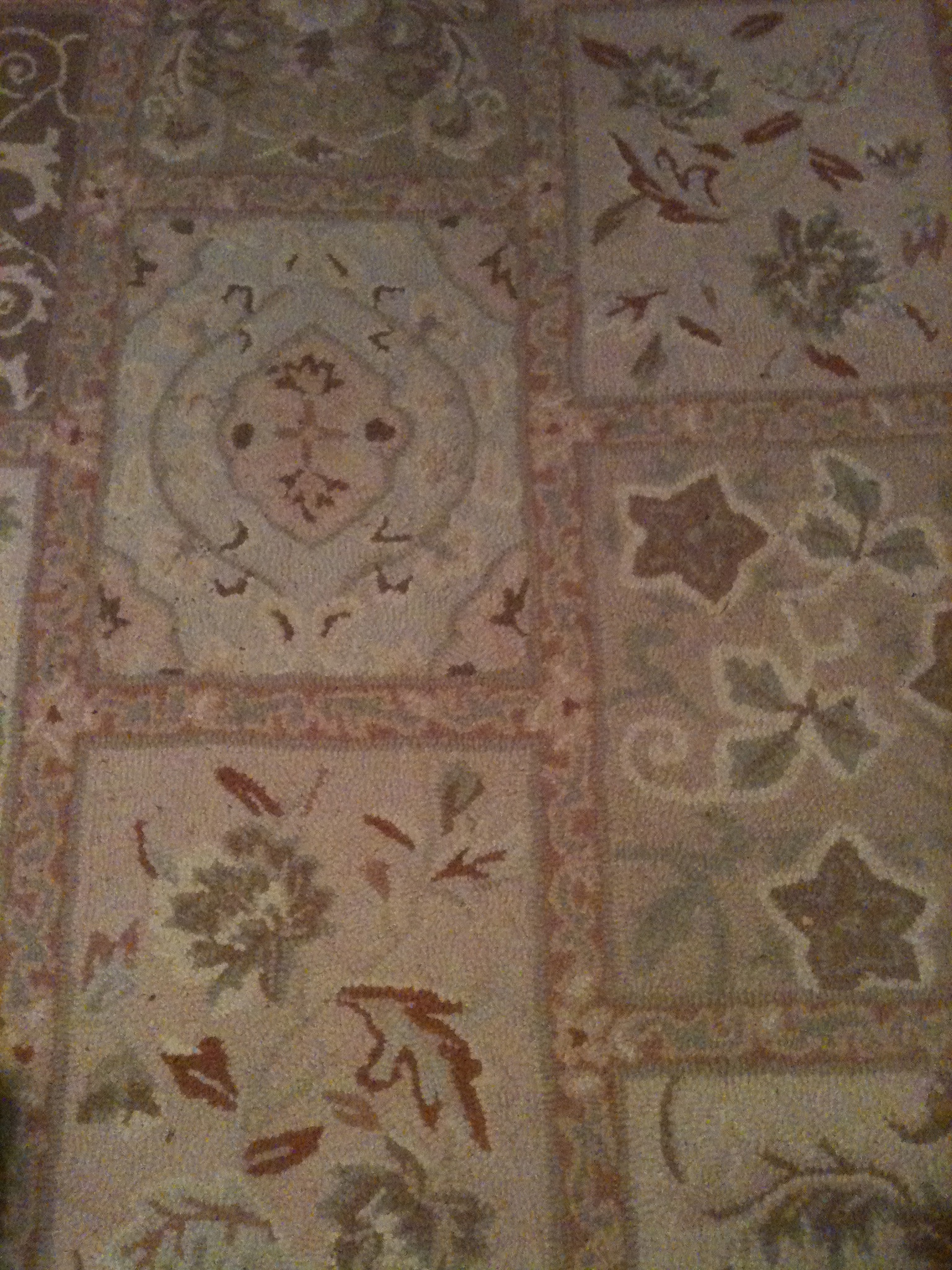
There are also a couple of rugs…I’m just showing them to you because we have them, and it is a hardwood floor.

5 x 8 Colors are sage, rust, pinkish tan, cream and brown

Size is 7 1/2 x 9 1/2 feet. Colors are sage, tans, creams, and dark rose. It is currently in the living room at our house in Pittsburgh.

So, is there any way you can put this jumbled up stuff together and have it be fresh?