92. DIY Organic Hand Cleaner for Oil-stains and paints (that’s actually good for your hands)

I had an amazing brainstorm discovery yesterday — and really? These things don’t happen to me that often, folks! I got so excited, I have to share this with you.

Sanding is hard on hands

Sanding is hard on hands

Since we have been redoing the cottage, my hands have not been lovely. They never were, but now they are worse. Stains under fingernails, oil paint that won’t come off, dry skin from various kinds of dirt and toxins. And now it’s winter!

Off and on for the past two years, I have been experimenting with DIY lotions and creams. I’ve made Lovely Lavender Lotion from Healing Heart Oils; Grapefruit Body Butter from One Good Thing by Jillee; Homemade Lavender Deodorant from Full of Graces; and Olive Oil Cleansing Lotion from Wellness Mama. I recently got really brave and made up my own recipe for Body Bomb from a ratio recipe. All these links are tried and make great stuff from easily available, edible foods and oils, and if you are at all inclined, I encourage you to check them out and make your own. Nothing like being able to eat your hand cream!

Yesterday I was using oil stain on the fireplace mantle that I am messing around with sanding, staining, priming and painting. I’m a tactile kind of person, and I hate wearing gloves. So at the end of the staining session, my hands and fingernails were stained a lovely red mahogany. A good name for a new nail polish?

This is a before picture of the fireplace mantle -- It is currently dis-mantled and sitting on sawhorses in the living room. Look for another post about it soon -- when it is finished.

This is a before picture of the fireplace mantle — It is currently dis-mantled and sitting on sawhorses in the living room. Look for another post about it soon — when it is finished.

I was looking disgustedly at my hands, thinking:

1. I’m glad tomorrow isn’t Sunday; and

2. Hmm. It’s time to make dinner and I’m going to make meatballs with these hands?

I washed my hands with kitchen soap and water, but I knew it wouldn’t be enough. They were still sticky with stain. Mr. H.C. always has wipes I can use, but the jar specifically says “Not intended for personal cleansing.” Hmmm.

As I was stewing about the stain on my hands, the phrase “Oil cleans oil” flashed through my brain. I practically ran into the bathroom to get my jar of newly made Olive Oil Facial Cleanser. I put a good dollop on my hands and rubbed them all over, and the red mahogany stain magically and wonderfully disappeared. Not only did it clean my hands, it made them feel wonderfully soft. After all, this is a facial cleanser!

So I hurried to find a jar that would hold the little cleanser pads that you can buy at drug stores for very cheap. I put half in the jar, and poured in half the oil; then filled the jar and poured in the rest of the oil mixture. Now I have handy little cleansing pads for either my face OR my paint-and-stain-covered hands.

And I finally found a good use for my Vintage Burma-Shave jar that we found in the glass dump on our property last summer!

And I finally found a good use for my Vintage Burma-Shave jar that we found in the Apple Hill Glass Dump last summer!

Here is the oh-so-simple way to make it:

Extra Virgin Olive Oil (or expeller-pressed Sweet Almond Oil)
Castor Oil (you can find this in most drug stores)
Essential oil of your choice — I used peppermint; lemon or grapefruit would be nice too.
Cleanser pads
Wide mouth jar with tight fitting lid

Mix the oils together and add a few drops of essential oil until you like the smell. If you are using peppermint, don’t overdo it; it is a facial cleanser as well, and peppermint isn’t always good in the eyes!

Here is the important idea: the castor oil is the astringent, so you don’t want to leave it out entirely, but depending on your skin type or the season of year, you can add more or less to the Olive oil. The mix to start with is one part Castor Oil to four parts Olive Oil. (If you would like to know the specific idea and ratios behind the Oil Cleansing Method, go to theOilCleansingMethod.com for an in-depth discussion and also options for differing oils and ratios to use in your mix.) Wellness Mama also has a very good article on it, and it is where I found my original recipe.

And just because I didn’t want to give you false information, I also tried this again today on my oil-paint-stained hands. (Mr. H.C. said to tell you all that this was stinky, sticky oil-based primer that gave us both watery eyes).

Before

Before

After 5 minutes with my little oil-saturated cleansing pad.

After — Just 5 minutes with my little oil-saturated cleansing pad.

It is also an amazing make-up remover. This wonderful stuff cleans your hands, takes off your makeup, and gently cleans your face — all with the same natural Olive Oil Cleanser. Try it, and let me know what you think.
78. random thoughts on painting wood (from a carpenter’s wife…)

I’ve been painting lots of wood lately. Doors, cabinets, woodwork… I love paint. I love color. But I also love wood.

Paint and color and wood can co-exist, but finding that perfect balance is difficult. Rooms with too much wood need color for drama; rooms with too much color scream out for wood to give rest to the eyes. It’s that perfect balance that makes us all sigh and sit down in comfort.

Mr. H.C., the carpenter, hates to paint wood. “When wood is painted, it’s painted,” he says. “And only a huge effort can get it back to its original state, and even then, it might not look good.” (For a very funny post on men and painting wood, read The Decorologist’s post, Why Men Fear Painting Wood)

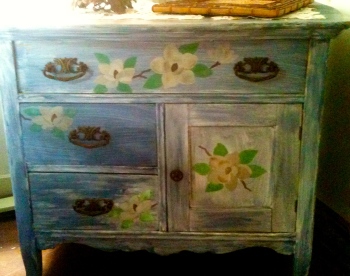
When I was about fifteen, my mom and dad undertook the making over of the basement in our fifties ranch house. They were on a shoestring budget, but they wanted a room where their teenaged daughters could hang out with their friends. It was a gigantic room — just putting carpet on the floor, a dropped ceiling, a big comfy couch, and room dividers at the ends probably put them over-budget. So Mom was gathering furniture from every attic and garage that she could find. Two of her scores were pretty little washstands. She painted one late-sixties orange. As she was preparing to paint the other (late sixties chartreuse) I stepped in. In my fifteen-year-old wisdom I said, “Mom, why are you painting that pretty washstand? You should never paint wood furniture.”

She gathered together all her parental wisdom and said, “When you’re older, you’ll understand.”

In the infinite circle of life, twenty-five years after she painted it chartreuse, I inherited this charming little washstand. It was still chartreuse. I took it to the local stripper and told him I would pay him well if he could take that paint off for me. A few days later he called me back. “Was this painted in the late sixties?” he asked. “And then maybe antiqued?”

pretty washstand painted in nineties blue stenciled with nineties flowersIt absolutely was.

“Yeah,” he said. “That stuff just can’t be stripped off.”  He sanded the door and then gave up. His advice? “Just paint it. It’s only poplar.” So I painted it early-nineties blue and stenciled it with early-nineties flower stencils. And now, twenty years later, it is relegated to holding craft supplies in my upstairs craft room that is not open to the public.

So many pieces of beautiful old furniture ruined.

And so I learned — Don’t paint it, if it can never be reclaimed.

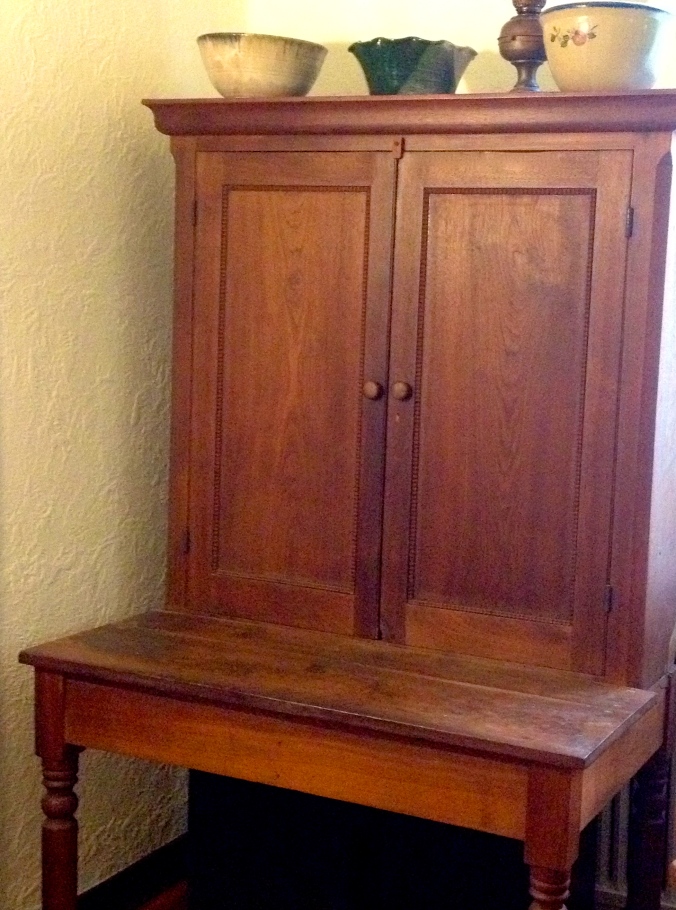
Truth be told, my mom paid her dues for painting all that wood furniture. (She also painted a carved wooden love seat and several oak pressed-back chairs orange, as well as two beautiful rattan easy chairs chartreuse!) When the trend for country furniture started in the late seventies, she and my dad were early adopters. (The first Country Living magazine was published in 1978  — probably a direct result of all that bad furniture painting and colors of the sixties and early seventies!) They bought beautiful old furniture at auctions and sales, stripped it, and refinished it with natural oil finishes. When she found this  primitive hutch in Uncle Judd’s basement, it was painted a lovely shade of pink and was storage for paint supplies  — a fitting tribute to what often happens to painted furniture…

primitive walnut hutch

Aunt Sara and Uncle Judd were astonished when my mom picked that particular pink piece of furniture. Mom dragged it home (it comes apart in two pieces) and she and Dad lovingly restored it. Mr. H.C. thinks it is walnut. It is a bit quirky, but I love the fact that it is a one-of-a-kind antique, passed down through family, that many hands have touched it, restored it, made it their own. I love the circle that life is.

I understand wanting to make a piece of furniture, or a house, your own — individualizing it. That’s what we are doing with Apple Hill Cottage, after all. DIY is good. But what happens when the DIY goes bad? Let’s face it, that little washstand  I painted and stenciled? I didn’t do such a good job of it. AND fashions change. The turquoise of today will be tomorrow’s outdated color. The white cabinets of today will be dated in ten years.

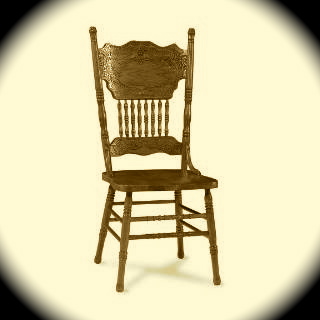
This is the classic pressed-back chair, and very similar to the one I painted glossy forest green...

This is the classic pressed-back chair, and very similar to the one I painted glossy forest green…

Recently I read a post about “reviving an antique Windsor chair” by painting it blue. I laughed to myself. I did that once. I painted a lovely oak pressed-back chair glossy forest green; BUT I only painted it because it had already been painted orange. (Yes, by my mom — it sat right next to that orange washstand in our basement.) And it was never going back to its beautiful oak original beginnings.

All those rungs? All that carving? All that glossy paint? I repeat:  Don’t paint it, if it can never be reclaimed.

…Which translates into the following rules suggestions for painting wood:

  • Do not paint any family heirlooms.
  • Do not paint anything that might be valuable the way it is.
  • Do not paint anything that has carving or curves or moulding that would be hard to sand back to its original condition.
  • Do not spend any more than $35 on any piece of furniture you are planning to paint. (Well, maybe $50 if you live in a city…)
  • Try to find pine furniture (or poplar) for painting. Or better yet, find something that has already been painted.
  • Paint only furniture that you are willing to refinish or throw away, when your mind (or the fashion) changes.

And our minds change frequently, don’t they?

With all that said, I’m looking for a few cheap dining room chairs to paint….

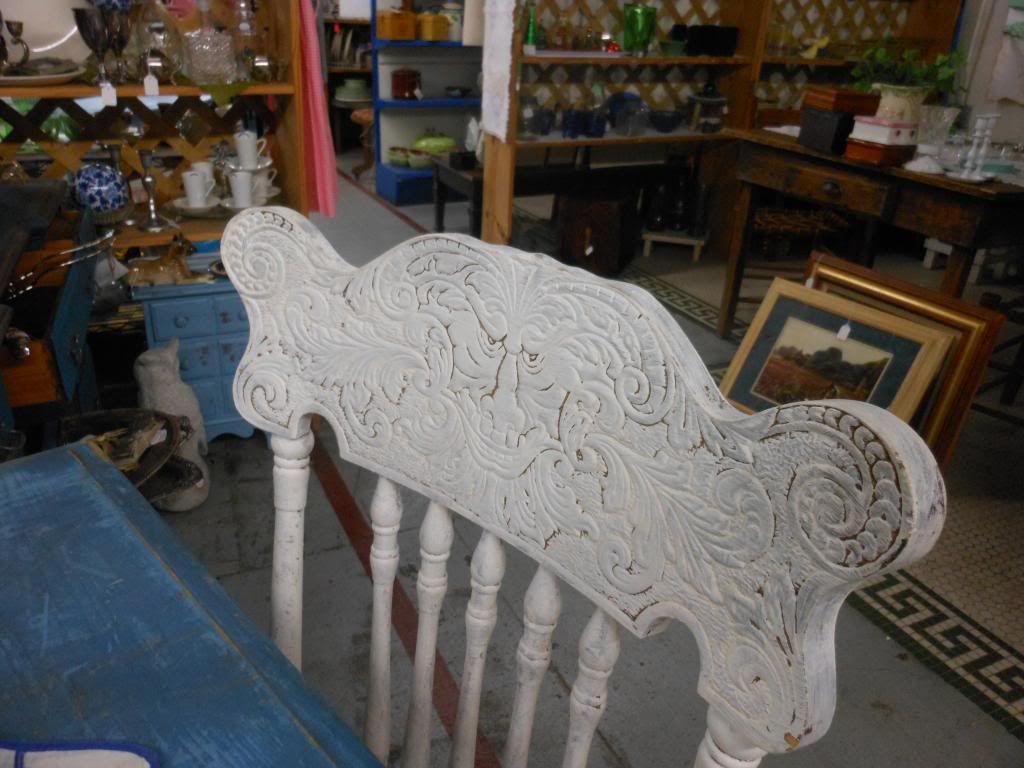
This lovely painted pressed back chair is from the Irish Lady’s Blog. If you live in Texas, you could drop by her shop and purchase this pretty chair. It looks lots better than the one I painted glossy green (but that’s because glossy forest green is currently out of fashion…)

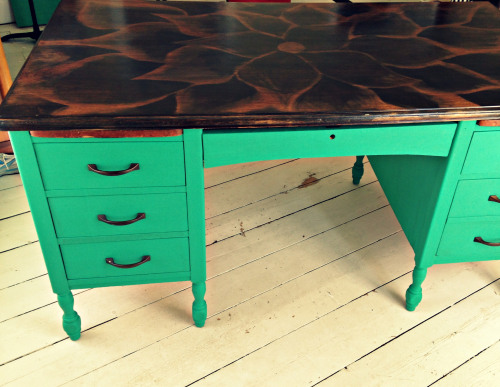
Emerald green, however, was Pantone‘s color of the year this year. And Tricia at the Domestic Fringe just posted this DIY painted desk. She found the desk set out for the garbage — in which case, it is totally OK to paint. Especially when you can do this to the top:

Desk1

To find directions on how to do something like this to the top of YOUR old desk, see the post on DIY: Trash to Treasure desk renovation..

I have an ugly wood desk in my not-open-to-the-public craft room upstairs. I would love to have that flower top on it… And I could paint the bottom a pretty, rust-colored orange… oh, wait. I can’t paint it orange! It belongs to Mr. H.C., the carpenter who hates to paint wood. But I do have a washstand that could stand to be painted…Maybe orange, huh, Mom?

48. Not Just Spray Paint: a DIY Oil Rubbed Bronze Finish

The look of oil-rubbed bronze finish on metal is sleek and rustic at the same time; it isn’t black, it isn’t brown. It’s comfortable. All the hardware in the cottage kitchen is a variation of it except the Expensive Kitchen Faucet. (You can read about that here.) We bought the faucet in brushed stainless, mostly because the counter top and sink are going to be soapstone, and we didn’t think a dark faucet would look good on dark soapstone. My decorator sister agreed. She thinks the oil-rubbed bronze finish will date your house in a few years — “Oh, that is SO oughties…” Well, I might give her that — I just hope I’m not around long enough to know. And I’m still thinking of oil-rubbed bronze fixtures in the bathroom…

Brass push plate and handleBut last week Mr. H. C. brought home this wonderful handle for the kitchen door that goes down to the basement. (This is the door that will soon be Blooming Grove Green.) The handle was bright brass with a matching pull plate; a lovely simple design, but absolutely wrong color.
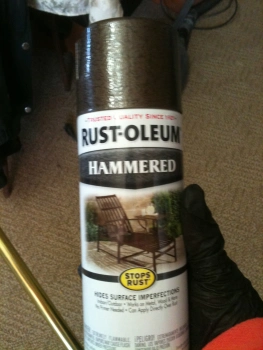
IMG_1300Now, I have spray painted oil-rubbed bronze finish on metal with the best of DIY-ers. I’ve done our cabinet hinges and screws, and I’ve done the light fixtures in the kitchen, and a curtain rod, switchplates, towel holders, door hinges…  But a door handle? That will be used every day? Mr. H. C. said, “So have you ever looked up how to get a real ORB finish? You know, Authentic?”

Apart from electrolyzing or electroplating metal, which I don’t think I am ready for, the best idea I found was from House of Antique Hardware. They sell a brass and bronze aging solution that takes unlaquered brass and gives it a dark old-looking finish much like the oil-rubbed bronze. We ordered a big bottle for around $25. I think we could have gotten away with a small bottle, but I don’t ever want to run out of this stuff!

Instructions specifically say that it only works on unlacquered metal, and I was pretty sure that this door handle was lacquered. It was really shiny. And smooth. So I soaked both the handle and the pull plate in lacquer thinner for about 15 minutes each; then I rubbed them carefully with the finest grade steel wool I could find.

I put on my safety glasses and my gloves – this is a nasty chemical mixture of acids, folks – and found a large plastic container. The instructions say that glass is also acceptable, but don’t use metal – you don’t want the acids to react in the wrong way with your container. Pour enough of the chemical solution in the container to cover the hardware. I did the handle first.

Items for DIY oil rubbed bronze finishing

Everything is pictured here except the safety glasses and the chopstick that I used to push the pieces around in the solution. I had my safety glasses on when I took the photo. AWYSG!

With gloves on, wipe the handle carefully with a clean lint-free cloth. Fingerprints can keep the chemicals from doing their thing on the brass. Then put the handle in the solution and be amazed. It starts to darken almost immediately. You also need a tool of some sort to fish the hardware out of the chemical solution. (I used a chopstick.)

Brass ager solution

I jiggled the handle around a bit so it would darken evenly on all sides; the larger pull plate I actually turned over several times. Leave the piece in the solution until it is a little darker than you want; it lightens with the next step.

Door handel in Oil rubbed bronze

No spray paint here!

Take out your hardware and rinse in cold water. I just used the sink, but you could certainly put a container of cold water next to you and just dunk the hardware into it. The point is to stop the chemical reaction. The water lightens it a bit. When I had done both pieces, then I got out some mineral oil and rubbed it in. That evened up the color and made both pieces a bit darker again.

You can see the shine of the mineral oil in this photo. Now you must control yourself from rushing around trying to find everything you own that is brass or bronze and throwing it in the solution. Pour the solution back in the bottle; it can be reused. I’m certain I will get much use from this bottle; however, this solution does not work on all metals. The little decorative washers that you see in the second photo came out splotchy; I don’t know if they weren’t solid brass, if I didn’t clean them enough, or why. Anyway, I spray painted them, and they look just fine.

This elegant $15 DIY oil-rubbed bronze door handle makes me smile.

*I am amending this post a few weeks later. I tried another brass push plate very similar to the one in the photo, but purchased at a different time and place. I soaked it in lacquer thinner as well. But when I put it in the solution, it was very streaky. Not acceptable. So I rinsed it off, got out the steel wool and went to work. Under a good light, I could tell that the lacquer thinner just had not gotten all the lacquer off. I put in a good 15 minutes of elbow grease and steel wool. The second time I tried it, it came out lovely — just as good as the other one. So don’t be afraid to try it again, if it doesn’t work the first time.

And here it is finished on the  painted door:

green door to the basement

This is how lovely it still looks three years later — this door handle gets touched multiple times every day.