45. Hearth Songs

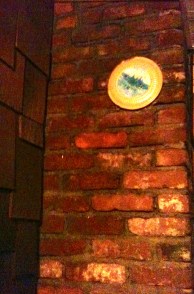
The chimney at the cottage touches three rooms — the kitchen, the living room, and the mudroom. Chimney in mudroomIn the kitchen and in the mudroom there are round openings for connecting up stoves or stove pipes. (The holes are covered with odd metal circles that look like paper plates.) In the living room is the fireplace. Bare brick only shows up in the mudroom, and it is rough. Perhaps that’s why the kitchen and living room parts of the chimney were plastered or paneled over. From time to time I lobby for uncovering the plaster in the kitchen or the living room for a partial-view of rough red brick, but Mr. H. C. vehemently vetoes the idea (quite stubbornly) every time.
IMG_1690

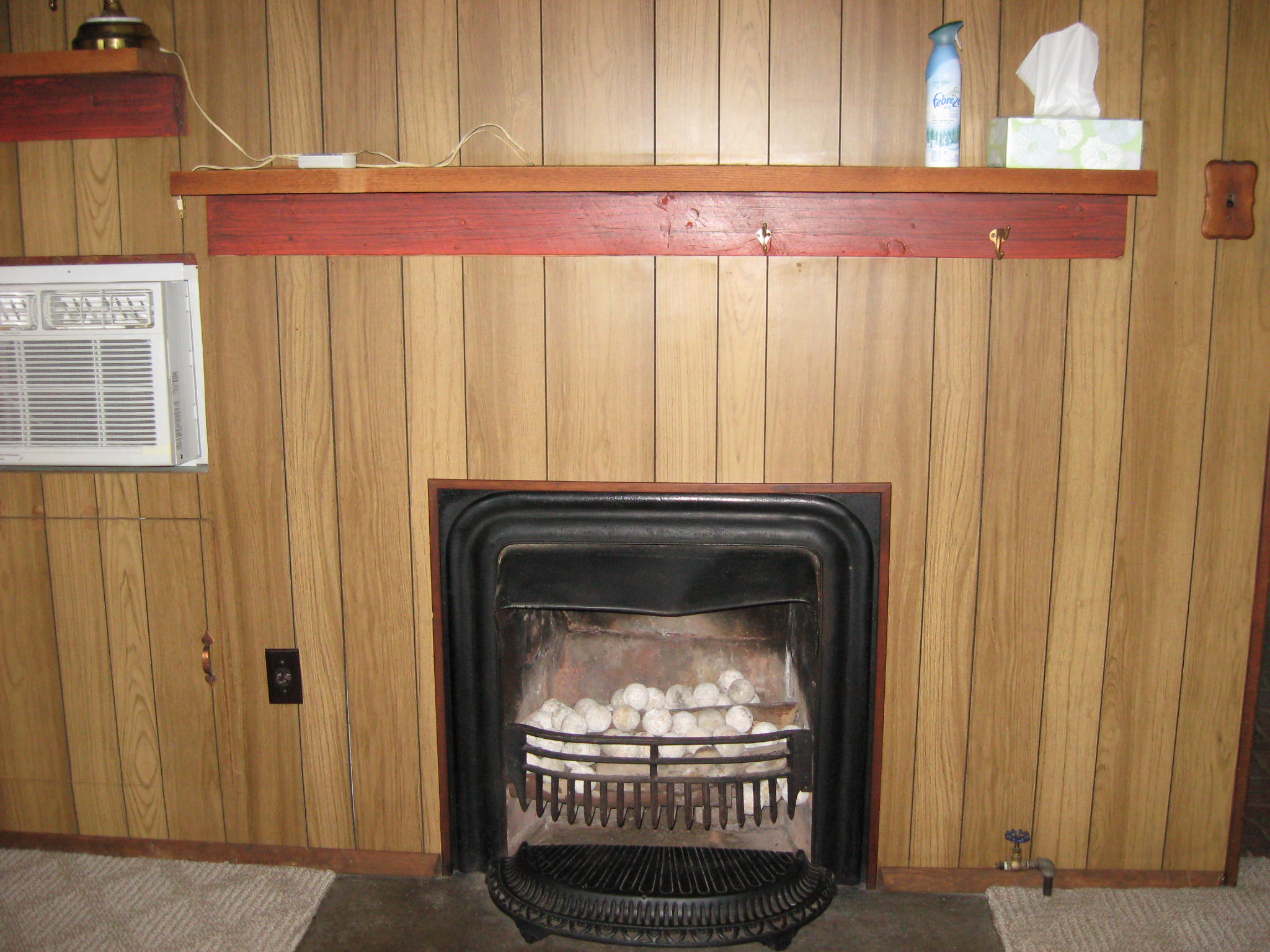
This is what the fireplace looked like in August 2011, when we first acquired the cottage. Clara’s knickknacks and collectibles are gone from the mantle, and in their place is the febreeze and tissues!

It’s been a puzzle to us, how we were going to fix up and adapt the chimney for our use. We know it will need work, no matter what we decide. Earlier in the process of rehabbing the kitchen, when we were more naive, we took off the round stove pipe cover in the kitchen (just for curiosity); we discovered it was full of leaves, sticks, ashes, probably mouse nests, bird feathers, and other unmentionables. We quickly put the cover back on and said, “Okay, something else we have to clean before the kitchen reno is finished.”

We were supposed to do that this weekend (in my mind anyway…) but it was just another thing that got put on hold while life happened. It will be next weekend, I think; but it’s just as well because, dear readers, I think you would be totally disgusted by any pictures of this process. So I am off the hook for showing them to you; you are off the hook for having to look at them, and we shall simply move on to other, more favorable aspects of the chimney…

IMG_1158

Not that this is very favorable! But you’ll notice that tools have replaced the Febreeze. And notice the paint shadows around the fireplace that tell us where some sort of hearth used to be.

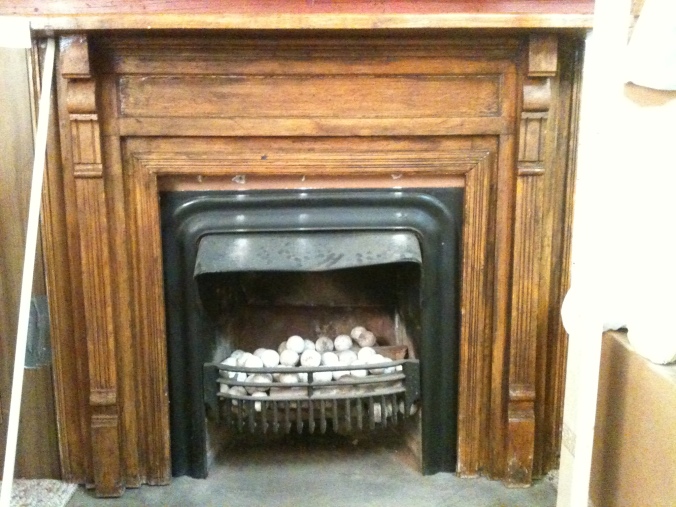
We found this mantle pictured below in Waynesburg at a great little store called Jan’s Country Nook and Hardware. She bought the hardware store several years ago; she has kept the hardware inventory and added her own antiques and collectible finds. There’s everything from hard-to-find screws, antique oil finish, wash basins, quilts, canning jars, and old whatchacallits… A fireplace mantle in the window drew us inside. When we walked in, there were two old timers there looking around and offering their commentaries — “Well look at this, I ain’t seen one a these in years!” “Is that a real stuffed coon? He looks like he’s seen some hard times!” She had several fireplace mantles leaning around, and we found this one that was the perfect size. Well, almost perfect. So we paid our $75 and hauled it away.
Fireplace mantle

This mantle is old (dove-tailed joints) and made of pine, but stain-varnished to look like oak. I love that about it. It was made by a craftsman who just used pine…It was also used for a coal fireplace because it is filthy with coal dust. That’s what gives it the lovely patina! We aren’t sure what will happen when we start to clean it. The stain varnish may come right off and we’ll end up painting it…Ah, the adventures an old house brings!

Only after we got home and leaned the mantle up against the fireplace, did we seriously start looking for gas logs. (See post 41. A Winter’s Eve.) And that’s when we discovered that our lovely little living room fireplace is actually for coal. This was typically done in Victorian houses in bedrooms for a lttle extra warmth. The fireplace dimensions are small, so gas logs are out. What’s in are very nice looking (read expensive) coal baskets.
Coal-basket

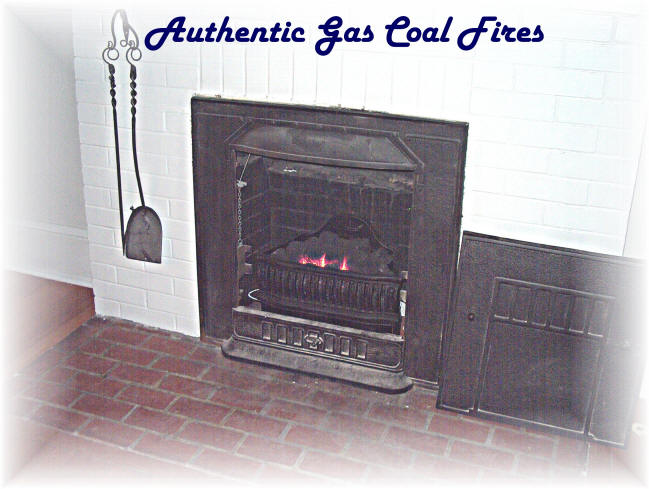
This is a picture of a coal basket from Four Seasons Supply; they sell these gas-coal baskets to retrofit old coal fireplaces.

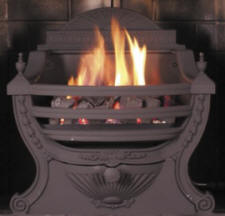
Here is a another style from the same company:16c493f0
If you look closely at one of the photos of our fireplace, you’ll see that we already have the coal basket, so we’re hoping to find a unit that just has the burner and the coal thingys. (Oh, I love the exactness of the word thingy — and the best part is it can be substituted for ANY word! Hand me up that thingy… Did you see that thingy I’m looking for?… What are those round thingys in the fireplace?)

Yes, those round thingys in the fireplace are clay balls that were used to hold the heat in fireplaces. Michael counted them as he took them out of the coal basket — 61 of them! We both thought they were odd; most people who come here ask what they are. But while researching coal fireplaces, I found these fireballs. fireballsThey are now the “Contemporary Alternative” to gas logs at the Gas Log Guys website. Fireballs can be purchased in several different colors — brown, white, gray, adobe red, and black. We only have white, but if you like ’em, we, uh, have 61 for sale…
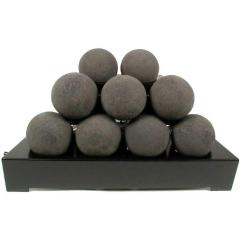
After Michael took out the fireballs, we put the decorative sycamore logs back in the coal grate and went looking for the little cast iron semicircle thingy that used to be in front of the fireplace. We found it and put it back. I cleaned the mantle this weekend (instead of the chimney) and sure enough, the stain varnish is chipping off in places.  We will have to paint it,  or antique it, or encourage its distressed look in some way, but that is more research and another post. Cinnamon brown? Dark gray? Gray-green? (Michael says no to antique white!) Stay tuned. But for now it has been decided — the wood stove with its real fire will go in the mudroom. Stay warm…

20130126-230558.jpg

32. Imperfect Little Cottage

Last week my son-in-law lent me a book called Perfect English Farmhouse by Ros Byam Shaw. Ms. Shaw is a foremost English interior designer and has written several books: Perfect English Cottage; Perfect English; Living Colour; Old House, New Home; as well as Perfect English Farmhouse.

There were several items of entertainment and enjoyment in her book, as well as some inspirational pictures and good color ideas, so in order to adequately discuss these books, I tried to order Perfect English Cottage from the local library. There was only one copy in all of Allegheny County and it was on the holdshelf… So I forked out $$ and bought it, hoping I wouldn’t be sorry.

I will confess to loving decorating books, but I. don’t. purchase. them. I read them from my local library. Otherwise I would overspend my already large and out-of-control book budget. There is not a single decorating book on my bookshelves, unless you count Shelves, Closets, and Cabinets, a no-decorating how-to DIY. There is a lot of pressure to love this book.

I love antiques, real stuff made from real wood, real fabric, real metal, and my house is filled with them. Every one has a story. I’m a 100% kind of person — 100% cotton, 100% wool, 100% old. And here’s the thing : we think 1800s are old! When the English say old, they mean medieval — not like in the US where 100 years is old; some of these farmhouse kitchens have leaded glass windows from the 15th century. Makes the 40s cottage seem downright modern!

AGA Ranges

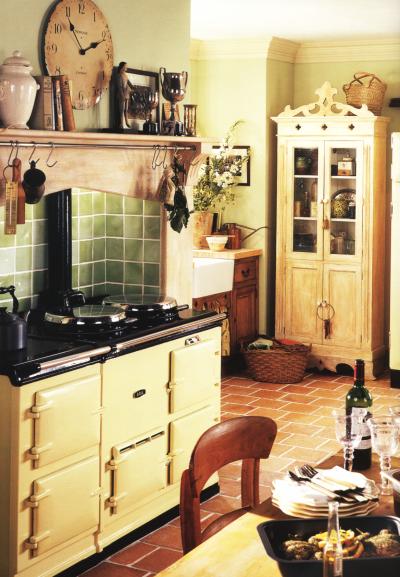
Every kitchen in this book has a wonderful old enameled cast iron stove called an AGA. Oh, I drooled on Pedro’s book! Turns out, one can still buy them!

This is a photo of an Aga from MurphyHeating.com.

They were originally designed and built in Sweden in the early 20th century and became a hit in England from 1925 on. They are never turned off, which makes them an extra heater in the kitchens of chilly England and Northern Europe. Chefs love them; Jamie Oliver says, “I think the AGA makes people better cooks; they’re generally technically better cooks because they understand cooking.” Each AGA has at least three ovens — a roasting oven, a baking oven, and a slow-cook oven. Devotees say they take the place of toasters, slow cookers, tea pots, and clothes dryers. I’ve never seen a demonstration, but they surely are beautiful. Perhaps luvly is the better word.

They come in gas, propane, or electric and some of them have dual fuel options — electric oven, gas “hobs”. (Burners, for all of us Yankees!) This photo is from the AGA website.

Just look at this pistachio one! There’s also one in English Racing Green! and Aubergine! Each of the traditional cookers is hand made in England after it is ordered and then shipped to you in pieces and installed by the dealer. There are nine AGAs for sale on EBay right now, and they vary in price from $1050 to $12,250 — a little over budget no matter how cheaply we got the cabinets, the doors, and the windows — A girl can dream…

Earthy Walls and Paint Shadows

One of the pictures in the book that made me laugh out loud was a photo in the chapter called ‘House of Leather’. The house is 130 years old and “…Much of Matt and Jax’s work on the house consisted of stripping off layers of ancient paint and wallpaper, and they have left this wall unpainted like a mottled map, showing the history of the various colours and patterns that have decorated it in the last 130 years.” Can you imagine? Our cottage is about 65 years old, and we are complaining about scraping off four layers of paint and one of wallpaper… And this wall they left made it into a very elegant decorating book. I love it! I have walls like this! So now I know that we can just leave the walls in the bathroom.

Bathroom wall — looks like old Italian plaster, eh?

They are kind of swirly, yellow avocado and pink–definitely looks like old Italian plaster! Holes might be a problem, but then again, they can just be covered with wall art and towels, yes?

20121028-131629.jpg

Paint shadows around this closet showed us the original moldings. That doesn’t mean we aren’t going to paint over the shadows though…

In a similar scenario, Botelet Farm is a third generation B&B in Cornwall. As son Richard was redoing an upstairs bedroom, he found a paint shadow of a mantle that his parents had removed when they were “modernizing” in the fifties. The old paint showed the details of what had been taken off. He wasn’t sure what to do with it, so it got left like that for a time. (My kind of reno!) After a while, he decided he liked it that way and just left it. We have those too!  As a matter of fact, the paint shadows show how the trim over the doors and the windows used to be, and that has helped us decide how to do the trim around the doors. And look at our fireplace…20121028-132239.jpgThe Cottage Book

The Farmhouse book was lots of fun — I loved many of the rooms and the general simplicity of most of them. The cottage rooms are less stark, but actually, just as shabby. Maybe more so. It just isn’t what I expected. This book is not about cozy, light-filled, chintz-covered cottages. There are saggy rocking chairs with torn upholstery; there are antique pieces with big varnish blotches front and center; and old upholstered chairs draped with scarves, quilts, and antique textiles. I should take comfort in this. I have shabby antiques and sagging rocking chairs. In fact, we are wondering how to make this look better:

20121028-140648.jpg

That is NOT a varnish blotch on the drawer! (And the fake brick linoleum will soon be gone…)

I’ll be honest here: I don’t put stock in perfect things. But I would like the bottom of this kitchen island to look a little less shabby. (I think by the time we’re finished with it, it will.) If I had a lovely old cupboard with an unsightly varnish stain right in the front, I would fix it — no matter what it did to the ‘antique value’. And I can stand a lumpy rocker, but if photographers were coming to feature my home in a decorating book, I would get out my staple gun and staple up the hanging undergarments.

That’s not to say, I didn’t like any of the vignettes in the book — many of the rooms were charming with spectacular harvest tables, luvly painted kitchen “dressers”, and huge old stone and brick fireplaces. But I’ve got a decorating book for sale, half price…

(I’d like to show you some of the pretty rooms, but I don’t want to violate any copyright laws, and I’d be scanning the book to put up photos illegally. I actually requested permission from the publisher, but I am too impatient to wait for their answer. If they ever give me permission, I’ll repost this with photos of the charming spaces.)

29. Being Thankful for Failure Takes a Better Man than I

I don’t fail very often any more; and it certainly isn’t because I’m great at everything I do. No, it is much more because at age 59 and 11/12 I’m fairly aware of my limitations, and I stick to what I do well, or at least, what I’m pretty sure I won’t botch badly. I don’t try high diving or skateboarding or basketball; I don’t try to fix my own computer or my leaky roof; I don’t do my own taxes (although I’m tempted) or read Nature magazine. (What a misnomer that title is!)

But as the laborer at the cottage, I’ve been trying some new things, with a modicum of success. My confidence was up (inflated, even) until this past weekend.

I’ve been sanding the old windows that will go above the kitchen sink. I took out the glass — pane by pain (no blood though) — scraped, sanded, and primed. Eventually it was time to replace the glass; the correct term is reglazing and there used to be people who did this as a profession. They were called glaziers. They have my utmost respect.

I was about to do a real DIY blog post entitled, “How to Reglaze your Old Wood Double Hung Windows.” Notice that is not the title of this post. I took lots of photos and even cleaned my fingernails. I had visions of About.com contacting me and asking me to do regular DIY posts.

You might be asking “Why would you be so sure you could do this?” A very good question! Here are some random answers:

  • I am fairly good at artistic endeavors: I can sew, knit, and scrapbook. I have made a couple of quilts. I can do passable graphics, and I’m really good at using scissors and coloring.
  • I am particular and neat about my final work, tending toward perfectionism. (This could have been a warning sign…)
  • I am very good at reading directions.
  • I nailed the first part of the glazing process.

I have about twelve good photos from that first part, which is called the back bead. In effect, it sets the glass in place and seals the inside. It is easy. You just make snakes of the glazing putty, push the glass in, put in the points to hold the glass, and scrape off the excess putty. Would you like to see my pictures???

This slideshow requires JavaScript.

I worked on the second part of the process, which is the outside of the window (I kept reminding myself it was the outside and hardly anyone would see it)  for two hours. This is one pane; there are 6 panes per window and 4 windows = 24 panes. I pulled up the snakes and started again at least three times. I angled the glazing tool 100 different ways. When Michael came in from his own window project and asked how it was going, I’m not sure I answered him. Yes. Juvenile. He took the glazing tool from my hand and said, “Well, let’s see…”

When the going gets tough, the tough go take a nap. Two hours of napping and the longest, hottest shower I could take, and Voila! Michael has the entire window finished.

Technically, I am delighted that he could do it, and it looks great. I am glad to have a talented husband. The thing is, I’m supposed to do the unskilled labor and leave the jobs that only he can do (and there are a lot of those!) for him. I was supposed to be able to do this… This is a lesson in humility.

Oh, I know that Dr. Seuss sent his first book in and it was rejected multiple times. Madeline L’Engle‘s book A Wrinkle in Time (which later won the Newbery Award) was rejected 29 times. It took Thomas Edison 10,000 times to get the filament right on his first light bulb…I KNOW ALL THAT! And these failure quotes that you are about to read — I’ve read them all a dozen times. They are platitudes: boring, insipid, and … true.

“There are no secrets to success. It is the result of preparation, hard work, and learning from failure.” — Colin Powell

“Failure is only the opportunity to begin again, only this time more wisely.” — Henry Ford

“I have not failed. I’ve just found 10,000 ways that won’t work.” — Thomas Edison

“All my successes have been built on my failures.” — Benjamin Disraeli

 “If you have made mistakes, even serious ones, there is always another chance for you. What we call failure is not the falling down, but the staying down.” — Mary Pickford

“Failure doesn’t mean you are a failure…it just means you haven’t succeeded yet. ” — Robert Schuller

“I’ve missed more than 9000 shots in my career. I’ve lost almost 300 games. Twenty-six times I’ve been trusted to take the game winning shot and missed. I’ve failed over and over and over again in my life. And that is why I succeed.” — Michael Jordan

and my personal favorite:

“Success is the ability to go from failure to failure without losing your enthusiasm.” — Winston Churchill

Yes, that’s what happened; I certainly lost my enthusiasm and never regained it.

The ironic thing is that we had just had a discussion about fear of failure in church the day before! God asked Moses to lead his people out of slavery, and Moses politely declined at first. “Send someone else, God. I’m not really good at what you want me to do…” We all fear failure, but as those quotes above point out, failure is always a lesson. It could be a lesson in hard work, or lack of preparation; it could be an opportunity for a second chance, or to encourage creativity and enthusiasm;  it could be a lesson in losing gracefully or developing patience; or it simply could be to learn humility.

Moses went to Pharaoh to ask for the people’s freedom. Seven times (at least) he went. Can you imagine what he was feeling that last time? “Oh no, Lord! Do I have to go again???” God chose Moses, so His strength would shine through Moses’ weaknesses and failures. Failure is not only all those lessons above; it is a God-given gift! So we won’t live proud. So we can be thankful for those failures.

I’ve got three more windows to work on. I will certainly do the inside seal, but I’m not sure if I’ll try the outside bead of putty again. Perhaps I just need to practice…or perhaps it is a skill I won’t ever master. I need to know for sure, though, don’t I?

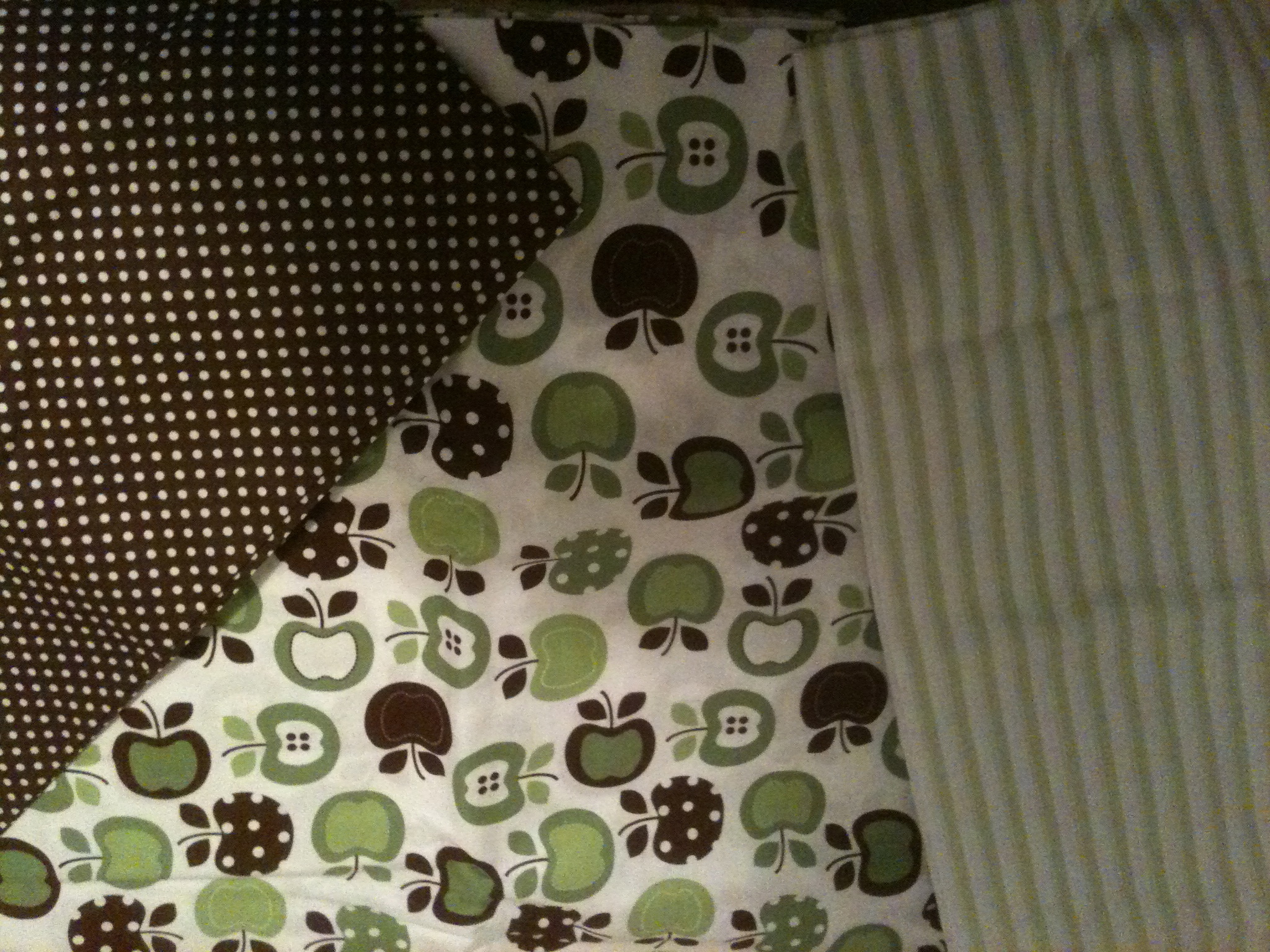
In the meantime, I’m sewing some shelf liners from this great apple fabric I ordered. No fear of failure with this project!
Apple fabric