11. Sundays at the Cottage: Rest Is Ordained by God
May, 2014
There’s been much chaos in my life lately….
Dashing between two houses, fixing up one to live in, fixing up one to sell, both of us working jobs, and trying to balance everything? I feel as though I am failing at it all.
We knew that redoing this little cottage would be hard; we were committed to having no downtime, but we forgot to factor in that we would also have another house to fix up too—the one we would be selling. After two years? I’m tired. Contractor husband is tired. We have iron-poor blood. Burnout with a capital B; Exhaustion with a capital E; Drained with a capital D. Bed—I just want to sleep for three weeks straight.
In about three weeks the job that I have loved for nine years will be ended, our city house will be almost on the market and we will be gently moving all summer (or until the house sells) to this unfinished cottage. (Please understand: I am not whining or complaining. I still love the cottage. I can’t wait to get here–I just want to wimp out about the rest of the work we have to do.)
Just looking at this To Do List makes me tired. (You might notice that “write” is not on the To Do List.) And this is only my list; it doesn’t begin to cover the contractor husband’s list.
Lately, because we are focusing on getting the city house ready to sell, we’ve only been at the cottage on Sundays. There’s no time to do projects, so it has been a day of rest for me. (Not for husband—he has to get the tractor out and mow because the grass is growing like it’s spring or something…)
At first I fought it and called it forced rest. But today I am sitting on the porch with my glass of cider, heeding the rules of the Sabbath. We need this weekly rest. God knew it and named it–Sabbath rest. I sit here and look at the sky and the trees and listen to the bird song and the trill of a woodpecker and the sack of burdens on my shoulder lightens with each breath. Today it’s a little chilly, so I have a blanket and a kitty for warmth. Yes, there is a breeze.
There’s a ton of stuff I have to do. I see my To Do List when I close my eyes. I hear the world’s voice in my worries: If you don’t get that house on the market by June, it will never sell. And then what will you do? You need to be more efficient with your time. Etc. Etc. And then sometimes, when I’m listening, I hear the still, small voice: Peace my child. I am in control. Give me your worries and submit to my time. That’s what a Sabbath rest is for, and it is why God ordained it. He knew we would never stop working, shopping, tending, doing, (add your verb here) long enough to just sit and listen for His voice.
Today the sun is golden in the blue sky and I am resting in the white fluffy clouds of God’s magnificent creation. Savoring nature is the easiest way to still the never-ending, jumping-around, neuron-colliding ruminations in my head.
But there are other ways to hear and feel God’s voice. He speaks through scripture and, often as not, when I am sitting on the back porch swing I have a Bible open on my lap. Sometimes it is my study Bible, and a companion notebook to write down difficult passages or Aha! moments. Just last week I purchased a journaling Bible that has no notes, no historical references, no maps. In that same vein, several reading Bibles have just been recently published; while divided into books, they have no chapter or verse markings to distract. I’m thinking I would like to read the Bible that way, too.
I can sit on that back porch swing and sing my favorite Godsongs. Although my voice is not as sweet as the wood thrush who lives in the nearby woods, it is a little better than the squawking crow who is calling to his mate from the barn roof.
I can also read worthwhile books. Some on my to-read list: Life Together by Bonhoeffer; The Brothers Karamazov, which it pains me to say I’ve never read; A Severe Mercy by Sheldon Vanauken; Just As I Am by Eugenia Price; A Place on Earth by Wendell Berry; The Place of the Lion by Charles Williams.
I have consciously put away technology for this afternoon. I don’t want to look at that To Do List; but, I do have books on my Kindle, and a study bible on my iPad. The problem is that it’s much too tempting to maybe just check my email for a second, or the stats on my blog for the day. I don’t do Facebook, for that very reason, but we all know how enticing technology is when the phone, the iPad, the game controller, or the remote is in your hand. Fasting from technology on a Sunday is a good thing to do.
There is no law for believers to rest on the Sabbath. We don’t want to be like Pharisees about this. On occasion we go to grocery stores after church, and in the summer I work in my garden on Sundays. (To me, that isn’t work). But we are not now bound by laws—Jesus is our rest, our peace. If you have to work on Sundays, that’s the way it is; just be encouraged to take some other time during the week to rest, to listen to God, to pray. He made us to need Him; don’t think you can do it on your own. Take a rest from doing, and Be.
The Hebrew word for Sabbath, or rest, is Shabbat and was also “one of the terms employed by the Jews for ‘salvation’” (according to John W. Bowman who wrote The Layman’s Bible Commentary to Hebrews). In Hebrews 3 and 4 the author discusses the concept of Jesus as our Sabbath rest. Jesus, through his sacrifice on the cross, frees us from the works of the law and allows us to rest in the work of Jesus. That same sacrifice paid the price for our salvation. Jesus calls himself the “Lord of the Sabbath” (Matthew 12:8), the Lord of rest. He says, “Come to me all you who are weary and burdened, and I will give you rest…” in Matthew 11:28. If we rest in the work of Jesus, we will know that salvation—it is waiting for us eternally, and now in this world too. We no longer have to worry about our works gaining us good standing with God; we no longer have to worry about all those laws that God ordained for His people to keep (just read Leviticus if you don’t know what I mean!); and, as a result, we can have peace if “we draw near to the throne of grace, that we may receive mercy and find grace to help in time of need.” Hebrews 4:16
And so for today, I am efficiently using my time—resting and listening and being thankful for that grace and mercy provided to me by my savior—and he is allowing me to banish any visions of the To Do List that might flutter across my eyes.
Write your to-do list, tear it out, and either crumple it up or burn it or shred it. (Burning or shredding is better—then you won’t be tempted to dig it out of the trash and smooth it out.)
How amazing is it that Sabbath rest and salvation were used interchangeably in the Old Testament. How does that make you feel about resting on Sunday? Do you struggle under the burden of resting? What can we rest from?
Hebrews 4 also makes clear the connection of Sabbath rest and salvation. One verse reads, “Nothing in all creation is hidden from God’s sight. Everything is uncovered and laid bare before the eyes of him to whom we must give account.” That is a scary verse! Yet just a few verses later the writer encourages us with the thought that we have a great High Priest in Jesus who understands our temptations and our humanity because He was human. How do you view the ending of Chapter 4?
Perhaps God gave us a “Sabbath Year” during the pandemic? The Jews were to have a Sabbath Year every 7 years (ours is way overdue) and then a year of Jubilee every 50th year (the end of seven seven-year cycles). That year was to be a year of debts forgiven, slaves and prisoners set free, and the mercies of God would be manifest. (It’s not clear if the chosen people ever celebrated this year of jubilee) Michael Card writes and sings, Jesus is our Jubilee. What takeaways did you learn from that Sabbath year of forced rest?
I just want to remind you that not too long ago we talked about busyness being self-importance. It’s so easy to forget, isn’t it?
12. Apples, Walnuts, and Pears: Bounty and Scarcity
My grandfather built the cottage in the nineteen thirties; my great aunt and uncle later lived here and sold apples from the front yard. When the contractor husband’s parents, Joe and Clara, bought the orchard from my grandfather, Joe took classes in orcharding, pruning, and spraying from Penn State. They ran it for several years, but eventually they divided the property into three parcels and sold the orchard acreage. It’s been sold twice since then, and the fruit trees that remain are broken down and unproductive. We wanted to make sure Apple Hill Road lived up to its name, so that first spring after we acquired Apple Hill Cottage, we planted a few fruit trees.
Joe named the road and made the sign, and now it is even listed on Google Maps…
For a time the old orchard property (which still has a greenhouse and a barn) was being rented by a local couple who were trying to make a go of a small nursery. So we drove the tractor over one sunny May morning and purchased two apple trees — a Honey Crisp and an Ida Red — and two pear trees — a Bartlett and a Luscious. Each year we’ve tried to plant at least two more fruit trees or berry bushes: we now have sixteen fruit trees, a dozen berry bushes, two grape vines, and an English walnut tree–all in varying degrees of fruitfulness.
The walnut tree was a total surprise. One bright October afternoon the contractor husband came into the house holding six or seven brown English walnuts — the kind you buy in the stores at Christmas time. “Look what I found in the yard,” he said. “There’s a lot of them.”
I followed him back out to the edge of the yard and we gazed up into the leaves to see hundreds of green husks just beginning to open. When the husks open, the brown shelled walnuts fall onto the ground, the road, the neighbor’s driveway…Within two weeks we had racks and racks of walnuts drying all over the house. The walnut tree is either feast or famine: we had two years of bumper crops; then two years of none. Two years ago we counted as we harvested: 993 walnuts, give or take 20. (It’s hard to remember your count when you are bending and stretching and picking up nuts from the ground…) Maple glazed walnuts in a Mason jar make lovely Christmas gifts. But last year there were none. (That was easy to count.) Bounty and scarcity, plenty and want.
The apple trees we planted five years ago are just now getting to the age where they will produce apples regularly. So far the only good producing trees are the two bent, aged trees that were here long ago, leftovers from the old orchard. We’ve pruned them back hard, but they won’t last much longer. The young trees have had a few apples here and there, but they are mostly what my grandfather used to call “little bits a nothin’.” The trees were set back several summers ago by a devastating plague of seventeen year locusts.
Periodical cicadas to be specific; and they decimated the young fruit trees we had nurtured. At the time it seemed to us a plague of biblical proportions, but all the trees survived, though not without damages. Then there was their recovery summer, and we were hoping last summer would be the year of the apples, but instead we had a week of 20 degree temperatures in May–and two days of snow–after all the trees had blossomed. The only fruit we had were a couple of quarts of blueberries. There are so many factors that can intervene to ruin apple crops: early blossoming, pollination failure, late frosts, too much rain, not enough rain, insects, deer… Even when there are apples on the tree, they can be lost or ruined by June drop, scab, insects, and various blights. Bounty and scarcity, plenty and want.
The two pear trees were much taller than the two apple trees we planted at the same time, so it’s likely they were a year or so older. Four summers ago we had our first real crop of pears. The Luscious tree yielded a bushel of large picture-perfect pears that we saved for eating fresh and giving away. The Bartlett tree yielded a bushel of many small pears that I canned and made into pear butter. In September, we were overrun with pears; by December the fresh ones were gone and we were left with canned ginger pears in the cupboard. Oh, they are good, but there is nothing like a juicy fresh pear. But since then? We had a summer of locusts, a summer in which only one tree produced, and the summer of frosts. Bounty and scarcity, plenty and want.
Bounty and scarcity. Plenty and want. The seasons of our lives are marked by these contradictions. At any time the loss of a job, a spouse, or health, can change our financial realities from prosperity to poverty. Here in 2020, this time of Covid-19, it’s become very obvious how prosperity can turn into poverty in just several short months. How do we live successfully through lean times? If and when good times return, can we live in compassion and generosity by remembering our own past troubles?
Paul writes of this in Philippians 4:11-12 when he says, “I am not saying this because I am in need, for I have learned to be content whatever the circumstances. I know what it is to be in need, and I know what it is to have plenty. I have learned the secret of being content in any and every situation, whether well fed or hungry, whether living in plenty or in want.”
I want that. I want his secret of being content in any and every situation. I don’t want to want fresh pears in February when I have delicious canned pears in my cupboard. Why isn’t that good enough for me? During a lean month (a contractor’s life consists of always trying to maintain the right balance between lean months and months of plenty) I don’t want to worry about bills. Don’t we all want that peace of being content in every situation? What is Paul’s secret? — He tells us in verse 13: “I can do all this through him who gives me strength.”
Put your needs, your wants, your discontents in God’s hands, not the world’s hands. Don’t look at those fresh pears from Australia or South America in the grocery store. Prayerfully think instead, “I don’t need these; I have a cupboard full of canned ginger pears from the bounty of last summer. Thank you Lord, for that provision.”
It isn’t easy, here in the land of plenty, where companies and advertisers make their living on making us want their stuff so much that we think we need it. Can’t live with out it–or maybe we know we could live without it, but we can’t live well without it.
How do we balance the world’s idea of living well with God’s truth of how to live well? Because the world’s truth and God’s truth are often at opposition, just as plenty and want are opposites; we need to learn how to do this balancing act if we are to live out our faith. I am no mathematician, but here is my vision of that balancing act. Draw a circle and two points on the boundary of the circle directly across from each other. Label one point Plenty; label the other point Want. Between those two points you can draw the true diameter. Truth. God. Draw a little triangle below that line in the middle that represents the balancing that God requires of us. It also represents the center of our lives, where God is (or needs to be). The triangle is a nice metaphor for the Trinity–God, Spirit, Son–don’t you think?
The worry about unpaid bills, or your job, or your relationship, or (fill in the blank here) is not to be in the center of the circle. Banish it to the outside point on the circle of your life and make God the center. The treasure. “For where your treasure is, there your heart will be also.” (Matthew 6:21) And Matthew gives us another verse later on that lets us know what will happen when our heart is in the center with God: “Come to me all you who are weary and burdened, and I will give you rest. Take my yoke upon you and learn from me, for I am gentle and humble in heart, and you will find rest for your souls. For my yoke is easy and my burden is light.” (Matthew 12:28-30) Jesus tells us that when He is the center, we can rest in Him. Rest from the world’s worries. Rest from your anxieties. Rest from the fear of scarcity.
The story from Luke, Chapter 21 about the widow’s offering helps to remind me of a good way to actually live out banishing the fear of scarcity to the outer point of the circle, and how to keep Jesus in the center. After watching a poor widow put two copper coins in the offering plate, Jesus says, “‘I tell you the truth,’ he said, ‘this poor widow has put in more than all the others. All these people gave their gifts out of wealth; but she out of her poverty put in all she had to live on.’” (Luke 21:3-4) Remembering this story encourages me to give extra when I am feeling poor, because I have never given all I had to live on. Even when we are feeling that there isn’t money to put in the offering plate on Sunday, remember this story and do it anyway. Can I just tell you? So far, the bills have always gotten paid.
There’s one more practical way to help combat those worries when times are lean: remembering your blessings. It’s hard to worry about an empty cup, when you are recounting remembrances of that same cup running over. Counting your blessings, as the song says, is the way to see what the Lord has done.
Recount a time (or times) when you felt poverty or want. Did you feel worldly anxiety or God’s peace? Now remember a time when you were poor and God provided. Thank God for His provision and blessings for your life. Be specific.
How can you live more generously? Be specific here, too.
There’s a quote from Matthew Henry that goes something like this: “It is not poverty that makes one unhappy, it is discontent.” And contentment can be found anywhere, any time through Jesus. It strikes me that sometimes discontent can be monetary, but it certainly doesn’t have to be. Discontent can come from a scarcity of ___________. Fill in the blank. How do you center yourself on Jesus in times of discontent?
Paul gives us plenty of concrete ideas on how to rejoice always in Philippians 4:4-9. List some of them.
Just a week or so ago, when I was getting this post together, Psalm 37 was part of my reading. I was blessed (again) by two prayers in Tim Keller’s book The Songs of Jesus. I have combined them for us here:
“Lord, how easy it is to put faith in power and money. If I know the right people and have plenty in the bank, I’m secure–an illusion! Through the cross my great debt has been paid, and through the Resurrection my future wealth is assured. Let me rest in that daily. Lord, it is difficult for me to trust in your provision for me enough to be radically generous with my money. But if Jesus had been as grudging with his life and blood as I am with my money, then where would I be? Make me a joyful giver. Amen.” (pages 74-75)
13. The Table’s Tale: Rehabilitation, Refinishing, and Renewal
February, 2014
I think I might have been the first furniture piece they purchased for the cottage. I was reduced to being sold for $35 at the Habitat for Humanity Thrift Store. It was absolutely humiliating, but they were very delighted. She wrote about it on her blog and called it a great deal. I shudder to think of it.
I admit I was no beauty anymore; I was a bit down and out, but I had solid black iron underneath, and at one time I was imposing. (Imported from Europe, but I don’t like to brag.) Plus, I lived large. Many people could squeeze around me, say grace, shout about the mashed potatoes, spill gravy, slosh coffee, and just, well, eat, drink and be merry. I was a table that said Home.
I heard her say that she was just going to paint me and let me be a shabby chic table; I don’t know what that means, but I am no Shabby Chick. I put all my hopes on the man; I could see he was a carpenter—all those tools! He could appreciate nice looking wood, even if I was just a fancy veneer over plain pine. Everyone has a veneer, right? And my heart and covering were both good solid woods. (And I do have great, curvy legs, if I do say so myself…) When the man got out his sander I was a bit nervous, but he was easy on me and I came out looking smooth and polished—a bit pale maybe, but definitely not shabby. Suddenly I was feeling rather Pottery Barn-ish.
I tell you I was thinking, Yes! Now I’m home and there will be real meals again! And then I was covered up in layers of plastic tablecloths, sheets, and tarps, and it was back to being a grunt work table for two more years. Even though They Said they were going to fix me up, I was beginning to lose hope.
Then one fine day, she uncovered me, moved me around, and started with the sandpaper on my legs… I wasn’t sure what to think about that pot of green paint she had with her. I thought that whole paint issue had been settled. I made her bump her head a few times before I decided I rather liked that silky green paint on my legs…
But still they hadn’t done anything to keep those gravy stains from permanently damaging my new complexion. When they finally moved me in place, I tried my best to look like I needed a vacation to the islands or somewhere sunny. Alas, all they did was give me a fake tan. But that oil they rubbed on my skin did warm me up, and three coats belonging to Polly somebody have just brought out my inner glow…
At least they have fixed up the walls I’m sitting beside. Talk about shabby? Oh, my! And those little lights above me are very sweet — they can be dim or bright depending on their mood, but we all have our little quirks, don’t you think? I think we’ll get along fabulously.
Am I not beautiful?
What concerns me now is the chairs she might surround me with… I don’t want to tangle legs with mismatched Duncan Phyfes or lazy benches or painted-up shabby chicks. And no bistro chairs, please. What is a redeemed table to do but worry about the company she keeps? I think several upright parson’s chairs would do quite nicely, thank you.
“Eh,” she says, “you’re getting a bit uppity don’t you think? I don’t need La Table telling me what to do!”
“Ahem!” she says. “I saw another table just like you today at Construction Junction for $45, so don’t go upscale on me!”
Forty-five dollars? Bring on those shabby chick chairs…
Down and Out, Longing for Renewal
Let’s leave the table in the dining room for a few minutes and think about our own renewal. God promised us—many many times in scripture—a refinishing, a renovation, a restoration of our souls when we trust in Him. “Therefore, if anyone is in Christ, he is a new creation. The old has passed away; behold the new has come.” (2 Corinthians 5:17)
Remember when you longed to become new? When you finally admitted to yourself that you were a bit down and out, faded maybe, even though you had once been imposing. Or perhaps you actually fell apart? God does that to us—makes us realize that we can’t do it on our own. Sometimes He really humiliates us before we figure that out; or sometimes instead of humiliation, He allows suffering. But whatever it was—however God brought you to Him—don’t allow yourself to forget it. Because more than anything, God wants us to use that same weakness to bring others to Him. He never makes us go through pain, depression, illness, divorce, addiction… for no reason.
“Consider it pure joy, my brothers and sisters, whenever you face trials of many kinds, because you know that the testing of your faith produces perseverance. Let perseverance finish its work so that you may be mature and complete, not lacking anything.”
(James 1:2-4)
A Thin Veneer or Solid Wood?
Think of the others who might benefit from the wisdom that you learned back then, while you were going through your own fiery trial, and don’t waste it. God doesn’t want followers who have a veneer of Christianity; He wants rock solid followers who aren’t afraid to get dirty, aren’t afraid to scratch that veneer of superficiality, aren’t afraid to admit their own past failings and fears, sins and shortcomings.
Just look at the disciples as examples. Jesus named Peter the rock, when he was anything but a rock. Peter had moments of brilliance, yes, but then plummeted to the depths of desertion and renunciation before Jesus forgave him and made him the leader and feeder of His sheep.
Thomas spoke amazing words of faithfulness when he said to the other disciples, “Let us go with Him, that we might die with Him,” (John 11:16) yet he also professed confusion and doubt on other occasions, when he said out loud that they didn’t know where Jesus was going, so how could they follow Him (John 14:5); and of course, the phrase which gave him the nickname Doubting Thomas — “…unless I see the nail marks in His hands and put my finger where the nails were, and put my hand into His side, I will not believe.” (John 20:25)
And Paul? He tormented Christians until Christ blinded him on the road to Damascus and then allowed him to see with new eyes. It was a regeneration of gargantuan proportions: the former persecutor becomes the greatest evangelist of all time. But none of that rock solid faithfulness of the apostles happened overnight. It took years. Why should we be different?
Losing Hope in the Wait
No matter where we are in the stages of refinishing a piece of furniture, a table, for instance, there will always be times of inactivity or waiting. Perhaps we are waiting for the finish to dry, or perhaps we get sidetracked by the little details of another project—that table sat unfinished for almost two years before we were ready—and she herself said she was beginning to lose hope. But to be rebuilt, reconstructed, or renovated, takes time and patience. It is not for the faint of heart:
“Therefore we do not lose heart. Though outwardly we are wasting away, yet inwardly we are being renewed day by day. For our light and momentary troubles are achieving for us an eternal glory that far outweighs them all.”
(2 Corinthians 4: 16-17)
Read that last verse again and consider what that renewal is bringing us—a home grander than any worldly mansion, a hope beyond all earthly hopes, an eternal glory that far outweighs anything we can comprehend. Can we wait for that?
Protection from those Gravy Stains
In the midst of the restoration work on the table, there came a time, when she was laid bare: sanded down to raw wood—exposed and vulnerable to all sorts of stains and spots from those who surrounded her. Yes, that table needed three coats of spar varnish for protection.
We’ve all felt that need for special care—to have our hearts wrapped
“…in a blue cloud-cloth away from the too-rough fingers of the world.”
Langston Hughes, The Dreamkeeper
When we are defenseless we need only take up God’s Book, which will arm us with power. When we need protection, we must repeat over and over to ourselves the verses that affirm God’s care and protection over us. He himself tells us to “put on the full armor of God.” (Ephesians 6:10-18) There is the belt of truth, the breastplate of righteousness, the shield of faith, the helmet of salvation, but perhaps most important of all, is “…the sword of the Spirit, which is the word of God.” (Ephesians 6:18)
Just today in the sermon, the pastor reminded us that it is difficult to avail ourselves of God’s protection if we do not immerse ourselves in His word. He said, “I am at times brought into situations where folks are facing great difficulties and I want to encourage them to pray, but that is most difficult because they have not had the years of training in God’s Word.”(sermon by John Dorean)
Find your favorite verses about trusting in God’s protection. Memorize them. Some of those verses are amazingly easy to remember: “Have I not commanded you? Be strong and courageous. Do not be afraid; do not be discouraged, for the LORD your God will be with you wherever you go.” (Joshua 1:9)
I have two favorites:
Just imagine the Holy God of the world redeeming you, knowing you by name, protecting you from flood and fire, and watching over your coming and going now and forever. Three coats of spar varnish, indeed.
The Company We Keep
Yet despite her own sins and her vulnerabilities, despite her renovation and redemption, what does the table worry about? The morality of the chairs with whom she will associate. My dining room table has become a Pharisee!
And yet, it is a battle fought by all the redeemed of God. We must forever forget the sins we have been forgiven from; scripture says they are wiped clean, (“I have been crucified with Christ. It is no longer I who live, but Christ who lives in me…” — Galatians 2:20) but at the same time we must never forget them or the magnitude of them, or we run the risk of forgetting the amazing grace and mercy of Christ who died to save us from those very sins. We are no better than anyone else; we have no right to moralize or condemn, but only to love with Christ’s love that now lives inside us.
And if it is within God’s power and mercy to redeem you and me, then He can cause your neighbor, your loved one, your church, your town, the world to explode in reawakening, renewal, restoration, revival. To paraphrase Matthew 19:26, all things are possible with God.
One of my primary struggles is putting to death what is earthly in me. There are several ways–awareness, prayer, self-discipline–but we can also think of putting on the protections of God–His armor? His garments? Thoughts?
The first part of Colossians 3 tells us about the earthly sins, and there is quite a long list. A couple of weeks ago we talked about the (ancient) seven deadly sins, but more recently Jerry Bridges wrote the book called Respectable Sins: Confronting the Sins We Tolerate. These are the sins like pride, jealousy, unthankfulness, judgmentalism, discontent, selfishness, envy, gossip… that we tolerate in ourselves (while criticizing others for their big sins!). How can we strike a balance on desiring personal holiness and being convicted of our sins, yet not dwelling on them?
The beat-up old table struggled with several things; they are printed in bold in the essay above. Is there one that resonates with you and where you are in your Christian journey right now?
That’s why I love the second half of Colossians 3–in answer to the negative sins in the first part, Paul tells us how to live as a new creation in Christ. Which one of these positives resonates with you?
As an exercise, look up all the verses you can find about being cleansed from sin — wipe clean, slate wiped clean, cleanse me from sin — and thank Him for the renewal that is yours, through Jesus.
14. The Messy Beauty of Everyday Life: Jesus Loves us Despite our Messes
I bought a new photo app for my phone the other day for 99 cents. While playing around with it (just pushing buttons, in other words) this photo was the fourth one I took.
I was shocked. It is really just a shot from the back porch here at Apple Hill. None of the others looked like this at all, and I have no idea what I did or how it came out like this. It is totally random, and I’ll probably never be able to recreate the effect; it’s messy; it’s artistic; and it reminds me of a favorite quote from Madeleine L’Engle:
That means, don’t wait—just plunge right in; that means, keep working—it will come; that means, while you’re working, don’t forget to say thank you to the Creator who created you to create.
I’ve been thinking about beauty lately because in the middle of a house remodeling project there is very little beauty: walls being ripped out; ugly boards; years worth of dust and dead bugs (and maybe a mouse or two, as well).
Yet there is a beauty in messes that only the person close to it, the creator, can see. We know what the mess is going to turn into (or at least what we hope it will be!) Think of making a cake: flour, eggshells, sugar spilled on the counter, dirty cups and measuring spoons all over? Yet the end result is a delicious dessert.
We are moving everything out of the kitchen to get ready to lay the floor. All the stuff that was in the kitchen is now in the living room along with what actually belongs in the living room. I don’t even see this mess because I know it’s just a temporary inconvenience; but if anyone came to visit, they might think we’re applying to be on the television show Hoarders. And, really, the entire cottage looks like this right now; there are no Beautiful Photos because there are no beautiful spaces.
Yesterday there was a package of BX Cable coiled around like a hose on the floor of the mudroom; it is shiny silver and wrapped in heavy duty plastic. Electricians use this cable to run wiring—it is waterproof, mouse proof, fireproof. This coil of wire is not the essence of beauty to most people. Most of the time it just sits on shelves of the local home improvement stores and looks plain. But I look at that gorgeous roll of BX cable, and I see new wiring in a wonderfully rehabilitated, once dilapidated, old cottage. I see the cost of it, the hands that labored over it, and what it is replacing—old jumbled up, mouse-chewed, taped-together wires. Now see again with new eyes—Isn’t that a fantastic coil of shiny cable?
What a metaphor for everyday life, for God. Our creator knows and loves us regardless of the mess we used to be (or still are) because he knows what we will be later: a perfectly created work of art; a delicious dessert; a remodeled house, perfectly wired.
For those of us who are still in the messy state of wondering how this is all going to turn out–God loving us regardless of how ugly and taped together we are–is the epitome of hope. And realizing that we are all jumbled up, mouse-chewed, taped-together wires is the beginning. Those wires can’t change themselves into brand new cable; no, not only was there a cost involved in buying the new cable, there were hands that labored over it ripping out the old and replacing it with new…
Just as there was a cost involved for Jesus—and it was very great. It cost Him His life to buy ours. Our lives, bought by Him, are no longer sin-scarred, taped-together wires. Those have been replaced and made new. They are silver-shiny and rehabilitated. “Therefore, if anyone is in Christ, the new creation has come: the old has gone, the new is here!” (2 Corinthians 5:17)
That’s the version of us that He sees, because He is our creator.
Madeleine L’Engle’s quote about inspiration happening as you’re working is so hopeful, isn’t it? Especially to a procrastinator who often uses the excuse that I’m waiting for inspiration… Is there anything that you are putting off doing because you’re waiting for inspiration?
Look at your biggest mess (according to you) and think how Jesus will see it when it has been redeemed and made new.
Do you have a mess going on right now? Broken egg shells and spilled flour all over the counter? Pray for a new vision for it; pray to see it through Jesus’ eyes. Ephesians 1 may help with this: Verses 3-14 tell of God’s amazing plan of adopting us and seeing us as “blameless before Him”, and verses 16-18 remind us to see through the “eyes of our hearts” so we can know this hope.
We are created in His image, so we also are creators. What are you creating right now? Think of this question as holistic and apply it to all areas of your life–physical, emotional, spiritual…
15. Now That We’ve Seen the Worst: In All Things God Works for Good
We’ve been working on this little cottage since 2012.
And in those years, we have learned a lot about old houses, our limitations, and God.
No longer under any illusions, we know that the wiring has been haphazard, the upkeep was minimal, and it was built in fits and starts without much planning. (This is not to cast aspersions on previous owners and builders—they were our grandfathers and great-uncles; they were our fathers and mothers, and we loved them.)
We thought we were prepared for what we were going to see when we took out the kitchen cabinets. We were wrong. Way wrong. We were not prepared. We were both so appalled that I took only one small picture, and that was after we cleaned the floor of grungy insulation, mouse nests, hickory nuts, dead bugs, a mummified mouse, an inch of mouse droppings, and mouse chewed electric wires. There was no photo taken because, quite frankly, I don’t want to remember it.
But that wasn’t the worst. When we took out the second old cabinet along the outside wall of the kitchen, there was a hole. A giant hole where there was no floor; under the cabinet were three small pieces of plywood—each piece about eight inches wide by twelve inches long—just sitting on the joists. Not nailed down. Of course, when the cabinet was pulled out those boards dropped into the crawl space below. Just in case you missed this—there was not a nailed-down floor under the cabinet.
We spent five minutes staring aghast at the ground below; we spent three minutes wondering if Gus the groundhog would poke his nose into the kitchen; and we spent eighteen minutes scurrying around fixing it temporarily, so we could sleep that night. While I guarded the kitchen from Gus, raccoons, snakes, skunks, or any other critters that could possibly make their way up that hole, the contractor husband found enough boards to cover the floor temporarily, while we tried to figure out what was next.
We are not wimps here; we’ve seen holes in walls and floors before…but what is astounding is that these cabinets were installed in the seventies by a Professional Cabinet Company. What kind of Professional Cabinet Company would leave holes in the floors and walls and shrug and say, “Oh just leave it, the cabinets will hide it anyway.”
At one point, early in the new kitchen planning, we tossed around the idea of leaving the kitchen cabinets and just painting them. The internet was filled with articles on how to paint your kitchen cabinets white and update your kitchen. Thankfully we rejected that idea, after examining the poor quality of those junk-board seventies cabinets. Just imagine if we had done that and not found the terrible holes in the walls and the floor. We would have had bugs and critters in the kitchen forever; in fact, Clara had always complained of mice in her bread drawer, and now we know why.
The New (Redeemed) Kitchen during canning season
When we’ve seen the worst—maybe it is our own sin; maybe it is the sin of someone who is very close to us: a spouse, a child, a parent, a best friend, a pastor; or, maybe we’ve been sinned against—we all know that crushing anguish of Why God?
The scenarios are horribly ugly—much worse than mouse droppings and bug detritus and holes in the floor—but those are apt analogies. When we are in the midst of them, it is bleak: we forget to pray, or when we try to pray, no words come. Our favorite Bible passages don’t bring pleasure. God, whom we know in our head loves us and will never forsake us, seems absent from our hearts, and we certainly feel forsaken. How long, Lord? is the cry at the core of our being; but that same core of our being is the place where God’s spirit uniquely resides, whether we feel it or not. God does not say However bad it gets you will always feel my presence. In our bad times we often feel abandoned and forgotten, as if God is far away. Yes, God may feel to us as if he is far away, but he is right next to us, whether we feel it or not. We know this is true, because it is one of his promises: “…I will never leave you nor forsake you.”(Joshua 1:5) Allow me to repeat this–our feelings are not always reliable.
No one is exempt from suffering, no matter what form it takes, great or small, weeks or years. Jesus told us, “In this world you will have trouble…” (John 16:33) This eighty-year-old cottage has seen it all—betrayal, tragedy, death, abandonment, dishonesty, smashed dreams—and so has God. He is not surprised at anyone’s sins or messy lives or detritus. He went to the cross for the debris, the rubble, of our lives. And there is nothing that we can do that will surprise Him, because He knew us before we were born; (Read Psalm 139) he knew (or knows) our past, present, and future sins; and he knows how it will all turn out. He loves us still.
In my NIV Study Bible, that verse—Romans 8:28—is the first verse in the section called More Than Conquerors, and it tells us that no trouble will ever separate us from Christ’s love. Not hardship. Not persecution. Not danger. Not even a sword. No, Paul tells us, all those sufferings are part of life and they have always been part of life, and those troubles actually bring us closer to Christ.
Sometimes we can be so overcome by our own suffering, our own terrible circumstances, that we forget who he made us to be—His light, His truth, His love to a dark and suffering world. We were made to reflect the King, the light of the world, to all who are struggling in the dark.
He takes our messes, our sufferings and turns them around to reflect His likeness. Later, in 2 Corinthians 4:17 Paul calls them “light and momentary troubles.” And what are they doing for us? “Our light and momentary troubles are achieving for us an eternal glory that far outweighs them all.”
When we are in the middle of them they seem dark and endless; if only we can allow Him to nail our sufferings to the cross and not wallow in them; if only we could see and remember that they are light and momentary in consideration of eternity. Please, God, take our if-onlys and make them so. You have promised to repay us for the years the locusts have eaten. (Joel 2:25)
This gives me so much hope, for I have a lot of years that were eaten by locusts. I have a lot of detritus hidden behind the walls. And perhaps I have not yet seen the worst…. But I will not fear, for those sins and sufferings and debris of my life have been nailed to the cross of Jesus through His grace and mercy. When Satan reminds you of the rubbish in your life, sing out in power “…my sin, not in part, but the whole, has been nailed to the cross and I bear it no more, Praise the Lord, Praise the Lord, oh my soul.(It Is Well with my Soul, Horatio G. Spafford)
16. The Color of Light: the created world points us to God
Choosing paint colors is big business these days. There are color tools to help one choose, there are giant paint samples, colors of the month, colors of the year, and innumerable blog posts and web sites on paint colors.
I admit to having trouble making decisions on color, mostly because I love all colors (though that doesn’t mean I want just any color on my walls). There are so many caveats: Is it morning or afternoon light? When will you be spending time in this room? Do you want peace and harmony or a fashion statement or both? What if your favorite color is blue, but your partner can’t stand that color. (Ahem. Who doesn’t like blue? It’s the color of the sky, for goodness sake!)
For inspiration I’ve been sitting on the back porch looking. Looking at the sky (yes, it’s blue!) Looking at the birds. Looking at the world. Every color is here, there. In the natural world, colors just seem to harmonize; the best color matching is always a close copy of God’s own perfect design.
When I think of color and light I tend to get off topic because the physics and metaphysics of light, color, and sight are amazing to me. How do I know if the beautiful shade of Blooming Grove green in my kitchen is the same color you see?
I don’t. It all comes down to our eyes and the light.
I learned a new word the other day: metamerism (met-TAM-er-ism). It means the effect that light has on color, specifically the type of lighting used to illuminate color and how it affects our perceptions of shades and matching.
The varieties of light make colors change. Fluorescent lights, incandescent lights, LEDs, those squiggly bulbs…they all make the same color look different. That’s why decorators tell you to paint a giant swatch in your room. The same color that you love in your north-facing kitchen will look different in the south-facing bedroom. That same color will change in morning light or afternoon light, summer light, or autumn light. Think of the sunlight on the trees and how it changes their colors. Think of the sunlight pouring down and reflecting on a mass of snow crystals and the glittering colors that result.
The glories of creation speak to us of an all-powerful, self-existent, beauty loving God—from the sky and sun and stars to the shape and smell and shade of a hydrangea. The world is filled with minute intricacies and details that “…since the creation of the world, God’s invisible qualities—His eternal power and divine nature—have been clearly seen, being understood from what has been made, so that people are without excuse.” (Romans 1:20)
God the creator has made us to be creators as well. We are made in His image… He has made colors for our eyes, music for our ears, and He has put eternity in our hearts. We are seekers and God is waiting for us to knock at the door. He will never force us to believe, but the created world points us to God. He has made it all: every human, every spiderweb, every musical note, every apple tree, every word picture…
All creation sings and worships…
…and He is waiting for our hearts to open to Him in a thank-you song. How will you say thank-you to the Creator God for putting that creator spirit into you?
17. The Black and White Floor: It’s not always black and white
March 2013
I have had black and white on my brain lately.
Everywhere I look, I see black and white together. Dark and light. Absorbing and reflecting. Hot and cold. Opposites. Contrasts.
Black and white together–it is bold. Courageous. Balanced. Stunning. It takes a stand.
And it’s our new kitchen floor..
I generally believe in hardwood floors or muted rugs because I don’t think it’s a floor’s job to be noticeable.
But this is bold.
The contrast of black and white tiles laid next to each other makes this floor shout out: Look. At. Me. One of my friends shook her head when I told her what we’d be doing with the floor. “If one color doesn’t look dirty,” she said, “the other will.”
Yes, it’s a worry. I’d better be able to keep it clean….
March, 2023
Ten years later, I can say contrasts, opposites, paradoxes–these have been on my mind lately too. Tensions of faith fill the Bible, and sometimes it’s hard for me to get my head around them. I just read today in Joshua 1:7-
There are many other verses that tell us to keep straight on, not veering to the right or the left. (Deuteronomy 5:32; Deuteronomy 28:14; Joshua 23:6; 2 Kings 22:2; Proverbs 4:27; Isaiah 30:21 are just a few…) This is troubling to me, because I don’t always like to stay on the main road…I like taking little detours, or long detours; I think they can add stillness and depth and beauty to a journey. Perhaps I am overthinking it though, because our Christian faith journey is already filled with the enigmas of contrasts, opposites, and tension:
Jesus’ kingdom is already, but not yet. The present may look bleak, but God’s promises for the future are true and the basis for our hope;
We are sinful, but forgiven in God’s eyes;
Grace means we are free from “works righteousness”, but we are still responsible for working for the good;
Christ was a human, yet Christ is God;
God’s will judge us all with his righteous judgment, yet he is also a God of mercy;
God is a God of personal intimacy, yet God is a God of the universe;
Sorrowful, yet rejoicing. God allows both unimaginable joy and unimaginable suffering;
Poor, yet rich;
In the world, but not of the world;
God is sovereign, yet humans are responsible for their own actions;
…and I am certain that I’ve only thought of a few.
How do we, as people of faith, deal with all this tension? We can get stuck on one side or the other, veering off to the right or to the left and lose focus on what is straight ahead. In truth, the world is always calling us to veer off to the right or to the left. Even those words right and left are loaded with the world’s values, aren’t they? (And some of those “right and left” issues are fracturing the American church and Christian testimony right now.) Look at some of those contrasts in the list above and think about which ones trouble you the most. Mike Cosper writes about the balance that Christians must struggle with:
“Does it sound confusing yet? Does it sound absurd? Rest comes with struggle? Blessing comes with wounds? Grace comes from the death of an innocent man?… Life with God is an invitation into a world where most of what makes sense to you crumbles. It’s far richer than you imagined, far less orderly and sensible, and far more mysterious…”
Mike Cosper, Recapturing the Wonder, p. 163
The mysteries are many…
so why must we argue about them and substitute human-made rules? We must remember and take to heart that Christ’s Church is called to be a diverse lot of believers from every tribe and nation. God calls us to be different, to be a peculiar people. He called the Hebrews in the Old Testament to be His chosen people and they failed spectacularly. Yet regardless of their failures, God did not change his plan. He kept on using sinful, prideful people to do his work of building his kingdom. Jesus came and opened the kingdom to all who repent and believe–and yes, the church is STILL made up of prideful sinners, for even though we have the Spirit, even though we are forgiven, and even though Jesus is our cornerstone, God’s blessed Kingdom has not yet come. We are still tempted and tried by the world and its curse of sin. And so often we fail…
And yet, God is sovereign. He holds the spinning planets and stars of the universe loosely in his hands–allowing for our own free will–desiring for none of us to perish. Because we are the people whom he created to be like him (see Genesis 1:26-27) we have that thirst for knowledge, that curiosity, that need to know; and we sometimes (most of the time!) can’t accept the mysteries.
And yet, there are things we don’t know, can’t know, and need not know. We study and study and argue and argue and split churches over doctrine and point fingers at other believers and say You’re wrong about that. (Jesus’ Church has become contentious Pharisees.) I admit I’m no better than anyone else. I saw those Jesus signs held by demonstrators who later took over and tried to destroy the Capitol building, and I cringed. I hate that there are so-called Christians who are trying to make our nation into a theocracy and ruining the witness of Christ. And yet, if I criticize them, I am no better than they are with their loud and ugly signs and words. And yet, God is in control. All of us–you, me, them–we will be judged by a just, but merciful God.
The mysteries are many…
and if you are anything like me, you like to have order and reason in your life. Confusion, uproar, and tension leave me shaky and wishing for peace. Perhaps this is why Jesus talks so often about the peace He gives us. He tells us straight off that it is not like the world’s peace; it’s a different kind of peace. (John 14:27) He knows that humans won’t understand what he is telling them, what he is bringing them. The disciples sometimes have no clue–“Who is this?” they asked each other in Mark 4. “Even the wind and the waves obey him.” (Mark 4:41) The disciples lived with the man Jesus. They saw his miracles daily. They heard his words over and over. And yet still, they didn’t understand until later. That should be comforting to us here in the 21st century who are still living in the not yet and still struggling to understand.
How is the peace that Jesus gives us different from the world’s peace? We all know that worldly peace can be shattered by one event, one phone call. I’m no expert; I still struggle, but I believe the peace of Christ comes through knowing, trusting, and believing his great promises. There are many great promises, but here are a few:
Come to me, all you who are weary and burdened, and I will give you rest. (Matthew 11:28)
For the Son of Man came to seek and to save the lost. (Luke 19:10)
I am the light of the world. Whoever follows me will never walk in darkness, but will have the light of life. (John 8:12)
For everyone who asks receives; the one who seeks finds; and to the one who knocks, the door will be opened. (Matthew 7:8)
I am the way, the truth, and the life. No one comes to the Father except through me. (John 14:6)
Very truly I tell you, the one who believes in me has everlasting life. (John 6:47)
And surely I am with you always, to the very end of the age. (Matthew 28:20)
The mystery here is that Jesus took on our guilt and sins, and after three years of teaching his followers, he took our place as the sacrificial lamb. And now, in God’s eyes, we are seen as sinless and clean as Jesus. So mysterious as to be unbelievable to the rationalists among us….
The mysteries are many…
I can say very truthfully to you that until recently, I raged against those mysteries. I tried my best to understand them. I read and studied diligently; of course, I knew that I was limited by my little brain, but the rationalist in me said I can figure this out if I just study harder and read more! It’s only been lately that I’ve been able to let those mysteries be. Perhaps it’s my old age? Perhaps it’s the hard lessons I’ve learned? But I’ve been encouraged by reading and listening to N.T. Wright. You can listen to his podcast with this link; the two books that have most helped me are Surprised by Hope and The Case for the Psalms: why they are essential. He wrote in his book on the Psalms that Jesus is the point where space, time, and matter converge. It’s fascinating to think about that way, and it encourages me to accept the mysteries; love the mysteries; and make peace with the mysteries.
In my quest for order and understanding, I think perhaps I divided scripture and concepts too much. Rather than thinking about opposites or trying to make contrasting concepts black and white, I should have been concentrating on the whole. God wants our whole mind, heart, body, and soul (Deuteronomy 6:5 andMark 12:30). Rather than dualistically examining faith and works, or rich and poor, or sorrowful yet rejoicing, we should be encompassing the whole of scripture and seeing it as God’s One Big Story for the World. It is the Wholeness that counts.The story consists of concentric circles, overlapping and growing ever larger, that include the whole of time, space, and matter. It is God’s universe, Jesus’ kingdom; and as we live and work and worship as part of that world, the bold and courageous and good things we do for the kingdom will somehow be transformed into that new world that is coming down from heaven. The earthly tensions will be transformed, and we will realize then that they were nothing but mist that obscured the clarity of Jesus’ light.
Questions to think about:
The mysteries are many is a repeated phrase throughout this chapter. What mystery of faith do you particularly struggle with?
All our lives we’re told, “Do your best. If you do your best, that’s all anyone can ask.”
And what, exactly, is our best? How many times can we have a do over? When and how do we draw the line between “our best” and OCD? And who ultimately gives us the final grade? Friends? Lovers? Bosses? Ourselves? Society? Or God?
These are such hard questions I’d better stop now and have a cup of tea. I hope you’re having one with me…
Several events have precipitated these musings on perfectionism.
The Color of my Kitchen
I spent (or wasted) hours poring over paint samples. After purchasing a sample jar of Benjamin Moore Blooming Grove, I fell in love. There were even signs to let me know I’d chosen well: On the way to pick up our kitchen countertop in Eastern Pennsylvania we passed the exit to Blooming Grove. It was a big green sign on the interstate that couldn’t be missed.
Delighted that I’d finally made my decision, I bought a gallon at a store that shall remain nameless. I do have to say that when the mixologist opened the can to show me the paint, I said, “That’s too yellow.”
“No,” he assured me. “This is Blooming Grove. It will dry darker.”
It didn’t dry darker. I painted half of a cabinet door from the sample can, and the other half I painted from the newly purchased gallon. It was a striped cabinet door. One half was lovely spring green, the other half was a not-so-lovely yellowish-green. I struggled with this: I didn’t want to be the whiny-perfectionist-lady-customer who demands a new gallon of paint because it isn’t exactly right.
Nevertheless, it was clearly Not Exactly Right.
Does God want me obsessing over a paint color? Paint color just isn’t that important in the scheme of the universe. I know this. Where does the line fall here?
The Last Glitch in the Kitchen Window Process
Two weeks ago we were ready to put up the windows in the kitchen. The left side just had to be finish coated and we were ready to go. As I sat down to paint it (the paint was poured and the brush dipped) I could see that the primer was not sticking to the glazing. So instead of finish coating, I spent the next three hours peeling little strips of paint/primer from the window muntins. (For those of you who are not old-window-experts, the muntins are the vertical and horizontal strips of wood that hold the panes of glass in place.)
Instead of putting up windows, we were back to priming/drying/painting/drying. It was discouraging. And I wondered as I was sitting on the floor in the late afternoon sun peeling off little strips, “Is this normal?” Would other people say, “Oh for goodness sake, just paint the stupid windows and be done!”
I wanted to do that. But I knew it was peeling. Done poorly. Where does the line fall here?
Life in General; Rehabbing a Cottage in Particular
I don’t mind little imperfections in wood or paint or people; I myself have little imperfections. I am not a complete dorky perfectionist all the time. (The jury is still out on the contractor husband.)
I have buried uncleaned paintbrushes in the bottom of a garbage can because
A. I didn’t want to clean them, or
B. I did clean them, but not good enough and they dried out stiff and I didn’t want any other perfectionist who lives in the household to find them.
Do you know that one could spend hours cleaning a paintbrush? Or peeling paint from an imperfectly primed window…. Or redoing a board because it is a quarter inch off…. Or choosing the right color of paint…. I don’t have any answers here folks. The age old question—blessing or curse—is still a question. But I can tell you that just last week I read a quote from Thomas Merton (much wiser than I…) who said this:
Now I have to go demand a new gallon of paint. (Nicely, of course.)
Post Script: A different clerk at the paint store was truly gracious. She saw the difference in color and looked up the formula to make sure it was mixed correctly. It had been. She was puzzled for a bit, and then she realized that I had purchased a new Benjamin Moore brand of paint and even the uppity-up corporate mixologists hadn’t come out with the correct color formulas yet. She then hand mixed it, showing me the paint every couple of minutes asking me what I thought. She dried the sample with a hair dryer, and, to make sure I was satisfied she told me to bring it back again if it wasn’t right.
Yes. God is the only perfect creator.
Last night I was reclining in bed, surrounded by pillows, books, notebooks, and reading glasses, writing a blog post on my iPhone. The mobile app is very handy when one has a thought and doesn’t want to lose it in the quagmire of daily living (or nightly dreaming). I was about to save the post when my finger accidentally hit the publish button.
There’s something very ironic and humbling about accidentally posting a post on perfectionism… It wasn’t ready. I hadn’t said it all yet. Hmmm…well, maybe I had, but I certainly hadn’t gone over it twenty-three times to make sure it was as perfect as I could write it.
Hence, more thoughts about perfectionism. But this time I’m thinking about the blessings of it—because God asks of us our best and our best can be a blessing, not only to those around us, but also to ourselves.
Artists and writers and musicians and craftspeople particularly know the struggle here. How does one know if the piece is finished and finished well? Madeline L’Engle says that inspiration usually comes as you are working, not before.2 So if one keeps working, one will continually be inspired. Perhaps when the inspiration stops, the piece is finished well?
That might work for pieces of music or writing or art, but it doesn’t hold up so well for paint or wood or refinishing windows. The wood of those windows that we have renewed isn’t perfect. It’s old. There are dents and nail holes. One could work on them forever, and the wood would never be perfect. Yes, that is a metaphor…
We all have our imperfection tolerance limits, and the more talent one has, the higher the limit. That’s as it should be. The contractor has higher expectations for his carpentry skills than I do for mine. Except…
God, the perfect one, should have absolutely no tolerance for our human imperfections. Yet he does. Rather, he loves us in spite of them. And no amount of our own striving can help us achieve that perfectionism that is God. He has given us that striving, made it part of us, so we would desire to be like Him. In that way it is a blessing–His gift to us. It only becomes a curse when the world, (or the evil one, if you prefer) keeps whispering in our ears that we aren’t good enough or didn’t do it well enough.
Lysa TerKeurst says in her book It’s Not Supposed to Be This Way that because we once lived in the perfect Eden, we remember the perfection and long for it. “This is why our instincts keep firing off the lie that perfection is possible. We have pictures of perfection etched into the very DNA of our souls.”3
Perfection died when we were banished from the garden and we have been struggling with its loss ever since. This struggle between the blessing and curse of perfectionism is just one more tension of the Christian life. We can embrace our perfectionism as a God-given gift, but we must draw the line when we no longer feel the blessing or the inspiration of it. Instead of yearning for our own perfection, we can (we must) lean on the only one who is perfect. He has offered us His perfect self as a substitute for our imperfectness.
When God looks at us, He sees the perfection of Jesus. If only we could see ourselves that way. Paul writes in 2 Corinthians 5:20-21: We implore you on Christ’s behalf: Be reconciled to God. God made him who had no sin to be sin for us, so that in him we might become the righteousness of God.
God, the perfect creator, is calling us to perfection again, through His perfect son. Jesus paid it all. For me. For you. For us. Don’t let that perfection slip through your hands…
Where is your striving harming your peace with God?
Psalm 8 asks: What is mankind that you are mindful of them; human beings that you care for them? Yet look at the next verses and just see what God has ordained for us to do. Is your perfectionism keeping you from doing what God might want you to do?
I think that sometimes we all fall on both sides of the line, because my next question is: Or is your careless attitude keeping you from doing it well? It might depend on what it is we are doing and our talent/aptitude for the project. Thoughts?
Our need (or desire) for perfection is really about control, isn’t it? Where can you give up your desire for perfection and trust God?
19. In the midst of Noise, Trouble, and Hard Work: Finding the Calm in Your Heart
Sept. 2017–Bathroom project, Take Two
There’s a ladder living in the bathroom.
A small seven-word sentence. It doesn’t even have an exclamation point at the end. Although it should, so I’ll put one here instead!
In 2011, when we became official owners of this little cottage, the bathroom was the first room we intended to refinish. It’s small, we thought; yes, start small. But then we ran into a few problems, and the contractor husband decided it would be better to redo the kitchen first. So now, six years later we are finally starting on the bathroom.
Can I just say that the cottage bathroom would definitely take first place in the Ugly Bathroom Contest. The walls have had the wallpaper peeled off (one of the first tasks I completed) and are generally three different colors of old plaster—sometimes melding into one odd shade of greenish-yellowish-pink. Vintage Italianate plaster it is not. The ceiling was painted back in the seventies with textured paint and is peeling; the sink vanity is covered with some sort of fake material that started to peel, so I ripped the plastic off and one door is brown while the rest of it is still shiny off-white vinyl. There is a seventies moulded shower stall that is moldy and simply won’t come clean, no matter how much it is scrubbed with Barkeeper’s Friend. The wood floor is partially sanded (I also own up to this–remember we were going to start with the bathroom?) and partially still covered with years of caked varnish and paint drips. It is truly the ugliest bathroom on record.
In all these years, however, we have collected most everything we need. The first pieces we bought for the house were the bathroom vanity and mirror. They’ve been against the wall in the garage bedroom covered in plastic All. This. Time. The truth is often not pretty, but there is a glass-half-full outlook. We already have: the sink, the sink faucet, the shower faucets and hardware, the vanity, the mirror, the lights, the toilet, a lovely cabinet with glass doors that was left over from the kitchen project, the tile for the shower floor, the faux marble tile for the vanity top, the boards for the ceiling, an electric wall heater, and (drum roll please…) the pull-down attic ladder–which was the initial problem that stopped this bathroom project those many years ago.
That long list above, makes the list of still-to-purchase items rather short: subway tile for the shower walls, a shower pan, and some incidental plumbing materials. Oh, and paint. And maybe a window. We haven’t really decided about the window yet. That’s the least of our worries; we haven’t gotten to that wall yet…
But can I just be honest and say, this prolonged bathroom project has made for a lot of anxiety and needless tension? The last unnecessary comment I made was earlier this year: the contractor husband thought maybe we could invite some folks over for dinner.
We have a lovely kitchen for cooking.
We have a lovely dining room for eating.
We have a lovely porch for grilling.
We have a lovely living room for conversing.
Did I focus on any of those? No.
I said, “No one is getting invited here for dinner until the bathroom is finished.”
I mean, let’s face it: you can’t invite people for dinner and then shove them out the door right after dessert because you don’t want them to use your bathroom….
Yes, the truth is not pretty. It’s right up there with those ugly bathroom walls.
And no, I never have had peace about living in the midst of a really ugly bathroom. Oh, every morning when I take a shower, I’m grateful for the hot running water. I lived without running water for several years, so I know about praise for hot showers…. And I know that much of the world does not have clean running water and I am a spoiled, first world rich woman. Forgive me Lord.
It’s just that I really appreciate beauty, and there is such a lack of beauty in this bathroom… The only charm is in my mind’s eye because I know what we have planned. Yet we are still in the midst of noise, trouble, and hard work, and the beauty is still not there. For months I had this saying on my kitchen chalk board:
This quote seems to me to be a direct explanation of the verse in the Bible that reads: “Peace I leave with you; my peace I give you. I do not give to you as the world gives. Do not let your hearts be troubled and do not be afraid.” (John 14:27)
The world expects that peace is the absence of anxiety, noise, and strife; but Jesus tells His disciples plainly that even though peace is one of His gifts, it is not the way the world expects. His peace may be found in the midst of strife–through prayer. His peace may be found in the midst of anxiety–through prayer. His peace may be found in the midst of trouble–through prayer. No, it isn’t easy. But Jesus never told us it would be easy, He said, Yes, in this world you will have trouble, but He is our peace, and He has overcome the world. (John 16:33)
Back in Chapter 17, I put down a few scripture verses on peace, but today I want to circle back to the words peace and calm. I confess that I struggle with this quite a bit, and I’m pretty sure that I’m not the only one. Jesus knew we would struggle with worry, anxiety, and finding clam in our hearts because Jesus was a man, a man who lived in the world, and he knew the struggles that we face each and every day. He faced them too. The author of Hebrews writes: “For we do not have a high priest who is unable to empathize with our weaknesses, but we have one tho has been tempted in every way, just as we are–yet he did not sin.” –Hebrews 4:15
Worry is a sin. (That’s a sentence that can really cause anxiety.) We just don’t like to think about our anxious moments as sin. Let’s face it, sin just isn’t popular to talk about anyway, so what’s a little worry here and there? Or a lot of worry? Or fretting all the time? We’ve all know fretters, and we also know how hard it is to help them with their anxieties. I generally try to share my own techniques with them: look at the glass-half-full option instead of what I’m focusing on; take calming breaths; and pray.
The story of Jesus sleeping during the storm while the disciples were in the boat fearing for their lives has been brought up to me three times in the past two weeks. (When the Lord grabs our awareness in this way, we’d best pay attention.) There is the obvious connection of Jesus giving the disciples peace when they have only worldly fear of the storm, but there is something else, deeper and more sublime: He chides them for their lack of faith, but really, why are they afraid? They do not yet know that they are with the Lord of all creation, the creator of the wind and the waves who only has to say hush, and all of nature obeys. In fact, when He does just that, they are awestruck. They even say, “Who is this? Even the wind and the waves obey him!” (Mark 4:41) We do not have that excuse. We know who He is, and what He is, and where He is: He is Jesus Christ, the Lord of the Universe, God with us. He is our peace, and we have no reason to ever fear noise, trouble, or hard work.
One of the most difficult trials of the Christian journey is the worry about noise, trouble, or hard work that seems to surround us like a dark cloud (or an ugly bathroom). Stripped down, it is simply a lack of trust in God’s promises. He has promised to be our peace; He has promised to be with us always; He has promised to never leave or forsake us; He has promised us eternal life with Him. Think on those promises when worry, trouble, or anxiety creeps in, and pray for that calm to prevail in your heart.
What is the storm in your life right now that needs to be calmed? Put another way, where in your life is there anxiety or noise that should be replaced by the peace of Jesus?
Our fears over noise, trouble, or hard work can also be from fears of our own lack of preparedness, or lack of control over details, or the unknown, or…. (add yours here). Sometimes I find myself giving my fears to Jesus every five minutes! In the words of a friend: Why do I lay my fears at the feet of Jesus, and then pick them right back up again? Do you? What makes us prefer worry to the promises of Jesus?
Picture Jesus sleeping in the back of your boat. At what point do you wake Him up? What do you say to Him? What does He say to you?
I remember the first time I read this story of Jesus asleep in the boat, my thought was “How can He fall asleep when the waves are crashing over Him and the boat is about to capsize?” Now when I read it I understand that faith and trust and lack of anxiety all go together like a beautiful three-stranded cord, and I long for that peace to fill me. I haven’t made it yet, but I’m further along on the journey. Where are you?
And here is a post-script: The bathroom is still not finished in 2021, although it certainly looks a lot better. It took three more years to get the shower finished. But here are the three walls that are done–
20. If It’s Worth Doing: Work at it with all your heart
The DIY era is generally considered to be a positive step forward: this age of instant how-to information, allows and encourages anyone to do anything with a little help from the internet. Suddenly we’ve all become experts. I suggest that we should often rethink our expert status.
I’ve had lots of time to think on this—in my life I’ve helped build one house and fix-up two old houses; I have also spent much of my life as a children’s librarian who was mostly a Jill-of-all-trades-and-master-of-none. I’m a DIY-er from way back—that first house I helped build was in 1978, before the first Home Depot even opened its doors—so I’m writing to myself as well as other DIY-ers out there. In the interest of saving money, or pride in accomplishment, or whatever else drives us to do it ourselves, are we accepting a lesser quality than if we would hire someone who knows how to do it really well?
A blogger posted a photo of a coffee table she had painted. It looked nice enough, though the photo was taken outside and there were shadows on the table. As I glanced through the comments, a professional furniture painter had commented that regular people should not take on projects they can’t do. Rudeness and inappropriateness aside, I get what he meant. He’s a professional who has honed his skills for many years and is trying to make money at it. And here come the amateurs saying, Hey, we can do that! Let’s just buy some chalk paint. Or better yet, let’s make our own chalk paint.
I’ve done it. In fact, I do it all the time. I bought two matching oak schoolhouse chairs at the local St. Vincent de Paul’s, made my own chalk paint from a recipe I found on the internet and painted them. Why should I pay someone else money when I might be able to do it? And why buy expensive chalk paint when I can make it myself?
Two chalk-painted chairs from St. Vinnie’s; and yes, I made the chalk paint too.
The contractor husband and I have spent much of our time (in two houses) fixing other peoples mistakes. So often I think, ‘If you couldn’t do it right, you should have called a professional!’ The running joke at the cottage is that it was wired by Joe’s Electric. It’s a good thing Joe was the contractor husband’s dad, otherwise he would come in for a lot of criticism. We also fixed up our City House to sell, and it had no such relatives, consequently, the former owner was criticized. Several times. I was doing the painting, so that’s what I noticed.
Whoever painted the basement took a giant brush and five gallons of gray latex basement paint (I know this because the five-gallon container was still in the basement) and slopped it over everything: door knobs; door hinges; metal floor drains; electrical outlets and their covers; the lock and chain on the door; not to mention the concrete floor. There were slops, drips, and globs everywhere. Bristles from the brush were left in the dried paint. Corners of trim were left unpainted because it was, well, hard. And suddenly, it became my issue because if I just painted over the mess, I became the sloppy painter that I’m criticizing.
So if you are thinking about a Do-It-Yourself painting project and you don’t know the following rules, I’m here to give them to you:
Take off the door hardware before painting the door. This includes the hinges.
Never brush or roll latex paint on metal. (There is an adhesion primer that can be used to prepare the metal beforehand.)
Never use oil-based paint over something already painted in latex (and vice versa) without prepping it beforehand.
Take stray bristles out of the wet paint before it dries. Better yet, if your brush is leaving bristles behind, throw it away and get a decent brush.
But I digress.
As a recovering perfectionist (and married to one who is not yet recovered–See Chapter 18!) I suggest that if a thing is worth doing yourself, it’s worth doing well. The contractor husband is a professional who has been called in many times to rescue homeowners who got in over their heads. And I think it’s great that they had the humility to admit they couldn’t do it. When the contractor husband considers doing something sub-standard, he says, “No, it’s against my morals to do that.” I usually smile when he says that, because, really? That’s the way everyone should work all the time.
Yes, that’s everything. From doing the dishes and vacuuming the floors, to that project you’re putting off at work, to every moment you spend with your child, spouse, co-worker, or friend. From painting a room, to writing a blog post, to building a greenhouse. From weeding the garden, to cleaning the car, to making a meal on a weeknight. From the mundane, to the technical, to the beautiful–it all counts before the Lord.
Yes, it’s hard to do. It’s hard to keep the attitude right; it’s hard to keep remembering that every little thing is significant; it’s hard to not get distracted; and it’s hard to keep at it when you make mistakes. But mistakes are not always bad–if we allow it, they can encourage us and help us see what we’ve done wrong. Making a mistake is not the same as sloppiness or careless work. Whatever might keep you from doing your best, meditate on (or memorize) this amazing verse from Philippians 4:8-9: Finally, brothers and sisters, whatever is true, whatever is noble, whatever is right, whatever is pure, whatever is lovely, whatever is admirable—if anything is excellent or praiseworthy—think about such things. Whatever you have learned or received or heard from me, or seen in me—put it into practice. And the God of peace will be with you. (NIV)
…That we ought not to be weary of doing little things for the love of God, who regards not the greatness of the work, but the love with which it is performed.–Brother Lawrence. Fourth Conversation
That small quote speaks briefly and quietly to attitudes. Our work, no matter how great and no matter how small, should be done with love–for God–and not caring how other people view it.
I have a particular aversion to cleaning floors. It seems no matter how long I spend vacuuming, sweeping, mopping, or scrubbing, five minutes later I see another blob of mud, dust, or crud that I either missed or was deposited in the four minutes after I finished. It is a chore. I call it a chore. But if only I could rename it as a blessing for me to be grateful that the floors are lovely; grateful that we live in the country where dirt is a given (and I wouldn’t have it any other way); grateful that we all are still walking around to track mud on the floors… Lord, change my thinking–from chore to ritual and let me see them as blessings. Let me do them all–chores, rituals, blessings–for you.
It really comes down to a worldview of creation. God created this world–day, night, sun, moon, seas, deserts, plants, animals, and called it good. Then God created man and woman to be the stewards of his good creation–to maintain it, to care for it, so that in turn, the creation could bless God. Each little act that we do is part of making God’s world a place of order, a place of beauty, a place of delight. That includes keeping the house in order, the garden in order, the car in order, the family fed, and our work done well… What we have is God’s gift to us. God owns it all.
Just this past week I was listening to a podcast when a poem by the 17th century poet/Anglican priest, George Herbert, was quoted. I looked it up to get the complete words; the poem is The Elixir and I will just quote the first and fifth stanza:
Teach me, my God and King, In all things Thee to see, And what I do in anything To do it as for Thee… A servant with this clause Makes drudgery divine: Who sweeps a room as for Thy laws, Makes that and th’ action fine.
–George Herbert
I need to remember those lines: Sweeping a room for God makes drudgery divine…
What is it that you are most likely to slough off and not concentrate on doing well? Is it something you are proficient in, or is it something you don’t do well and are forced to do it?
The phrase, Be in the Moment has become a cliche, but how can it encourage us? I am most likely to be sloppy when I am distracted and not “in the moment”. How can we take something we are likely to be sloppy with and see it from the Lord’s eyes?
Think of times when you are most likely to do sub-standard work. Is it the task? Or is it the time of day? Or your attitude? Apologize to God for those times. What can you do to manage this?
21. On Mowing and Marriage and Trying to Be Like Jesus
There’s very little in this life that I like less than mowing grass. Reasons? Oh yeah, I got plenty:
What a waste of time–I could be gardening, reading, writing, baking bread, washing dishes, mopping the kitchen floor…
What a waste of gasoline and added pollution, when we could be growing food, or flowers, or sheep instead of grass…
Lawn grass has no value whatsoever, unless one is playing golf on a golf course…
Imagine sitting down on Friday evening to a glass of your favorite beverage and some appetizers and having your neighbor fire up their stinky, noise-polluting lawn mower. Right. Just imagine…
I could go on, but you get the idea.
Usually mowing the grass is the contractor husband’s job, and I don’t have to think about it. But he’s busy doing the roof while the sun shines. (July in Pennsylvania makes watching the Weather Channel unnecessary — we know what the forecast will be: 90 percent humidity and scattered thunderstorms.) And the grass has to be mowed when the sun is shining too. Plus, the tractor is broken. So I’m being the selfless servant and mowing the grass with the push mower.
Right. Not quite so selfless as one might think…
Today as I started mowing, silently congratulating myself on serving my busy husband, he came down off the roof and waved at me to stop. When I stopped, he bent down and raised the mower deck on me. “You’re cutting it too short,” he said. Then he disappeared back up onto the roof.
Excuse me?
If I am cutting the grass, I will blimey well cut it at the height I want. The shorter the grass, the less it has to be mowed. I’d just as soon kill the wretched grass anyway. That’s the trouble with it; grass doesn’t die. Its roots live forever and come back to haunt you next year after you’ve planted a lovely flower bed there. But I digress.
I confess that I was sweaty, hot, and bothered. Muttering the whole time, two passes later, I stopped the mower and lowered the deck back to where it was. But that still didn’t make me feel any better. Here I was, unselfishly mowing the grass so he wouldn’t have to, and he comes to tell me I’m doing it wrong? What kind of ungrateful man is this anyway?
Oh, wretch that I am…
I’ve heard enough sermons in my life to know that this is not what Jesus would do. And I’ve also heard enough John Dorean sermons to know that the goal of every Jesus lover is to grow and be more like him every day. Of course, we fail all the time, but that IS the goal…
So when I stopped to take a break and get a cool drink of water, I sat down on the couch and picked up the book I’ve been reading. Sacred Marriage. (If you know this book, you may laugh here.)
I had a copy of this book once, but we were newly married and I ended up giving it away to someone before I read it, and I never got it back. Since then I’ve read sections of it and heard sermons from it, and I know the subtitle by heart: What if God Designed Marriage to Make Us Holy More than to Make Us Happy? But I’ve never read it cover to cover.
Turns out, maybe I should have.
I always thought, yeah, yeah, I know what Gary Thomas is going to say. Die to your self. Respect your spouse. Love unconditionally.
And yes, that’s what he says. And yes, it’s hard. And, as Thomas says, none of that comes naturally to us.
But as I sat there reading Chapter Six, “The Cleansing of Marriage: How Marriage Exposes Our Sin,” I knew. I knew that those words needed to penetrate my soul. Just as I need to die to my self a hundred, no, a thousand times a day, I also need to desire humility a hundred, no, a thousand times a day.
Of course, we always see our spouse’s sin–it’s so much easier to see other’s sins, isn’t it? Yes, this specifically refers to taking the log out of our own eye before we take the speck out of someone else’s eye (Matthew 7:3-5). Listen to this:
“View marriage as an entryway into sanctification–as a relationship that will reveal your sinful behaviors and attitudes and give you the opportunity to address them before the Lord. But here’s the challenge: Don’t give in to the temptation to resent your partner as your own weaknesses are revealed. Correspondingly, give them the freedom and acceptance they need in order to face their own weaknesses as well. In this way, we can use marriage as a leg up, a piercing spiritual mirror, designed for our sanctification and growth in holiness.”
Sacred Marriage, Gary Thomas
I needed to re-read that sentence Don’t give in to the temptation to resent your partner as your own weaknesses are revealed. There it is–the basic sin of all sins: Pride. Lack of humility. Thinking that I know best, yet knowing in my heart and soul that I do not. It’s ugly, pride is. Later Gary Thomas quotes François Fenélon who wrote: “…all the saints are convinced that sincere humility is the foundation of all virtues.”
To grow in holiness marriage must be understood as a spiritual discipline, Thomas says. “To do this,” he writes, “we must not enter marriage predominantly to be fulfilled, emotionally satisfied, or romantically charged, but rather to become more like Jesus Christ.”
There it is again…to become more like Jesus; to do that we must put on our robe of humility and not throw it off each time we get hot and bothered. And not only do I agree with Fenélon that humility is the foundation of all virtues, but can I suggest that pride just might be the foundation of all sin?
Today as I was reading an article about the need for us to feel awe before our holy God, I came across the term self-forgetfulness. How I long for it. The author, Jen Wilkin, cited research that suggests when humans feel awe they are better able to forget themselves and reach out to other people. And I started wondering: What else makes me put on self-forgetfulness?
Doing something for someone else with no expectations. (Remember mowing the lawn? It went wrong because of my own expectation–that my husband would be pleased and thank me profusely for doing something I hated to do.)
Praying–talking to the Holy God of the Universe. Yes, that definitely gets the mind off oneself.
Thinking about Jesus–whether it is reading the Bible, listening to worship music, or just meditating on how weak and incompetent I am, and how strong and competent Jesus is for me.
Immersing yourself in something beautiful that reminds you to thank God for creating such beauty. It may be poetry, it may be nature, it may be a conversation with a loving friend…
Finding things to be thankful for reminds us of our blessings
So here we have: Go watch a sunset or the clouds or stand on a beach or a mountain or a hilltop; Make dinner for your neighbor; Read your favorite passage in God’s word and thank Him for it; Meditate on the strength of Jesus and your own shortcomings and feel awe that you are so loved; Be grateful.
As I read further in Sacred Marriage, this paragraph jumped out at me:
“Don’t run from the struggles of marriage. Embrace them. Grow in them. Draw near to God because of them. Through them you will reflect more of the Spirit of Jesus Christ. And thank God that he has placed you in a situation where your spirit can be perfected.“
Sacred Marriage, Gary Thomas
And today, in the sermon I heard this: He loves us where we are at any given moment. Certainly He invites, encourages, challenges us to become more like Christ, but that becoming is not a prerequisite of His love. Can I get an Amen?
It’s time to mow the grass again…
The tractor is fixed. As the contractor husband took it for a spin to see how it was running, he said, “I’m not going to mow the grass short because there are lots of bees on the clover, and I don’t want to mow the flowers away.” Yes, he knows how much I like bees and clover…
I smiled to myself. Thank you God that you have placed me in a situation where my spirit can be perfected.
Think of the traits in your spouse that bug you to death; you know the ones that make you mutter to yourself Every. Single. Time. (Surely I’m not the only one????) Ask God to help you see the good in them. Ask God for new eyes to see and understand that they probably don’t do those things just to bug you….Ask God for forgiveness for your critical spirit. Ask God to bring to mind the things that you do that undoubtedly bug your spouse.
Look at Matthew 7:3-5. Previously we talked about Matthew 6:22-23 “The eye is the lamp of the body. If your eyes are good, your whole body will be full of light.” How can we correlate and compare these two verses on eyes?
I read somewhere that it is not only seeing well, but perceiving and understanding well that makes the difference between being holy and being worldly. My trouble is I know what I’m supposed to do and how Jesus wants me to think, I just don’t have the self-discipline to do it. As Paul says, “Oh wretched man that I am…” (Romans 7:24-25) I particulary like this passage in the The Living Bible translation, here.
It seems the more I grow in my faith, the more I struggle with how unholy I really am. Can you think of any other verses that can comfort us on this?





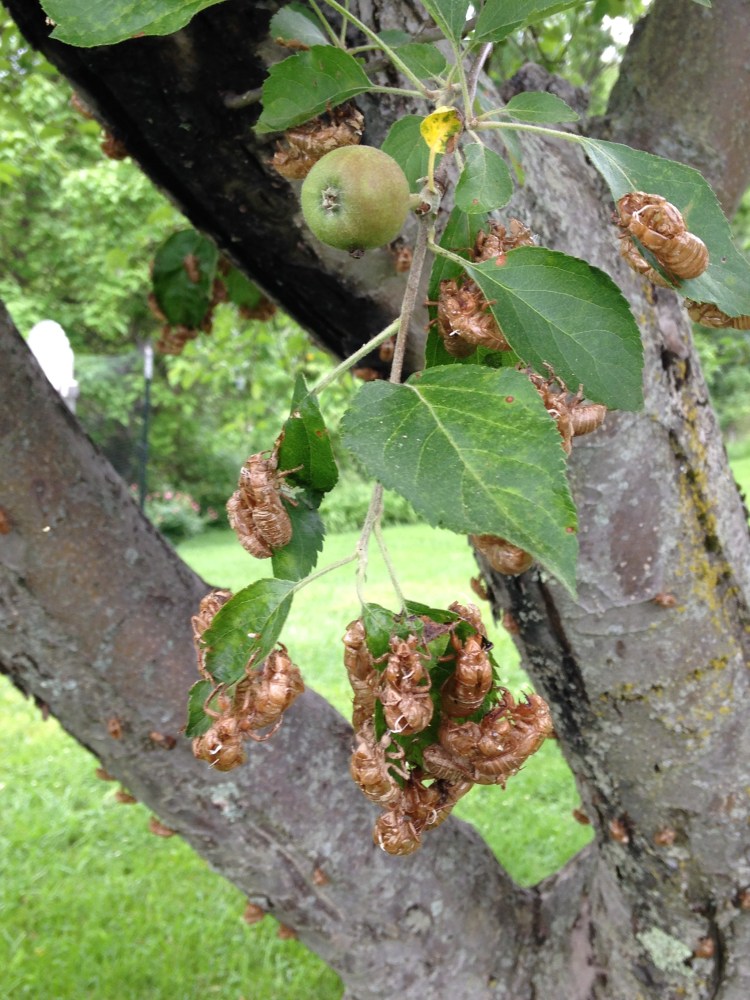


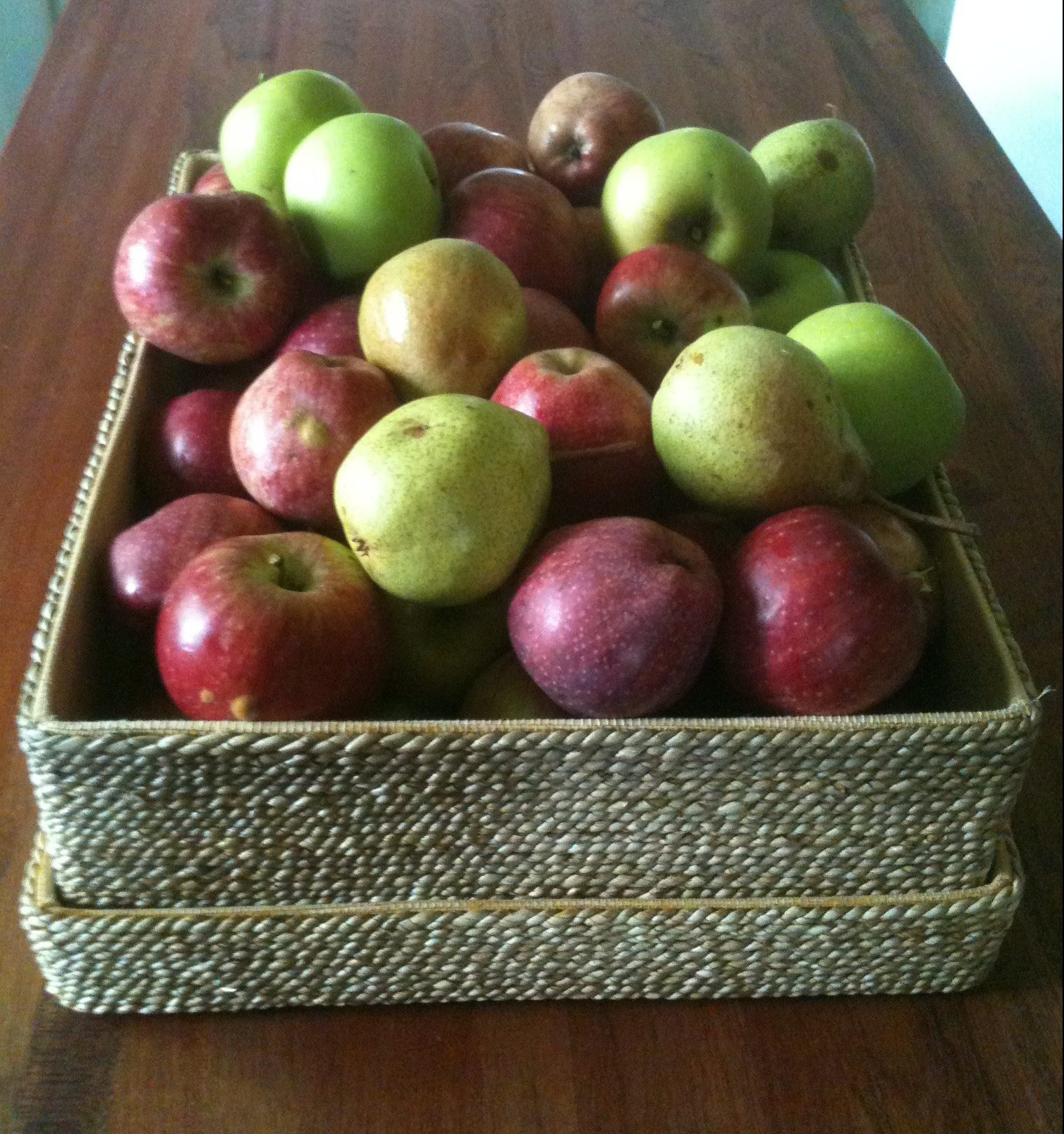


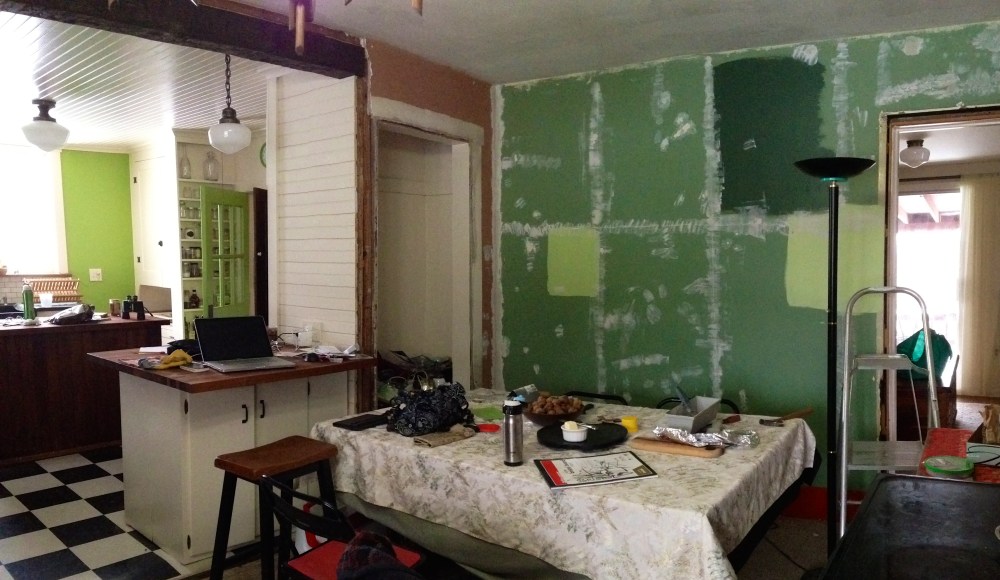
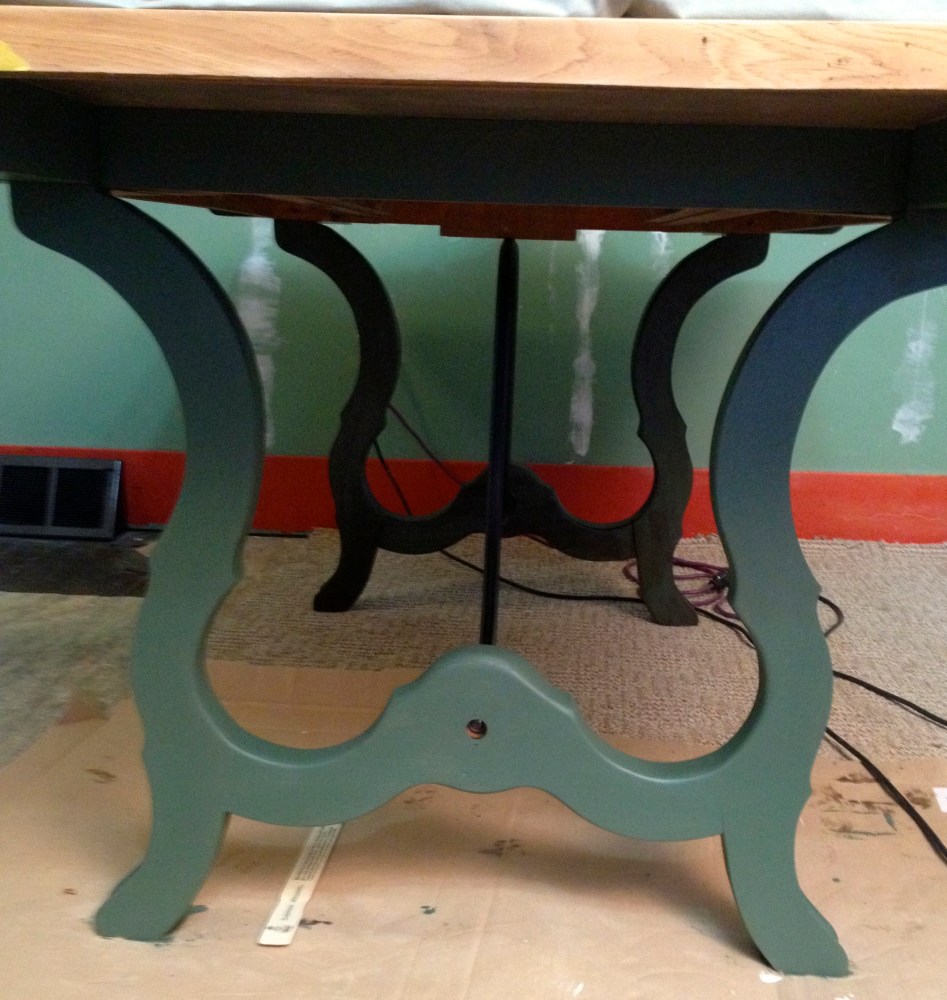















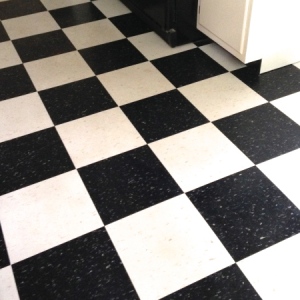





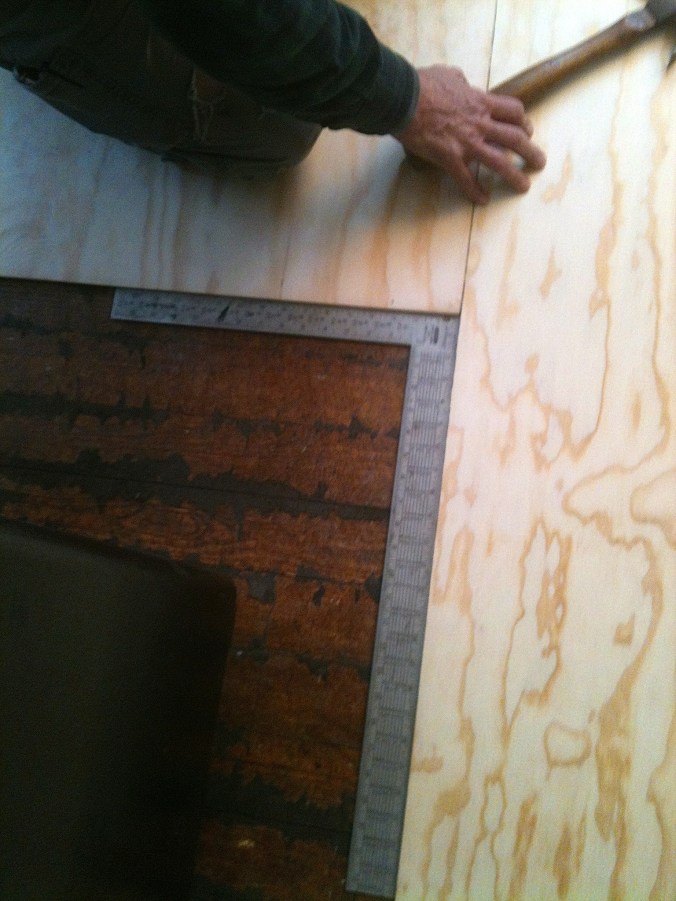














 the circle of life