All the Words We Know: a book review, of sorts…

Dear friends and readers, WordPress just notified me that my subscription is about to expire. My first post on this blog was May 22, 2012. That’s a long time ago! But my last post here was in July…So I’ve decided that I can no longer afford the expense for an on-again/mostly off-again blog. This will be my last post. And when you read it, you will understand why. Perhaps some other time, I’ll write again. But it will be in a different format. Thank you all for reading all these years. Stay hopeful. Stay grateful. Stay humble.


It’s never good to be in a rush at the library. But there i was, with only twenty minutes before an appointment and books to be returned, so i didn’t have much time to choose. The obvious selections are there by the circulation desk–six long rows of new books, faced out, so one can easily judge by the cover. The title? The splashy artwork? The author’s name?
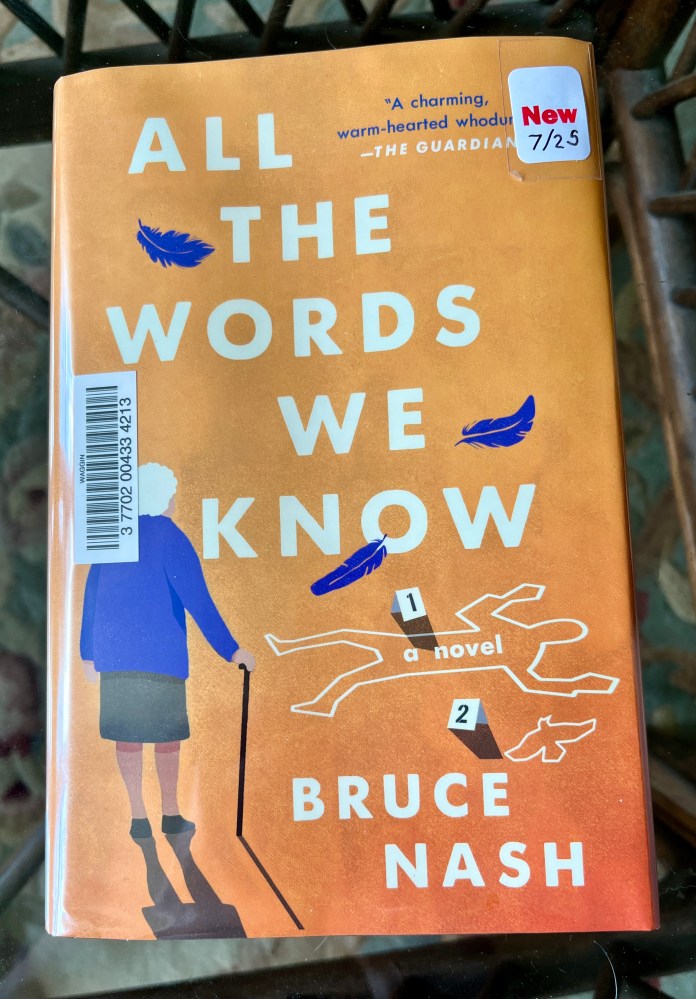
The last two out of three books that i selected from these shelves have been winners, so the odds seemed pretty good. And this title jumped out: All the Words We Know by Bruce Nash. Never heard of him. Seemed to be a cozy mystery with an old lady on the cover. But it was the title that drew me in–All. The. Words. We. Know.

i have always loved words. Always have i loved words. Words i have always loved.

reading. writing. poems. novels. scrabble. word-games. magazines. books. libraries. bookshops. stories. lists. talking. thoughts. journals, crosswords. so, yes, give me All the Words We Know… Due in three weeks.

Only later, in the evening, as i opened it to read the blurb, did i realize that it was about a woman with dementia in a nursing home where residents are dying suspiciously. She has up days and down days, so sometimes she can remember what she knows, and sometimes she forgets what she should remember.

It’s not the subject i would have chosen. i closed the book. i shut my eyes. i should have known a book about old ladies and words wouldn’t be my kind of book.

Words are in such short supply here these days. These days words are in such short supply here. Here there is such a short supply of words.

My husband is losing his words.

He was always a man of few words. But the words he had were kind words, good words, sweet words, and now there is silence. and struggle. the silent words float up into the clouds and fall back down like rain from my eyes.

And so. Do i really want to read a whole novel about someone else losing their words and forgetting?

i decide to try the first few pages and see how i feel. Yes. This is why i’ve mostly been reading happy-ending-escapist fiction.


Rose (at least she thinks that is her name) is funny. If she forgets a word, instead of silence, she just throws another word in there. (Word Salad, anyone?) And since she is not running the country, it’s humorous. The elevator is the revelator, and next to it are the Fiery Escape stairs. There’s Angry Nurse, the Scare Manager, and the fellow in the wheelchair who doesn’t live there. In the cafeteria are pictures of sharks on the walls, and there are meatballs every night for dinner. The pictures on her whatitsname are pictures of the Dresser family–her son, her daughter, her granddaughters, and her two husbands, one of whom has his head torn off in the photo.

But all is not right at the nursing home. Her best friend, who cheats at Scrabble, is found dead in the parking lot from falling out her window. Rose loses her own beautiful room–with the window overlooking a garden to a room with the window overlooking a parking lot. And the man who takes her old room dies mysteriously after she has visited him one evening and held his hand. Maybe.

Rose’s musings take the form of disjointed thoughts, word play, puns, and occasional brilliance. Sometimes I stopped and read a paragraph out loud just for the joy of it. Here’s an excerpt from her thoughts after her room is downgraded.

“When they murder me, when they push me out this window and I am on my back in the parking lot with my head broken staring at the sky, I will be wearing a nice pantsuit. Pant suit. Pants suit. I like to look my best. The Scare Manager looks his best too, I’ll give him that. He makes an effort. If he murders me, at least we will both look the part. He looks quite handsome, in fact. I don’t think it’s just the new medication. Although I can’t be sure, obviously. As well as his expensive gold watch, he wears a shiny new leather jacket. And pants, of course. Not leather pants, but pants. He would not murder me with no pants on. Would not, with no pants on, murder me. That would be unprofessional. That would not be Best Practice. That would not meet Benchmarks.”

In her own broken way, Rose solves the mystery, brings the villains to justice, heals her family, and, yes, gets her own nice room with the big window back. Her own back window in the nice big room. And here’s what Rose has to say about it all:

“Things never change, until they do. Nothing ever happens, then things happen very quickly. It’s about time. Everything about this place is different, even if it isn’t. Everyone seems happier, about their room at least, or about the wall that they sit against in their wheelchair, or whatever. None of us may have much more in our accounts, but what we have at least flows in a new direction. One day recently there was a quiz night, and someone got an answer right. There is even some talk of the meatballs having improved.”

The thing is, this book made me laugh. Losing your words isn’t funny. Until it is. Maybe, just maybe, i need to have a different attitude. It’s about the sun glaring in your eyes. Or your eyes glaring at the sun. You can shut your eyes and enjoy the warm, or you can go blind glaring at it. If only i could remember this thought, instead of forgetting it when i need to remember.

But i will say, along with Rose — to enjoy this book, you really do need to like words. You do need to really like words to enjoy this book.


The End
of This.
The Beginning
of Something New.
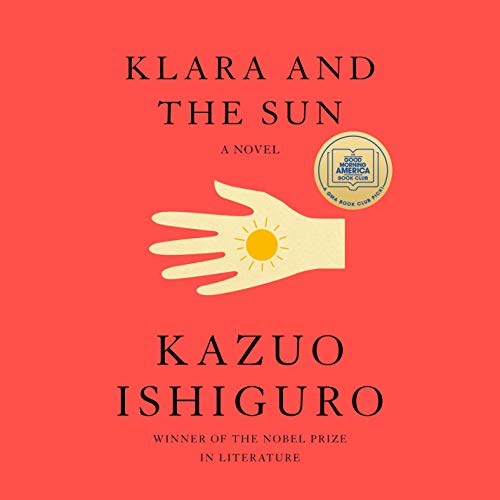
Binge-reading Ishiguro…

If you watched 60 Minutes the other night, you might have seen a disturbing episode on Artificial Intelligence. Anderson Cooper interviewed Yuval Noah Harari, a philosopher and historian of the future (and author of Sapiens) about what technology may bring. You can watch the episode, “The Future of Sapiens” here. As I watched uneasily, I couldn’t help thinking of the two novels by Kazuo Ishiguro that I had just finished: Klara and the Sun (2021), and Never Let Me Go (2005)

I read Klara and the Sun first, based on a glowing NYT book review. I was stunned with the beauty and simplicity of the writing in what is an intricate and complex plot. Set sometime in the near future, Klara is–for lack of a better word–an automaton, or Artificial Friend. These Artificial Friends are marketed toward the older child/young teenager to serve as a friend, companion, or nanny. As technology moves forward, new models of Artificial Friends replace older ones, and stores continually push the new product, the newest model. Klara has already had her chance in the store window and has now been shoved back toward the middle of the store, when the young girl, Josie, and her mother purchase her. Klara’s storekeeper assures the hesitant mother that Klara’s model is actually preferred by many because of their sentience and compassion. Indeed, the humanoid robot Klara seems, at times, more of a compassionate character than the humans she lives with. It is a familiar, yet chilling world, in which the haves give up some of what makes them human in order to have more, and the have-nots face the choice of keeping their humanity at the expense of always being considered less. What would you do, as a parent, to make sure your child succeeds in life? And what does success look like? Indeed, what does being human look like? This is a 5-star read.

I had to be on the wait list for Never Let Me Go, but to be honest, it is my favorite of the five I have read so far. (I have not seen the movie–I watched the trailer, immediately after finishing it, and the first scene was not even in the book…so I’m not going to watch it, at least for awhile.) This novel, also set in the near future, raises similar issues–What does it mean to be human? Just because we can use genetic engineering, does it mean we should? I’m not going to give you a plot summary because there would be spoilers. It’s the type of novel that uncovers what is actually happening a little at a time, page by page. To give a plot summary would be to ruin the tense, dystopian atmosphere that Ishiguro has mastered in Never Let Me Go. This is a 5-star read that is hard to put down. Don’t pick it up if you have anything important to do….


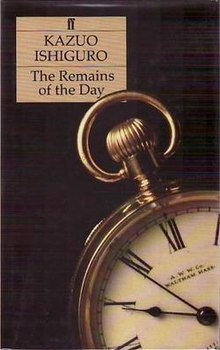
In between the two dystopian novels, I read The Remains of the Day. I’m ashamed to say I’d never read it, and it’s one of the few times I saw the movie without reading the book first. I guess Anthony Hopkins and Emma Thompson persuaded me…The film came out in 1993, so the only thing my aging brain could recall about it was an older English butler who worked for a Nazi sympathizer. I was glad that was all I could remember; for this is a brilliantly nuanced memoir of how we can so easily fool ourselves with our own thoughts and memories.

The aging Mr. Stevens is still the butler in charge of the grand old English manor, Darlington Hall, but the old Lord Darlington has died, and the manor has been purchased by a rich American who really has no idea of how things should be run properly. He suggests that Stevens take a vacation, a road trip, and even provides the roadster. As Stevens travels from Darlington Hall near Oxford to the West Country, he relives his life and his relationships with seeming honesty and (sometimes) painful introspection. I think that this is probably not a book for everyone. It is a quiet, introverted book, and not much happens plot-wise. But the language transported me, a modern American, to a time gone by in England. What follows is a particular paragraph that is likely to let one know if one would enjoy this book.

“But this small episode is as good an illustration as any of the hazards of uttering witticisms. By the very nature of a witticism, one is given very little time to assess its various possible repercussions before one is called to give voice to it, and one gravely risks uttering all manner of unsuitable things if one has not first acquired the necessary skill and experience.”

Kazuo Ishiguro, The Remains of the Day

And if that resonates, here is another:

“One need hardly dwell on the catastrophic possibility of uttering a bantering remark only to discover it wholly inappropriate.”

Kazuo Ishiguro, The Remains of the Day

Ah yes, the wholly inappropriate bantering remark… This is a 5-star read, and yes, I’m going to watch the movie again soon.

After the third Ishiguro novel, I was excited to read The Buried Giant. It was billed as an Arthurian fantasy or fable, and I have always been a fan of classic fantasy and myth. The Mists of Avalon, The Last Enchantment...yes, I read them both and loved them, and I think that’s why my expectations were high. I suppose we should be wary of great expectations, for I was actually disappointed in this one, and I’m not sure why. The plot is fine: an aging dragon breathes out the mist over the land that keeps people’s memories foggy. This was Merlin’s last enchantment to keep the Angles and the Saxons at peace. Indeed it has worked all these years, for no one can remember to hold a grudge, but neither can anyone remember their children, or love, or why they live as they do. The aging couple Axl, who was a peacekeeper in Arthur’s court, and his wife, Beatrice (whom he irritatingly calls Princess) set out on a journey to find the son they vaguely remember. On their journey they are joined by a warrior, a young boy, and Sir Gawain–each of them on their own journey to reclaim memory. Each one of them has clarity about the past at different times, but they are all the epitome of the Unreliable Narrator. The reader is never sure if what is remembered is true or mist. Ishiguro himself said he was writing about collective memory and how societies cope with traumatic events by forgetting. Reading this book is like having a conversation with someone who has Alzheimer’s. It’s well-written, but I never felt much empathy for any of the characters. It was as though having their own struggles with memories made them keep everyone–even the reader–at arms length. I give this one three stars.


When We Were Orphans takes the reader back to England in 1923, where we are introduced to Christopher Banks, a young man who has just graduated from Cambridge and is about to embark on his long-dreamed of career as a police detective. And though you might see this billed as a detective novel, it is not. The reader really only hears vaguely about his career and the cases that have made him famous. What we have instead is another theme on our memories and how they often fool us into misinterpreting facts and the world around us. It’s called cognitive bias, and this article by Charlotte Ruhl says that “…it results from our brain’s efforts to simplify the incredibly complex world in which we live.”

The first few sections of the novel take us back and forth between England and young Christopher’s childhood in Shanghai, where he lived with his parents in the International Settlement. (An aside–this novel’s rich details about early twentieth century Shanghai make it worth reading just for the exotic locale.) When he was nine, his father disappeared, and a few months later his mother was kidnapped. Young Christopher is sent back to England where he is sent to boarding school and raised by an aunt (whom we never meet).

Twenty-some years later, after Christopher has established himself as a renowned detective, he returns to Shanghai, in the midst of the Sino-Japanese war (ca. 1937) to solve the disappearance of his parents. His return to China begins the dreamlike episodes of the book, for up until now, the reader has assumed that everything Christopher has told us is true. And it is true according to his memory, but his memory is also that of a nine-year-old boy who has experienced great trauma. I’m not a literary critic; I’m not even an ex-English major who sees the symbolism for the light at the end of the dock; but when Christopher returns to Shanghai, he is transported back to that nine-year-old life and refuses to see the changes and the differences to this new city at war. What makes him think that his parents are still alive after all these years? And the truth, when it comes out, might be even stranger… This is a 5-star read, too.

I think next I will read An Artist of the Floating World. Does anyone have any suggestions? My suggestion to you is to pick up one of his books. He won the Nobel Prize for Literature in 2017, and he isn’t called Sir Kazuo Ishiguro for no reason.

Summer Reading

I’ve read a few really good books this summer, and I want to tell you about them before summer is over and you have excuses to not read them… So put up that hammock, make a glass of lemonade, and grab a box of tissues… (All good literature is tragedy, right?)

Heron River by Hugh Cook

Heron River is a beautifully written book. I simply couldn’t stop reading it; I read far too late in the night for the five evenings it took me to finish it. The very first sentence grabbed me: “This is how Madeline will remember it years later.”

There is a lot of darkness in this novel. There are a lot of characters’ voices too, and I loved that. Each character speaks in his or her own voice, and Hugh Cook does such a marvelous job of writing their voices and their thoughts, that most of the time he doesn’t even have to tell us who is speaking, because the reader knows who it is. Each chapter is a different narrator, and not once did I regret that the next chapter was told by someone else because each voice carried the story forward in a new way.

Madeline is perhaps the main character, but really, there are two others who are just as important: her son, Adam, who is damaged in a childhood accident and now, as a young adult, lives in a group home; and Jacob, the thirteen-year-old paper boy. Their lives weave in and out of the lives and deaths of many others in the small river town of Caithness, where the darkness of one summer’s events alters everyone’s lives.

Yet despite the murders, the break-ins, the muggings, there is always a sense of hope and possible redemption. Many of the characters are not who you think they are, and many are better than you hope. There is evil, but it does not win. And that’s not a spoiler.

Everything I Never Told You by Celeste Ng

This book by Celeste Ng (Little Fires Everywhere) also has a gripping first line: “Lydia is dead. But no one knows this yet.”

So begins the family drama of a mixed race couple, James (Chinese) and Marilyn (Caucasian) and their three children, Nath, Lydia, and the much younger Hannah. They live in a small Ohio college town (it’s the seventies) where James is a professor; Marilyn is a brilliant college dropout stay-at-home-mom; and the children are Asian Americans in a midwestern sea of white kids.

Ng weaves her story back and forth across time — beginning with the disappearance of sixteen-year-old Lydia, the panic, and the discovery of her body in the lake across from their house. And with her death begins Ng’s lyrical examination of family relationships: the dysfunction, the hurts, the misunderstandings, the secrets, the expectations, the love…

James has never fit in, and he puts all his dreams of being popular and well-liked on his beautiful daughter. Marilyn cut short her goal of being a doctor to marry James, so all her dreams are transferred to her smart daughter. Lydia becomes what her parents dream for her and loses herself. Only Nath, her older brother, understands, and the thought of him graduating and leaving for Harvard, sends Lydia into a tailspin.

The police believe it is suicide, though no one in the family can reconcile suicide with what they know of their beloved daughter. Or what they think they know. In the end, the secrets we keep from those we love, derail everyone of us and require forgiveness — perhaps forgiving ourselves is the hardest of all.

Before I Saw You by Amy K. Sorrells

This is small town Indiana, where the opioid crisis is rampant. Like the town where I live now, everyone knows someone who has been or is affected by drug addiction. Jaycee is a young twenty-something waitress who is raising her little brother because their mom is an addict who can barely function. Jaycee has endured embarrassment and fear and has worked at turning it all into courage with the help of her eccentric neighbor Sudie, who teaches her how to rescue injured animals and trust in the Lord.

Tragedy is never far from an addict, and Jaycee endures the worst. With her mom in prison, and her little brother gone, Jaycee finds love in the wrong place and has just discovered that she is pregnant when a handsome, nice guy starts work at the diner. Their relationship blooms until he discovers her pregnancy.

Jaycee has everything stacked against her — poverty, drug addiction in her family, an abusive relationship, pregnancy — but she has faith. Buoyed by her elderly friend, she never loses her hope, even as she considers whether to give her baby up for adoption, or keep him and love him as the replacement for the little brother she lost.

This book moved me for many reasons: Sorrells knows the hopelessness and poverty of small rust-belt towns, and yet she believably allows Jaycee to rise above it. Jaycee has friends who care for her, grit and courage, a love of the injured animals she helps, and a faith that helps her get through the struggles. You can’t help loving her and cheering for her and be moved by her strengths. Keep your box of tissues nearby.

The Pearl That Broke Its Shell by Nadia Hashimi

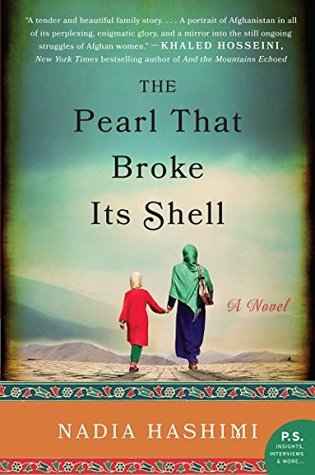
I first read about the cultural practice of Bacha posh (Persian for dressed like a boy) a few years ago when I read The Underground Girls of Kabul by Jenny Nordberg. It’s fascinating to me that this practice of turning a girl into a boy was/is culturally accepted. Nadia Hashimi has written this engrossing novel about two Afghani women — great grandmother and a hundred years later her great granddaughter — who lived for a time as Bacha posh, and how it affected them, their families, their lives.

Rahima lives in a family of only daughters in modern day Kabul. The sisters (and their mother) are at the mercy of their bitter, opium-addicted father. They can attend school only when the father allows it, and his capricious personality keeps the family in a state of poverty and forced seclusion. Adopting the ancient tradition of permitting a daughter to be a son (Rahima becomes Rahim) allows her to attend school, go to market, chaperone her sisters, and live the free life of an Afghani male. That is until she reaches puberty, when she must return to being Rahima, the powerless, subjected woman/child bride.

Rahima’s unmarried aunt visits the household often and brings stories of the outside world, as well as a special story of Shekiba, the girls’ great-grandmother who lived a century before, and also spent much of her life living as a farm boy and then as a harem guard. The novel alternates between stories of Shekiba’s life and the life of Rahima, who is married off at thirteen to a modern-day Afghan warlord as his third wife.

The tragedy and powerlessness of the lives of these women is hard to read. At the mercy of every male, the lack of change in the lives of two women who lived a hundred years apart is heartbreaking. In fact, Shekiba’s story ends with a note of hopeful modernity that never comes to pass, or if it did, it was only a few decades of allowing women relative freedom.

The author’s powerful prose and the tragic lives of her finely drawn characters will stay with you long after you’ve finished the book. The only downside is that the Afghani names are hard to follow and every character is named, no matter how small their part in the book. Their names were hard to keep straight at first, + I kept wishing for a glossary of Persian words–I read a kindle version and there was none. But persevere– you will come away richer for having read this book.

The Solace of Water by Elizabeth Byler Younts

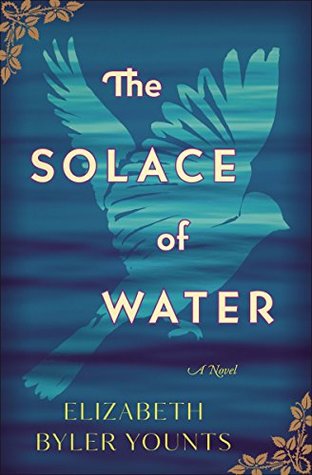
The Solace of Water by Elizabeth Byler Younts is another book that caused me to stay up too late at night to read. It took several chapters before it became a just-one-more-chapter-and-then-I’ll-go-to-bed book, but don’t give up on it. The story takes place in 1956 during the Montgomery Bus Boycott, yet it takes place in Sinking Creek Pennsylvania. Amish Country. Pennsylvania, the free state, where the signs that say Whites Only are unwritten, and folks just have to figure out where they are on their own.

Three narrators tell the story: Emma, an Amish woman; Delilah, a southern African-American woman who has come to Sinking Creek with her husband and family (Sinking Creek is where he grew up); and Sparrow, Delilah’s teenaged daughter. All three characters are putting one foot in front of another after tragedy, and the pain and secrets they are living with bind them together in ways that nothing else can.

One of Delilah’s twin sons, Carver, drowned in the Alabama River while Sparrow was supposedly watching him. Delilah’s pain and guilt is so huge that she cannot forgive her daughter for not watching him carefully enough, or herself for putting Sparrow in charge of him that day. Less than a month later, husband and father, Malachi moves the family from Montgomery to his old hometown in Pennsylvania, thinking that the move will help his wife and daughter heal from the tragedy. They move into a house next to the church where Malachi will be the new preacher, across the woods from an Amish farm.

Emma lives there with her husband John, a deacon, and their teenaged son, Johnny, in a house filled with secrets, pain, and deceptions. Sparrow and Emma bond immediately, for Sparrow is in desperate need of a mother and Emma needs a daughter. Delilah and Emma are cautious with each other, for they are worlds apart in culture, but, as they discover, bound together in their pain. It’s a friendship that even race troubles in the town can’t divide. “I don’t know how to fix it, but I’ll stand with you,” Emma tells Delilah. I am reminded of the verse from Ecclesiastes, “A cord of three strands is not easily broken.”

This is powerful writing and as relevant today as it was then.

If you’ve read this far, you might see a thread, a theme in all these novels. It was completely unplanned. I just read them during June and July and loved reading every single one. The writing is powerful and intense, the themes of loss and pain resonate, and the characters’ inability to communicate their suffering prevents their healing. Only when they let go of bitterness and secrets and are able to embrace forgiveness, is redemption possible. Because of the nature of the tragedies in all these books, they are recommended for adults.

If you’ve read any of these, let me know what you thought. Happy August.