DIY Cleaners, Cleansers, and Creams: Simple recipes that really work

When I wrote that post Every Day Is Earth Day I thought maybe later I’ll post some DIY recipes that I use all the time. So almost a year and a half has gone by… But today, I actually made a new batch of deodorant. I usually have to make it about 2 or 3 times a year. It’s pretty easy, after you gather the ingredients, and it only takes about 20 minutes. So I took photos. And here’s the recipe.

Homemade Deodorant
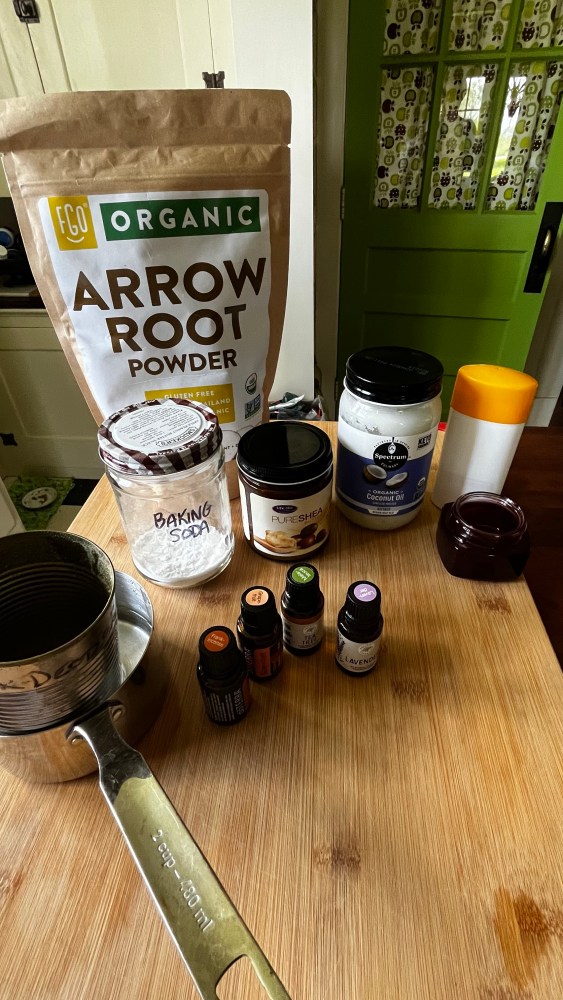
 (This recipe is adapted from wellnessmama.com and almost the exact recipe is also here on Revive)

Ingredients:

3 Tbsp Coconut Oil

3 Tbsp Baking Soda

2 Tbsp Shea Butter

1-2 Tbsp grated Bees Wax

2 Tbsp Arrowroot or Cornstarch

Essential Oils (optional, but unless you are allergic to scents, please use them…)

Directions:

1.  Melt Shea Butter, Coconut Oil, and Beeswax in a double boiler over medium heat until barely melted; OR use a can instead and place this in a small saucepan of water until melted. I save my can for every time I make deodorant–I store the bees wax chunk in it, and I don’t have to wash it out. When melted together, stir well. You want all the beeswax stirred into the other oils because the beeswax is what will keep it from melting in the heat of summer, or a hot bathroom. (I use a chopstick).

2.  Remove from heat and add baking soda and arrowroot.

3.  Mix well

4.  Add a few drops of essential oil and pour into a glass container for storage. I use an old deodorant container, but be careful. The first time I tried this, I had two old deodorant containers–the first one worked fine and the second leaked out all over the counter. Old face cream jars or half-pint jelly jars work great too.

5. Some good essential oils to use for skin and deodorant purposes include: Tea Tree Oil (sometimes called Melaleuca); Grapefruit; Bergamot; Lavender; and Clary Sage. Some lists also include Rosemary, YlangYlang, and Cypress.

If you refrigerate the deodorant, it will firm up faster. After it is firm, it doesn’t have to be refrigerated.

Laundry Soap

Yep, I make my laundry soap too. I do have to add a caveat here: This laundry soap is not for extra dirty, or hard stained clothing. It works very well for regular wash, and old work clothes that already have paint stains and grease blotches. But on your nice clothes, bad stains have to be pre-treated with something else. Also, I have a top-loader with an agitator, so I can’t address how much soap to use if you have a front-loader.

Here is what you need:

Ingredients:

1/2 cup borax

1/2 cup washing soda

3/4 cup Castile soap

20 drops essential oils (lemon or other citrus, tea tree oil, lavender, and peppermint are all good)

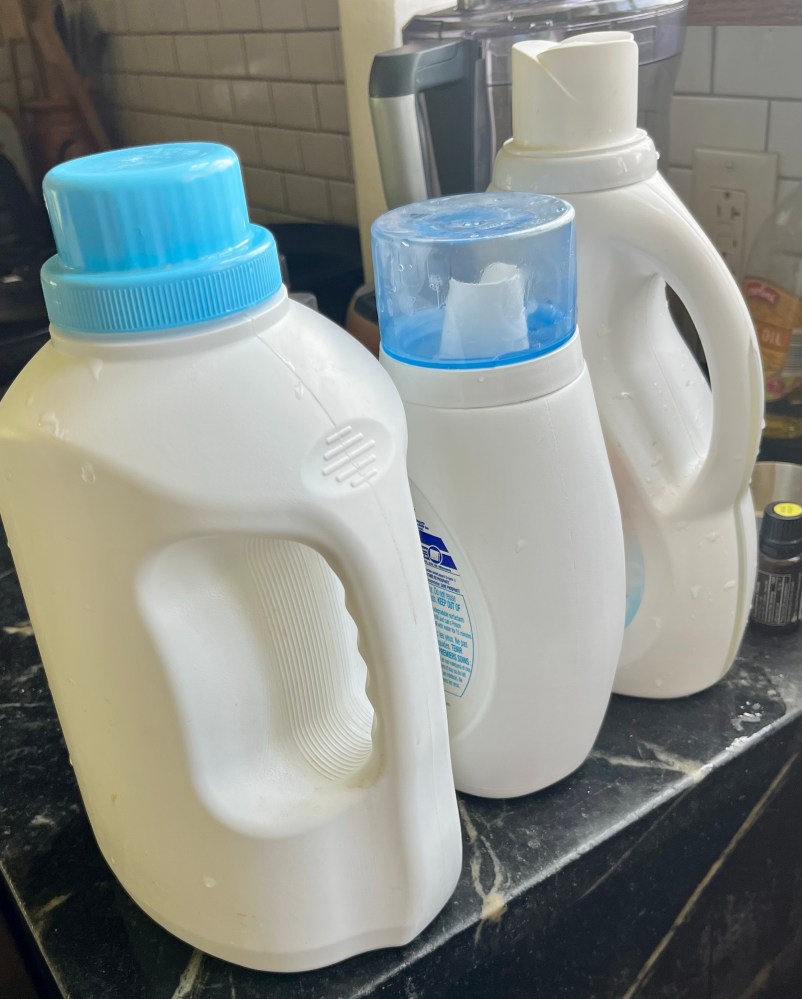
2-gallon bucket, and cleaned out laundry soap containers or clean gallon jugs

  1. Put the borax and washing soda in the gallon bucket and pour in up to a gallon of hot water to dissolve the powders. Stir around until it is all dissolved. The hotter the water, the faster the powders will dissolve.
  2. It’s handy if your bucket has hash marks for how may quarts or gallons, but if not, add another half gallon of water and stir around.
  3. Add the Castile soap at the end, otherwise it will foam too much. Stir gently to mix the soap in with the other liquid.
  4. Add about 20 drops of your choice of essential oils and stir gently.
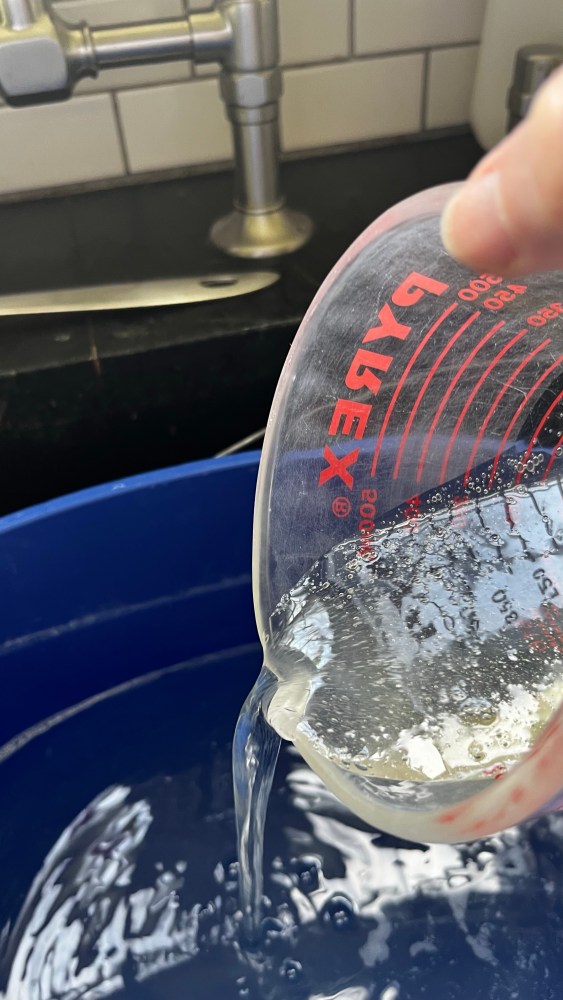
  5. Use a measuring cup to carefully pour into your waiting laundry jugs.
  6. (My original recipe called for using 2 gallons of water, but I’ve found that I prefer using less water. I usually end up with about a gallon and a half of liquid soap.) Be sure to shake well before adding to the washer. I usually use the cap of the container for a medium load. This is not a wild, soapy recipe–Castile soap is not known for its sudsiness.
All-purpose Spray Cleanser 1

If you’ve got the stuff for laundry soap, you can use this similar recipe for a spray cleaner…

Ingredients:

1 t. washing soda

2 t. Borax

1 T. Castile soap

2 cups very hot water

10 drops essential oil–Lemon, Orange, or Tea Tree, or a combination

Dissolve the powders in the hot water. Add the Castile soap and the essential oils and pour into a 16 ounce spray bottle.

Spray Cleanser and Degreaser 2

1 cup white vinegar

1 t. Castile soap

1 T. baking soda

3 cups warm water

15-20 drops essential oil–Lemon, Orange, or Tea Tree, or a combination

Mix together and pour into spray bottle. Do not use vinegar on marble. This is good for stovetops, range hoods, tile, sinks, and general cleaning. I have not had success on my oven door though. Nothing seems to clean my oven door….

Right now we are working on the laundry room, so I’m cleaning and reorganizing and throwing stuff out. It might be the last room in the house. Maybe it will be finished enough for photos in a couple of weeks…
The Cute Cat Post

It’s been a long time since I’ve written anything in this space.

A year actually. A. Hard. Year.

And then August rolled around, and WordPress emailed me to let me know my site had been renewed for another year.

So I either spent a hundred bucks for nothing, or I’d better write something.

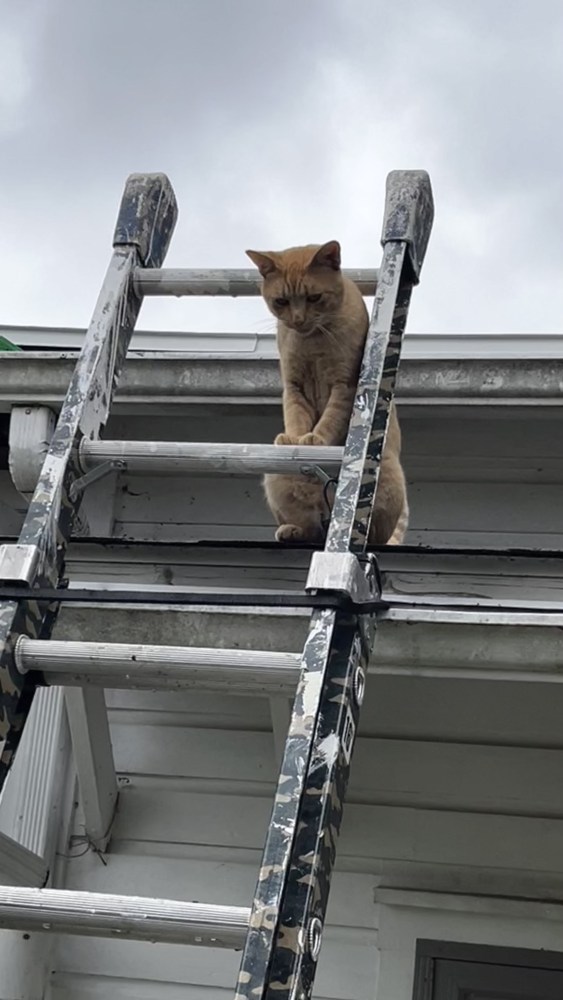
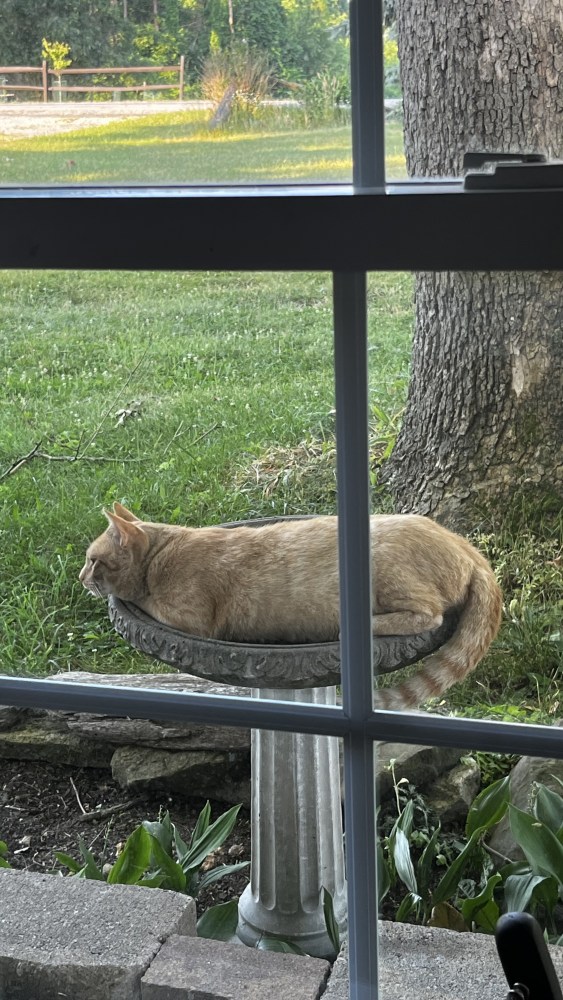
So for those of you who are tired of the media pretending that this upcoming election is normal and covering the republican candidate just as if he is a normal candidate, I present you with a Cute Cat Post, filled with funny cat pictures of our new stray cat, who has warmed our hearts and made us laugh when we really needed to laugh.

Introducing…

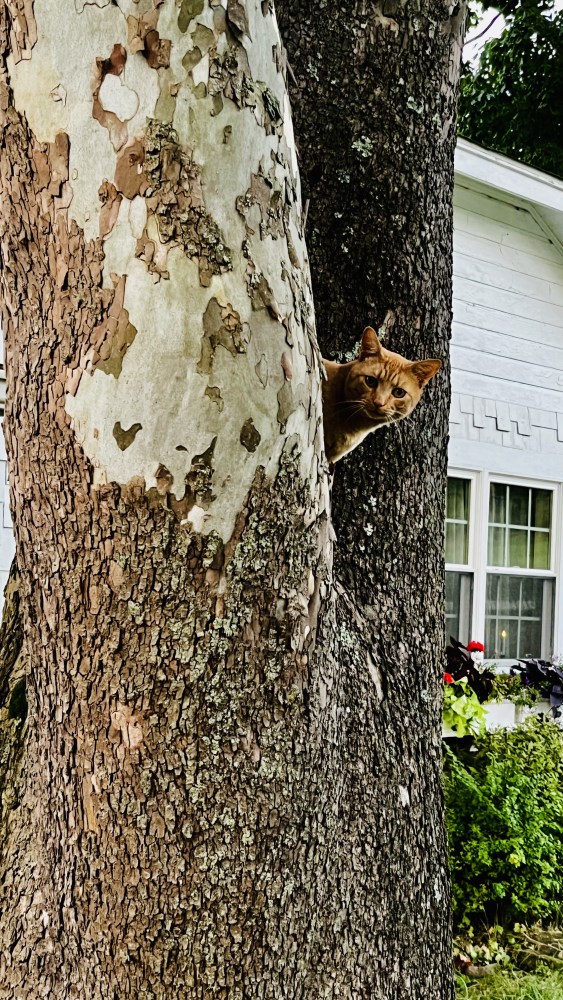
Mr. Tommy Orange

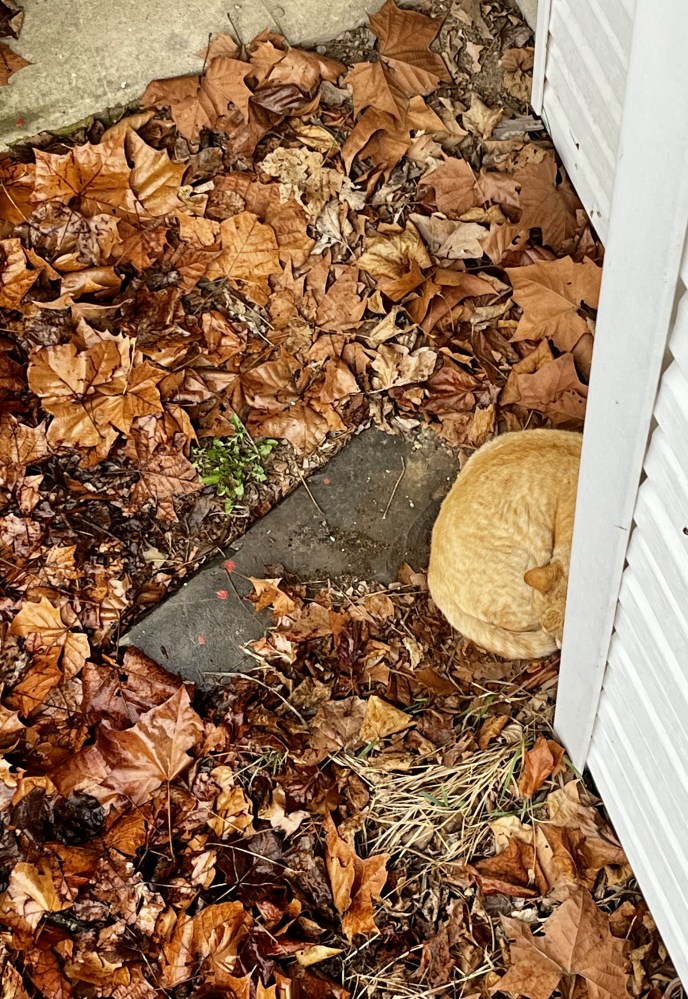
He showed up back in February as a streak of lightning dashing off the back porch and leaving the porch swing wildly crashing against the wall. I turned to Mr. H.C. and said, “I think there was just a cat sleeping on our porch swing.” About a week later we saw him again, curled up in a pile of leaves as close as he could get to the foundation.

We found him sleeping and hanging out in that same spot many times over the next week or two, so we decided we should probably give him some food.

Mr. H. C. put out some dry food nearby, and before long he was eating it regularly, and we were seeing him everyday. It took him several weeks but soon he would stay at the food bowl while we watched him from the porch. We both talked to him quietly, but Mr. H.C. was the one who really spent time just gently talking to him and whistling while they were outside together.

A few weeks later, he discovered how comfortable the porch furniture is. He would still run off when we opened the sliding glass doors. Until one day, he didn’t.

The first time he let someone pet him. The photo is dated April 8.

After he was letting us pet him on a regular basis, we decided we should probably take him to the vet to get all the cat shots necessary for a pet cat. His first appointment was cancelled because no one could get him into the cat carrier. We ended up with scratched hands and arms and a cat who had vanished into the woods. He came back though. And the next time we were prepared. We had gotten him his own brand new cat carrier that didn’t smell like THE OTHER CAT, and we moved his feeding bowl inside the carrier where he happily ate his food for several weeks. This is why humans are generally considered smarter than cats.

But he needed a name before he went to the vet. Mr. H.C’s mom, Clara, used to have a cat she called Little Orange. We tried that on him, but, well, he is not Little. I was reading the novel There There by native author, Tommy Orange. I looked at the book on my nightstand and said Tommy Orange! So his official name for the veterinarian is Tommy Orange. (I hope the real Tommy Orange is not offended.)

He has since been to the vet twice–once for his shots, and once for his gender reassignment surgery. And now? He is definitely ours. He follows Mr. H.C. around the yard. He comes when he’s whistled for. He leaves us dead mice on the porch almost every morning. He takes naps on our feet. He makes us laugh every day.

But there is a problem.

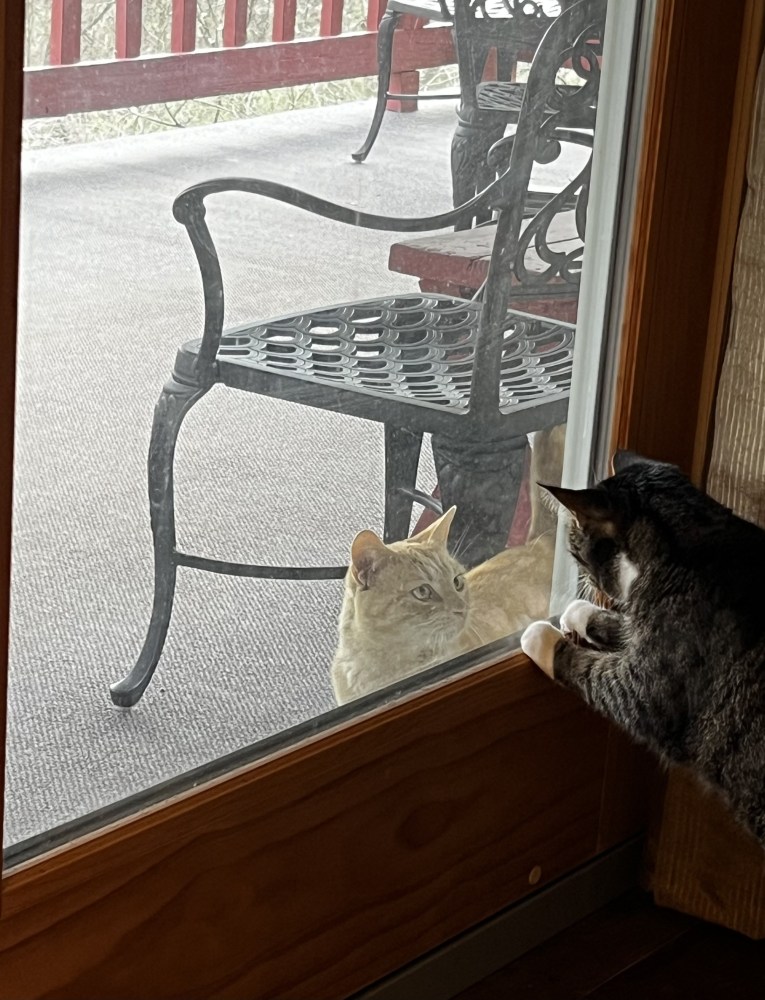
THE OTHER CAT hates him.

She has been the Queen for four years now, and she is not accepting applications for any other household occupants.

She hisses. She arches her back. She chases him from window to window. And if she gets outside, she chases him around the garage, and out of the yard. He has never tried to beat her up, though he certainly could. He seems to know that, yes, she IS the QUEEN.

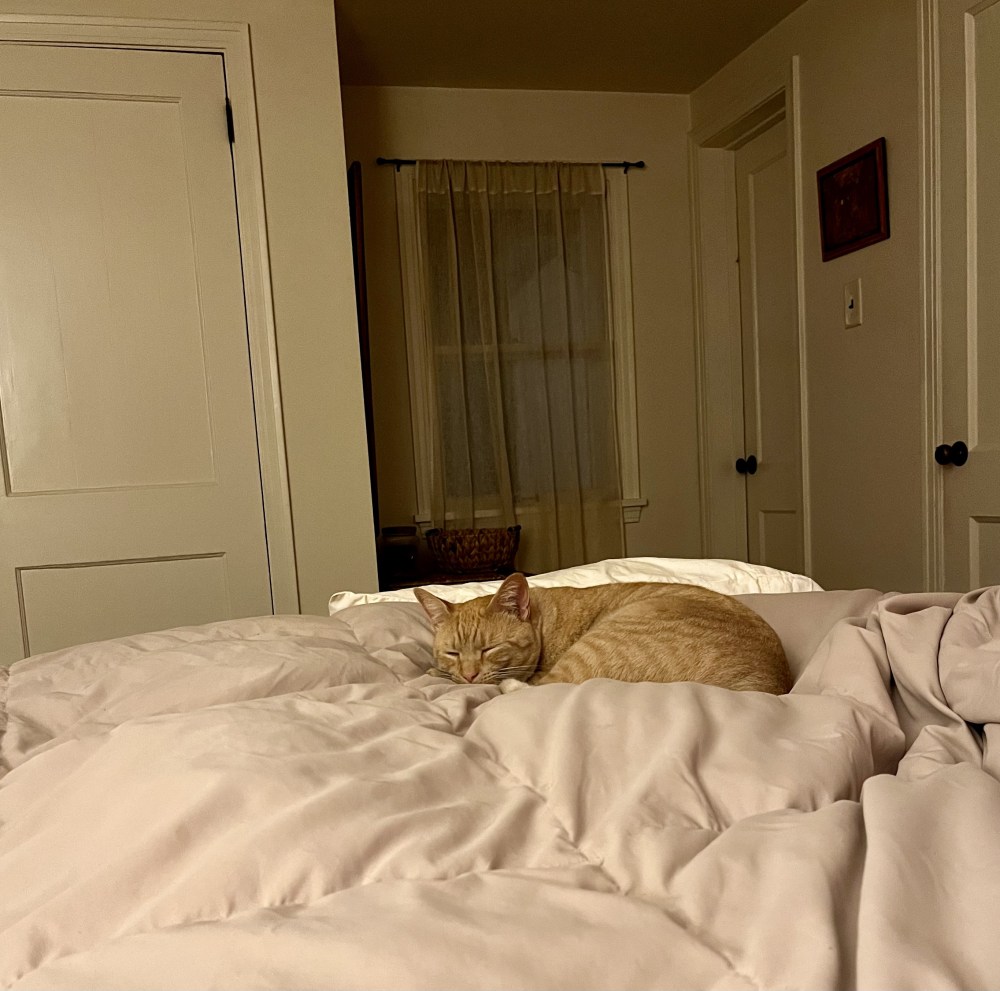
We have occasionally closed the doors to our bedroom and let him inside. He has made himself quite at home.

So now we are arguing, discussing, brainstorming what we can do to keep THE QUEEN happy and Tommy Orange warm this winter. So far the plan is a Cat Door in the new window in the laundry room. But that’s another post…

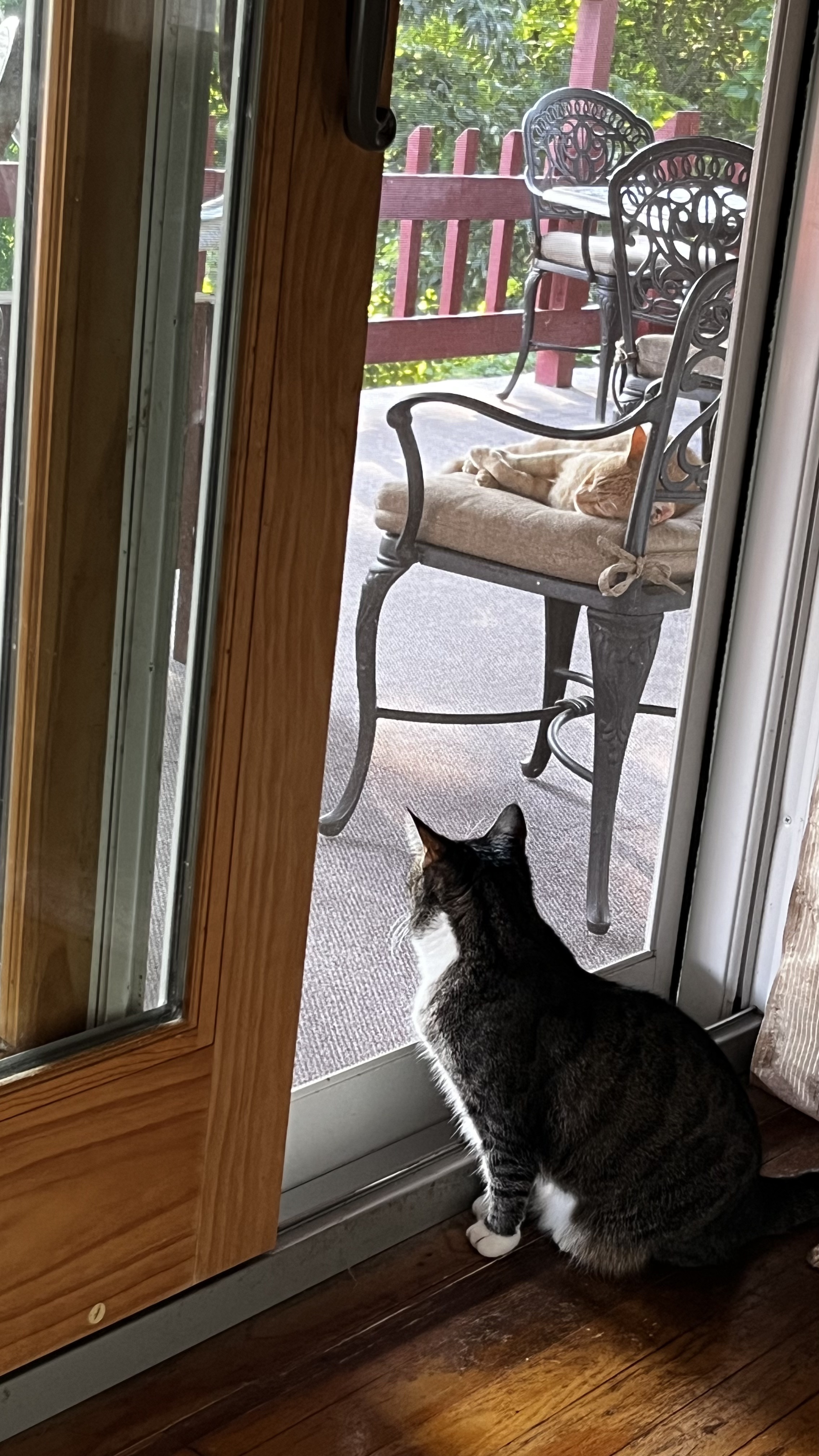
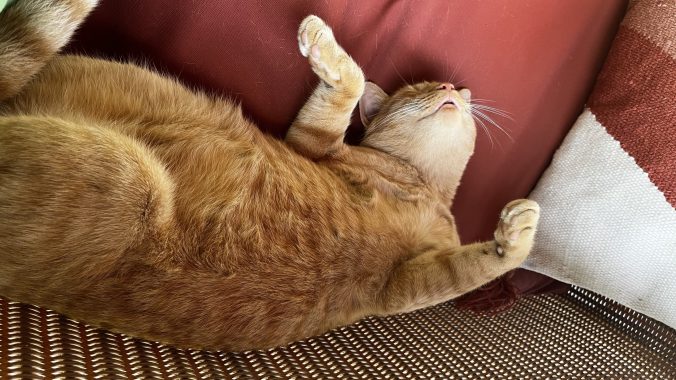
In the meantime, he’s still very comfortable on the porch furniture.

Cider Days, Part Three: Memories

This is a Remember when we were kids? post. If my memory is faulty, and I’ve gotten anything wrong, there aren’t many people around any more to tell me so… Just a couple of sisters, who have good memories of those times too.

Apple Hill Cottage, our apple trees, and our lives now are right next to the old orchard.

We three sisters grew up about three miles from my grandfather Pa’s apple orchard. (Pa called us Cee, Dee, and Fancy.) He used to drive his old farm truck up our driveway and ask Any of you girls want to go for a ride? Sometimes there were two of us, sometimes three, but those were the days when we just hopped in the back of the pickup. Most of the time he would make us sit down underneath the window (while we were on the road) but when we got to the orchard, we were allowed to sit on the sides of the truck, holding on for dear life over the bumpy orchard paths, and laughing as the wind blew our hair. No one can ride in the back of a pickup truck without smiling…

The big barn was magical to us, even though we weren’t allowed to climb the ladders to the hay loft. There, right in the middle of the main floor, was the huge apple grading machine. With a flip of the switch the machine turned on, bushels of apples were poured in, and the apples rode along a wire mesh train; if the apple was too small, it fell through the mesh to the bin of small apples. I remember the sorter as having three stations, with the last station as the final place for the large, Grade A apples. After searching the internet, I found this photo of a similar machine from Long’s Family Orchard in Michigan.

It was a grown up job to be allowed to stand at one of the stations and pick out any bruised or stained apples, and change to an empty basket when one was full. And the fate of those small, maybe bruised apples? The Cider Mill.

We all remember riding to the cider mill in the back of the pick up truck. I guess Pa figured with all the apples in the back of the truck, we were caged in and couldn’t fall out. We don’t, however, remember where it was. I think it couldn’t have been too far away.

I remember it as being an old, falling down building that was pretty much in disrepair. But we ran through the pressing area to the smaller room on the side where the spigots were. And also the bees. Hundreds of bees. (As I look back now, after my adult experience with cider pressing, I’m sure they were yellow jackets.) It was our job to take the glass jugs and switch them out when they were full. Oh the smell…

Here is where my memory fails…I don’t remember putting the filled jugs in boxes or crates. But surely we didn’t just put glass jugs in the back of the truck? I don’t know, but somehow we got back to our destination, which was the little barn at the orchard. This is the barn that has graced many of my own photos here at Apple Hill. In the back, on the ground floor was a refrigerated area for the cider.

We also sold cider on Sunday afternoons at the bottom of the long driveway to the house where we grew up. We stored the sign and the bleachers and the apples in the little garage there, right on Rte.19. Pa’s brother-in-law, Uncle Jim, had painted the signs–just the word APPLES and a pointing hand painted above a bushel of apples. It was in the days before interstates, and Rte. 19 was the main road from Erie to Florida. While Pa was putting together the small stand—three rows of bleachers—we would put out the signs, the apples, and the cider. Bushels went on the bottom shelf, peck baskets went on the middle shelf, and the shining glass jugs of cider on the top. 75 cents a gallon. And still, people would ask for a taste before they plunked down their 75 cents.

There were metal chairs in the front yard that we sat in while waiting for our customers. We counted cars, kept a list of license plates, ate apples, and sold apples and cider. Those were the days that the apples were sold right in the baskets. You bought a bushel of apples, and you got the basket too. I checked online last week–bushel baskets currently go for $9.49 each… I found a lower price of $7, but they were out of stock. And the cider was in glass gallon jugs. You can buy a case of 4 glass gallon cider jugs these days for $24.

And of course, we have stories…


We always replenished the cider on the top row with gallons that were stored in the refrigerator of the little house kitchen. (It was the house where our grandparents stayed often on weekends during fruit season, so they could be near the orchards.) All of us girls had gone in to the refrigerator in the kitchen to grab a gallon or two of new cider throughout the afternoon. As dinnertime approached, Nanny came out into the yard and whispered to us, “Girls, do you see my gallon of iced tea up on that rack where the cider is?”

It wasn’t there. Her iced tea was famous for being too weak, too sweet, and awful. No one liked it but my grandfather, and she had made it in a glass gallon jug and put it in the refrigerator. And one of us had sold her terrible iced tea to a customer. No one ever came back to complain, so we decided it must have been an out-of-town customer. Secretly I hoped it had been sold to the black Studebaker sedan from Ohio with the kid in the back seat who had stuck his tongue out at me.


Last week I checked out two books from the library in an effort to combat the diseases our apple trees are prone to have. One sentence struck me: If you want to start planting new apple trees, don’t plant them near an old orchard.

I guess that may be true; the old trees will give the new trees their diseases and their insects. Plus we probably have 75 generations of deer who’ve lived here and grown fat on the apples from those 19 acres that are now whittled down to 3. I wish Pa was still around to give us advice. But I certainly have him to thank for all these memories…